
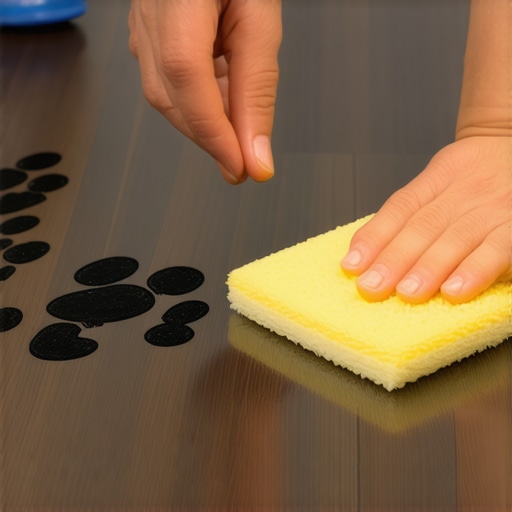
Most guys skip the leveling compound. They think the underlayment will hide the dip. It won’t. I spent three days grinding concrete on a job last month just so the floor wouldn’t click like a castanet. That clicking isn’t just a sound. It is a sign of movement. Movement creates friction. Friction creates these black marks that drive homeowners crazy. I have seen fifteen thousand dollar wide plank walnut floors ruined by people using the wrong chemicals to get a simple rubber mark off the surface. You do not need a drum sander to fix a scuff. You need to understand the molecular bond between a rubber sole and a polyurethane finish. When you drag a shoe across a floor, the friction generates heat. That heat allows the carbon black in the rubber to undergo a phase change and bond to the microscopic peaks of your floor finish. This article is about breaking that bond without destroying the wear layer that protects your investment.
The physics of the rubber transfer
To remove black scuff marks from hardwood without sanding you should use a clean tennis ball or a specialized rubber eraser to create friction that lifts the mark. For tougher marks, a microfiber cloth dampened with a neutral pH cleaner or a small amount of mineral spirits will dissolve the rubber bond. These methods work because they target the surface deposit rather than the wood fiber itself. When you see a black mark, you are looking at a polymer that has been smeared across the top of the aluminum oxide or polyurethane coating. It has not penetrated the wood. If you reach for sandpaper, you are cutting through the protective shield of the floor to get at a substance that is merely sitting on top. This is the mistake that leads to permanent damage and the need for a full refinish years before it should be necessary.
The ghost in the expansion gap
The health of your floor finish is directly tied to the stability of the subfloor. If your subfloor has more than one eighth of an inch of deflection over a ten foot span, the boards will move every time you walk on them. This movement creates a dynamic surface where shoes are more likely to drag and leave marks. I have walked into homes where the crawlspace humidity was so high the floor was cupping like a potato chip. In those environments, the wood is soft. The finish is under stress. When a heavy boot scuffs a cupped board, the mark is pushed deeper into the texture of the grain. This makes removal twice as hard. You have to keep your home between thirty five and fifty five percent humidity to ensure the finish remains hard enough to resist these transfers. If the wood is swollen from moisture, the finish becomes more susceptible to mechanical damage.
“A floor is only as good as the subfloor beneath it; deflection is the enemy of every joint.” – Master Flooring Axiom
The tennis ball technique for mechanical removal
A standard tennis ball acts as a high friction eraser that is softer than the floor finish but grabbier than the rubber scuff. By cutting a small X into the ball and placing it on the end of a broom handle, you can apply targeted pressure to the scuff mark. The felt on the ball creates enough heat to soften the scuff without reaching the melting point of the polyurethane. You rub the ball over the mark in a circular motion. The rubber molecules of the scuff prefer the texture of the tennis ball over the smooth surface of the floor. They migrate from the wood to the ball. This is the safest method because it involves no liquids and no harsh chemicals. It is a pure mechanical exchange of matter from one surface to another. If you have a large area with multiple marks, this is the most efficient way to handle the problem without hurting your knees.
Chemical solvents and the danger of high pH
When mechanical friction fails, you must move to solvents that can break the chemical bond of the rubber without emulsifying the floor finish. Isopropyl alcohol or odorless mineral spirits are the preferred choices for professionals because they have a high flash point and do not contain water. Many homeowners reach for vinegar or ammonia. This is a disaster. Vinegar is an acid that will eat the sheen off your floor over time. Ammonia is a base that can turn oak black by reacting with the tannins in the wood. A neutral pH cleaner is the only thing that should touch your floor. If the scuff is stubborn, a small amount of mineral spirits on a white rag will dissolve the rubber. You must wipe it away immediately. Do not let the solvent sit. You are performing a surgical strike on a molecular level. You want to liquefy the scuff and lift it before the solvent has a chance to penetrate the micro-cracks in the finish.
| Cleaning Agent | Effectiveness | Safety Rating | Finish Compatibility |
|---|---|---|---|
| Tennis Ball | High | Excellent | All Finishes |
| Pencil Eraser | Medium | Good | Satin or Matte |
| Mineral Spirits | Very High | Moderate | Polyurethane Only |
| Baking Soda Paste | High | Poor | Abrasive Risk |
| Acetone | Extreme | Dangerous | NOT RECOMMENDED |
The 1/8 inch that ruins everything
Precision is everything in flooring. Whether you are talking about the gap at the baseboard or the thickness of a wear layer, a fraction of an inch determines success. Most modern engineered floors have a wear layer between two and four millimeters thick. If you sand a scuff mark even once with a sixty grit paper, you have removed ten percent of the life of that floor. This is why we focus on non-destructive removal. You have to be a detective. Is the mark a scuff or a scratch. A scuff is additive, meaning material was added to the floor. A scratch is subtractive, meaning material was removed. You can clean a scuff. You have to repair a scratch. If you can feel the mark with your fingernail, it might be a scratch. If it is smooth to the touch, it is a scuff and can be removed with the protocols listed here.
“Wood flooring is a hygroscopic material; it will expand and contract with the seasons, making surface maintenance a moving target.” – NWFA Technical Guidelines
The checklist for a scuff free floor
Maintaining a high performance surface requires a system. You cannot just wait for the floor to look dirty. By then, the damage is already happening at the microscopic level. Dust and grit act like sandpaper under the feet of people walking across your home. This grit creates micro-scratches that trap rubber and make scuffs harder to remove. Follow this protocol to keep the surface pristine.
- Use walk off mats at every entrance to catch grit before it enters the home.
- Remove shoes with black rubber soles or high heels which can exert over 2,000 psi of pressure.
- Dust mop daily with a microfiber head to remove abrasive particles.
- Check furniture pads every six months to ensure they have not worn through to the plastic.
- Maintain a consistent indoor climate to prevent board movement and finish stress.
Why your subfloor is lying to you
People think a floor is solid. It isn’t. It is a system of layers. If you have a concrete slab that is emitting moisture, that vapor is pushing against the bottom of your wood. This creates hydrostatic pressure. This pressure can make the finish on top more brittle. When the finish is brittle, a rubber scuff doesn’t just sit on top, it can actually fracture the bond between the wood and the sealer. This is why some scuffs look like they are under the finish. They aren’t. They are just embedded in a fractured surface. If you have a wood subfloor, check for squeaks. A squeak is two pieces of wood rubbing together. That friction generates heat. That heat can affect the temperature of the surface finish. It sounds crazy, but a squeaky floor can actually be more prone to scuffing because the surface is marginally warmer and softer than a stable floor. Fix the subfloor and you fix the finish.
The science of the microfiber bond
Microfiber is not just a soft cloth. It is a precision tool designed to hook into microscopic particles. Each fiber is split into a star shape, creating millions of tiny hooks. When you use a damp microfiber cloth on a scuff mark, you are using mechanical hooks to grab the rubber molecules. This is why you should never use an old cotton T-shirt. Cotton fibers are round and smooth. They just slide over the scuff. You want the friction of the microfiber. If you add a drop of neutral cleaner, the liquid acts as a lubricant to slide the rubber off the wood while the microfiber traps it. It is a specialized piece of engineering that most people treat like a rag. Use it correctly and you will never need to touch a piece of sandpaper for a surface mark again.
{“@context”:”https://schema.org”,”@type”:”HowTo”,”name”:”How to Remove Black Scuff Marks from Hardwood”,”step”:[{“@type”:”HowToStep”,”text”:”Use a tennis ball on a stick to rub the mark in a circular motion.”},{“@type”:”HowToStep”,”text”:”Apply a neutral pH cleaner to a microfiber cloth for stubborn marks.”},{“@type”:”HowToStep”,”text”:”Use odorless mineral spirits as a last resort for heavy rubber transfer.”}]}