
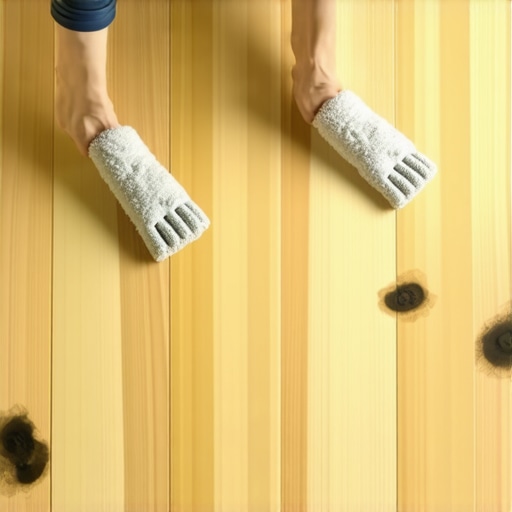
I once walked into a house where a $15,000 wide-plank walnut floor was cupping so bad it looked like a potato chip because the installer didn’t check the crawlspace humidity, but even worse than the cupping was what the homeowner did next. They saw black scuff marks from their shoes and decided to use a heavy-duty green scouring pad meant for cast iron pans. By the time I arrived, the beautiful satin finish was gone, replaced by cloudy white circles that looked like someone had hit the floor with 40-grit sandpaper. I spent two decades as a master floor installer, and if there is one thing I have learned, it is that the bond between a rubber sole and a polyurethane finish is a matter of chemistry and physics, not brute force. You do not need to sand your floors to get rid of those ugly black streaks. You just need to understand the molecular reality of what is happening on the surface of your wood. Hardwood floors are a structural investment, and treating them like a disposable surface is the quickest way to ruin your home value. Whether you are dealing with traditional oak or high-end engineered planks, the finish is a protective skin that must be preserved at all costs.
The ghost in the polyurethane bond
Black scuff marks on hardwood floors are actually deposits of rubber or plastic polymers that have been transferred via frictional heat. When a shoe sole or furniture leg drags across the polyurethane finish, the kinetic energy melts a microscopic layer of the carbon black filler, bonding it to the top coat.
When you see a black mark, you are not looking at a scratch in the wood. You are looking at an additive. Most modern shoes use a mix of synthetic rubbers and carbon black to provide durability. When you walk, your weight creates pressure. If you pivot or slide, that pressure creates heat. Because polyurethane is a resin, it has a specific glass transition temperature. While you aren’t melting the floor, you are creating enough localized thermal energy to make the finish slightly more receptive to the rubber molecules. This is why some marks seem to be baked into the floor. In my years on the job, I have seen people treat these marks as permanent stains, but they are almost always superficial. The key is to break the mechanical bond of the rubber without dissolving the chemical bond of the floor finish. If you go in with heavy solvents, you risk softening the poly, which leads to a permanent dull spot that will eventually attract more dirt and grime than the original scuff ever did.
“A floor is only as good as the subfloor beneath it; deflection is the enemy of every joint.” – Master Flooring Axiom
Why your cleaning cabinet is lying to you
Common household cleaners often contain silicone oils, wax, or harsh surfactants that can delaminate the finish or create a cloudy residue. Products marketed as floor polish are frequently the worst offenders because they leave a microscopic film that traps scuff marks and makes them nearly impossible to remove without a full chemical strip.
I have a rule in my shop: if it smells like lemons or promises a high gloss in five minutes, keep it away from my oak. Many people reach for generic sprays when they see a scuff. These sprays often contain chemicals that are fine for grout in showers or for the plastic wear layer of laminate, but they are catastrophic for site-finished wood. When you spray a solvent on a scuff, you might be thinning the rubber, spreading it deeper into the texture of the grain. Instead of a localized mark, you end up with a grey smudge. We also need to talk about moisture. Even if you are just spot cleaning, excess water is the enemy. I have seen guys leave damp rags on a scuff mark to soak it. That water can seep through the micro-cracks in the finish and cause the wood fibers to swell, a process we call grain raise. Once the grain raises, the scuff is the least of your problems. You are now looking at a textured surface that will require a screen and recoat to fix.
The micron that saves your finish
Dry friction is the safest and most effective method for removing scuffs because it uses mechanical force to lift rubber particles. Using a tennis ball or a microfiber cloth creates a static charge and localized heat that encourages the scuff mark to re-adhere to the cleaning tool instead of the wood finish.
This is where the physics of the job gets interesting. Think about how an eraser works on paper. It is more cohesive than the paper, so the graphite sticks to the eraser. The same logic applies to wood floors. A clean, dry tennis ball is one of the best tools in a flooring professional’s kit. The felt on the ball has a high surface area. When you rub the ball against a scuff, you are creating a different kind of friction than the shoe did. You are essentially peeling the rubber back up. I always tell my apprentices to cut a small X in a tennis ball and stick it on the end of a broom handle. This allows you to apply consistent pressure without getting on your knees. It is a simple mechanical solution that respects the integrity of the polyurethane. You aren’t using chemicals. You aren’t introducing moisture. You are just using physics to reverse the mistake. If the tennis ball doesn’t work, a high-quality white pencil eraser is the next step. Avoid pink erasers as they often contain dyes that can leave their own marks behind.
“Wood is a hygroscopic material; it never stops moving, and your finish must be flexible enough to move with it.” – Master Flooring Axiom
The mechanical reality of a tennis ball
| Method | Effectiveness | Risk Level | Surface Interaction |
|---|---|---|---|
| Tennis Ball | Highest | Very Low | Mechanical Adhesion |
| Pencil Eraser | Medium | Low | Shear Force |
| Microfiber Cloth | Low | Zero | Surface Friction |
| Mineral Spirits | High | Moderate | Chemical Dissolution |
While the tennis ball is the gold standard, there are times when the scuff is actually a transfer of plastic or a more stubborn synthetic. In those cases, you have to move up the ladder of intervention. But you must do it carefully. I’ve seen homeowners try to use magic erasers. Stop right there. A magic eraser is actually a form of melamine foam, which acts like 3000-grit sandpaper. On a matte floor, it might look fine. On a high-gloss floor, it will leave a dull haze that you can only see when the sun hits it at a certain angle. That haze is the result of thousands of microscopic scratches. If the dry methods fail, the only chemical I trust is a tiny amount of odorless mineral spirits on a clean white rag. Mineral spirits will dissolve the rubber but won’t eat through a cured polyurethane finish like lacquer thinner or acetone would. You must be precise. Dab, don’t soak. Rub with the grain, never against it. Once the mark is gone, use a second damp cloth to neutralize the area and then dry it immediately. This level of care is what separates a floor that lasts eighty years from one that needs a total overhaul after ten.
The daily maintenance checklist
- Inspect high traffic areas weekly for rubber transfer
- Use felt pads on all furniture legs without exception
- Place breathable rugs at all entry points to catch grit
- Maintain indoor humidity between 35 and 50 percent
- Avoid wearing shoes with black rubber soles indoors
Precision is everything in the flooring world. We deal with tolerances of an eighth of an inch over ten feet. We deal with moisture levels measured in single percentages. Why would you be any less precise with your cleaning? If you treat your hardwood with the same respect we give the subfloor during installation, you will never have to worry about scuff marks again. It is about the long game. Every time you avoid a harsh chemical or an abrasive pad, you are extending the life of that finish. You are keeping the protective barrier intact so the wood beneath can stay beautiful for the next generation. Most guys in this business just want to get the job done and move on. I want the floor to stay perfect long after I have hung up my kneepads. That starts with the right tools and the right knowledge. Keep the sandpaper in the garage and keep the tennis ball in your utility closet. Your floors will thank you for it. The science of flooring is a balance of chemistry and mechanics. Respect that balance, and your home will always look like a master architect just finished the final coat.