
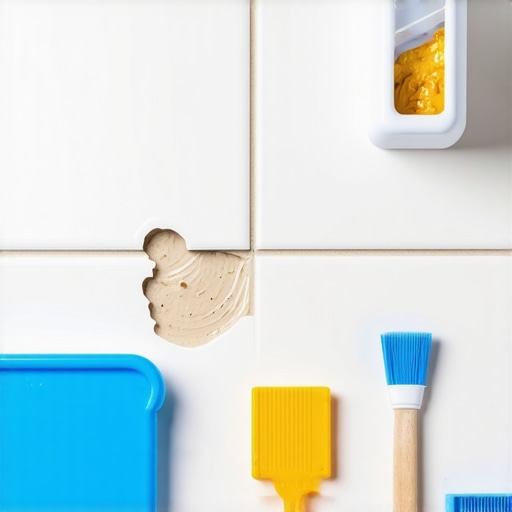
I spent three days grinding concrete on a job last month just so the floor would not click like a castanet. Most installers skip the leveling compound because they think the underlayment will hide the dip. It will not. When you are dealing with a chipped tile in the middle of a shower floor, you are looking at the same lack of structural integrity. A chip is never just a cosmetic blemish. It is a breach in the vitreous shield of your porcelain or ceramic. Once that glaze is compromised, every shower you take forces pressurized water into the porous body of the tile. This leads to saturation, adhesive failure, and eventually, the structural rot of your subfloor. Most homeowners want a quick fix with a tube of resin. I am here to tell you that in a high-moisture environment, the only real repair is a surgical extraction and replacement. I have seen $20,000 bathroom remodels go down the drain because an installer did not understand the capillary action of water through a single hairline crack. If you want a floor that lasts twenty five years, you have to treat it like a machine, not a decoration.
The physics of a shower floor failure
To repair a chipped tile in a shower floor, you must first assess the depth of the fracture and the state of the surrounding grout. If the chip penetrates the glaze of the porcelain, the tile is effectively a sponge. Proper repair involves grout removal, tile extraction, and a new bond. A shower floor is a dynamic environment where thermal expansion and contraction occur every time you turn on the hot water. When a heavy object hits the tile, it creates a point of high stress. Porcelain is dense and brittle. Ceramic is softer but equally prone to glaze spalling. The impact energy vibrates through the tile and hits the thin-set mortar beneath. If there was a tiny void in that mortar, the tile will crack or chip more easily. This is why coverage matters. According to industry standards, wet areas require ninety five percent thin-set coverage to prevent these exact failures. If you hear a hollow sound when you tap the surrounding tiles, you have a much bigger problem than a chip. You have a systemic bond failure.
“A floor is only as good as the subfloor beneath it; deflection is the enemy of every joint.” – Master Flooring Axiom
The myth of the simple patch kit
Most retail repair kits rely on acrylic resins or epoxy fillers that do not bond permanently to high-density porcelain glazes. These patches will expand and contract at different rates than the tile itself. Over time, the seal will break and water will seep underneath the repair. You might see a fix that looks good for a week. Then the soap scum and the heat get to it. The chemical bond of a standard hardware store epoxy is no match for the hydrothermal cycling of a daily shower. When you use a patch, you are leaving the compromised tile in place. If water has already reached the biscuit of the tile, you are sealing moisture inside. This leads to mold growth that you cannot see until it is too late. Professional results require a mechanical bond. This means removing the damaged material and replacing it with a fresh piece of tile that is fully integrated into the waterproofing system. Anything else is just a temporary bandage on a wound that needs stitches.
Tools for a surgical tile extraction
The process of removing a single tile from a shower floor requires an oscillating multi-tool with a diamond grit blade and a set of high-carbon steel chisels. You must isolate the damaged tile by removing the surrounding grout to prevent vibrational damage to the neighboring pieces. Precision is the only thing that matters here. If you start swinging a hammer without cutting the grout lines first, you will send shockwaves through the entire floor. You will end up with six chipped tiles instead of one. The oscillating tool allows you to grind away the grout without putting lateral pressure on the edges of the good tiles. You need to wear a mask because grout dust is basically silica. It is bad for your lungs and even worse for your shower drain. Tape off the area with heavy-duty painter tape to protect the surfaces you are not working on.
The equipment list for professional repairs
| Tool Type | Specific Requirement | Purpose |
|---|---|---|
| Oscillating Tool | Diamond Grit Blade | Removing grout without vibration |
| Hammer | 16 ounce Trim Hammer | Controlled impact for tile breaking |
| Chisel | 1/4 inch Cold Chisel | Prying up the biscuit and mortar |
| Thin-set | ANSI A118.15 Modified | High-strength bond for wet areas |
| Grout | Matching Polymer Modified | Sealing the perimeter of the repair |
The chemistry of the new bond
Replacing a tile requires a polymer-modified thin-set that meets ANSI A118.15 standards for high-performance bonds. This adhesive contains chemical additives that allow it to remain flexible while resisting the constant moisture of a shower environment. You cannot use standard mastic. Mastic is an organic adhesive that will emulsify and turn back into mush when exposed to water. I have seen guys use mastic in showers and the tiles literally slide off the wall after six months. You need a cementitious bond. When you mix your thin-set, it should be the consistency of peanut butter. If it is too runny, it will shrink and pull away from the tile. If it is too thick, you will not get the collapse of the ridges necessary for full coverage. You also need to consider the waterproofing membrane under the tile. If you nick the Schulter-Kerdi or the liquid-applied membrane while chiseling, you must patch that membrane before the new tile goes down. Water is patient. It will find a pinhole and it will cause a leak.
“Total mortar coverage of at least 95 percent is required for tile installation in wet areas to ensure structural integrity.” – Master Flooring Axiom
Grout pigments and the passage of time
Matching the grout color of an existing shower floor is the most difficult part of the repair due to mineral staining and pigment fading. You must use a high-quality polymer-modified grout and perform a dry-run test to ensure the color matches the aged grout. Even if you have the original bag of grout from ten years ago, the color will not match perfectly. The grout in your shower has been exposed to hard water, soap, and cleaners. It has changed color over time. To get it right, you might need to mix two different shades. When you apply the grout, use a rubber float at a forty five degree angle. This ensures the joint is packed full. Many installers just smear it on the surface. That is a mistake. A hollow grout joint is a weak point that will crack within months. After you pack the joint, wait about ten to fifteen minutes before wiping it with a damp sponge. If the sponge is too wet, you will wash out the pigment and the grout will look patchy and white.
The final checklist for shower floor success
- Remove all old mortar from the substrate until it is flat and clean.
- Vacuum the area to remove every speck of dust that could break the bond.
- Check the waterproofing membrane for any punctures or tears.
- Back-butter the new tile to ensure one hundred percent coverage.
- Level the new tile with the surrounding pieces using a straight edge.
- Allow the thin-set to cure for at least twenty four hours before grouting.
- Keep the shower dry for at least seventy two hours after the repair is complete.
The biggest mistake homeowners make is rushing back into the shower. They think because the grout feels dry to the touch, it is ready. It is not. Cementitious products take time to hydrate and reach their full strength. If you expose fresh grout to running water and steam too early, you will interrupt the curing process. The grout will be soft and porous. You spent all that time doing a surgical repair, do not ruin it by being impatient. A floor is a structural system. Give the chemistry time to work. Once the grout is fully cured, you should apply a high-quality penetrating sealer. This adds one more layer of defense against the water. It keeps the minerals in your water from staining the new work and ensures that your repair lasts as long as the house stands. This is the difference between a handyman and a master. We do not just fix what is broken. We build things to stay fixed.