
Homeowners always ask why their waterproof vinyl is buckling. Usually, it is because they locked it under a heavy kitchen island, killing the floor’s ability to breathe and shift. I spent three days grinding concrete on a job last month just so the floor would not click like a castanet because the previous installer left a mountain of old adhesive behind. I have seen guys try to rip up old vinyl with nothing but a pry bar and sheer ego. They end up with a subfloor that looks like a war zone. If you want a surface ready for hardwood floors or high end laminate, you have to understand the chemistry of what is holding that old plastic down. Vinyl flooring is not just a sheet of plastic. It is a system of polymers and stabilizers bonded to a substrate by pressure sensitive adhesives or hard set resins. When you try to pull it up cold, the bond is stronger than the vinyl itself. The result is a torn mess. Using heat changes the physical state of the glue. It moves it from a solid or semi solid state back into a viscous liquid. This allows for a clean separation that saves your back and your subfloor.
The thermodynamics of old vinyl glue
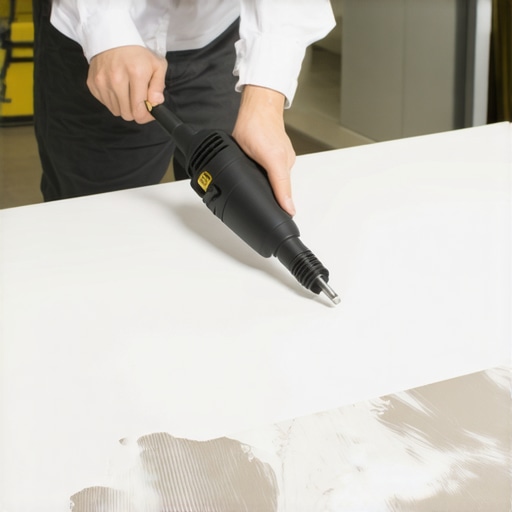
Applying heat to vinyl flooring lowers the viscosity of the underlying adhesive by reaching its glass transition temperature. This process softens the chemical bonds between the vinyl backing and the subfloor, allowing the material to be peeled back without leaving heavy residue or damaging the plywood or concrete substrate. You are not trying to melt the vinyl. If you see smoke, you have failed. You are aiming for a sweet spot where the glue becomes tacky and pliable. Most residential vinyl uses an acrylic based adhesive. These are designed to stay flexible, but over twenty years, they undergo a process called plasticizer migration. They become brittle or overly gummy. A heat gun provides a concentrated stream of air that penetrates the wear layer and hits the bond line. This is far more effective than a hair dryer, which lacks the BTU output to heat the subfloor through the insulating properties of the vinyl. I once saw a DIYer try to use a blowtorch. He did not get the floor up, but he did get a visit from the fire department. Stick to a professional heat gun with adjustable temperature settings.
“A floor is only as good as the subfloor beneath it; deflection is the enemy of every joint.” – Master Flooring Axiom
When heat becomes a chemical necessity
Using a heat gun is necessary when dealing with full spread permanent adhesives that refuse to release manually. This method prevents the delamination of plywood subfloors and stops the structural compromise of the underlayment during the removal process for future laminate or hardwood installations. If you are planning to install showers and need new grout in an adjacent bathroom, the last thing you want is a jagged, uneven subfloor. The heat gun allows you to work in sections. I recommend working in two foot by two foot squares. Focus the heat on the seams first. The edges are where the moisture and dirt have likely already started to compromise the bond. Once you get an edge lifted, you can direct the heat specifically into the pocket between the vinyl and the floor. This is the most efficient way to work. It keeps the heat concentrated on the adhesive rather than wasting it on the top of the vinyl. You will feel the floor give way. It is a distinct sensation. The tension snaps, and the sheet lifts with a dull, sticky sound. If you are fighting it, you need more heat or more time.
| Adhesive Type | Heat Requirement | Removal Difficulty | Best Tool |
|---|---|---|---|
| Pressure Sensitive | Low to Medium | Moderate | 4 inch Scraper |
| Hard Set Acrylic | High | Difficult | Power Scraper |
| Black Mastic | Caution Required | Extreme | Chemical/Heat Mix |
| Perimeter Bond | Low | Easy | Utility Knife |
The hidden dangers of black mastic
Black mastic adhesive found under old vinyl often contains asbestos fibers which become airborne and hazardous if sanded or scraped dry. Using heat can help soften the mastic for removal, but you must verify the material safety before proceeding with any mechanical agitation. This is where my years of experience kick in. If you pull back a corner and see black, tar like goo, stop. Do not sand it. Do not grind it. In the old days, that stuff was the gold standard for stickiness because it was loaded with minerals and fibers. If you must remove it, keeping it warm and wet is the only way to stay safe. Even then, many pros prefer to encapsulate it with a self leveling compound rather than risking the dust. When I am prepping for hardwood floors, I want a clean slate. But a clean slate is not worth your lungs. If the test comes back clean, then the heat gun is your best friend. It turns that black rock into a soft sludge that you can scrape into a bucket. It is messy work. It smells like a roofing project. But it is the only way to get down to the bone of the house without destroying the integrity of the wood underneath.
Why your scraper is only half the battle
A scraper serves as the mechanical force that separates the softened vinyl from the subfloor while the heat gun provides the thermal energy to break the bond. Success depends on the angle of the blade and the consistency of the heat application to avoid gouging the wood. I see people using those tiny little putty knives. They are useless. You need a long handled floor scraper with a replaceable four inch steel blade. You want to keep the blade at a shallow fifteen degree angle. If you go too steep, you are going to dig into the plywood. Once you gouge the subfloor, you have created a telegraphing point. That little divot will show up in your new laminate floor six months from now like a ghost. It is a structural defect. I tell my apprentices to let the heat do the work. The scraper is just there to catch the release. If you are leaning your entire body weight into the scraper, you are doing it wrong. Stop and apply more heat. Move the gun in a sweeping motion. Never leave it in one spot for more than a few seconds or you will scorch the wood and create a fire hazard.
- Ensure the room is well ventilated to clear out adhesive fumes.
- Wear heat resistant gloves to protect your hands from the gun and hot glue.
- Keep a sharp blade in your scraper at all times to minimize effort.
- Vacuum the area constantly to remove loose debris that can melt back down.
- Work in manageable sections to prevent the glue from re hardening.
- Test a small area first to determine the optimal temperature setting.
How to save your plywood subfloor from destruction
Protecting the plywood subfloor during vinyl removal involves balancing the heat intensity to avoid drying out the wood fibers or causing delamination. Maintaining a consistent temperature ensures the adhesive releases without pulling up the top veneer of the plywood sheets. When wood gets too hot, the resins that hold the plywood layers together can fail. You do not want to trade a glue problem for a structural problem. This is why I prefer the slow and steady approach. If you are prepping for a high end shower or a tile job where you will be using grout, the subfloor must be rock solid. Any delamination will cause the floor to flex. Flex leads to cracked grout. It leads to squeaky hardwood. It leads to laminate joints popping open. I treat every subfloor like it is the final surface. I want it clean, flat, and dry. After the vinyl is up, you will still have a film of glue. Do not just leave it. Use a citrus based adhesive remover while the floor is still warm. It will react with the heated glue and wipe away much easier than if you let it go cold and hard again.
“Proper substrate preparation prevents the telegraphing of old adhesive patterns through the new surface.” – Floor Prep Standard
The technical limits of the heat gun method
The heat gun method is highly effective for residential vinyl but reaches its limits with industrial grade epoxy adhesives or large scale commercial installations. In these cases, mechanical grinding or chemical stripping may be required to achieve a suitable surface for new flooring. You have to know when to quit. If you have five thousand square feet of vinyl to pull, a heat gun and a hand scraper will take you until the next century. That is when you rent a walk behind power scraper. But for a kitchen or a bathroom, the heat gun is the surgical tool of choice. It is precise. It is quiet. It does not create a cloud of dust that will settle in your vents and stay there for a decade. The chemistry of the bond is your opponent. You are using thermal energy to win the fight. Once that vinyl is gone, check your moisture levels. Heat can drive moisture deep into the wood, and you need that subfloor to be at the correct equilibrium before you lay down a single plank of hardwood. Acclimation is not just for the wood. It is for the house itself. Take your time. Do it right. Or do not do it at all.