
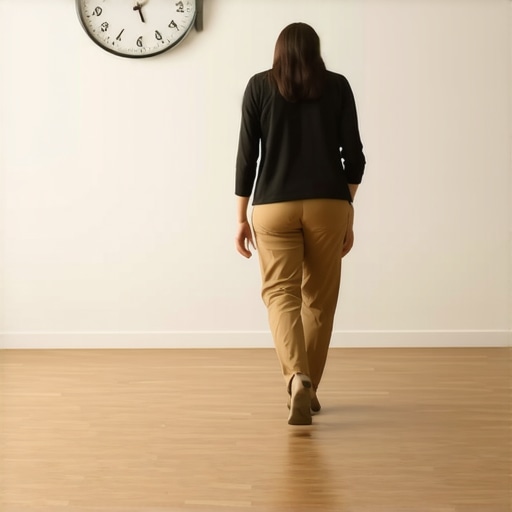
I once walked into a house where a $15,000 wide-plank walnut floor was cupping so bad it looked like a potato chip because the installer didn’t check the crawlspace humidity. The homeowner was in tears. She had moved her heavy mahogany dining table back onto the floor only twelve hours after the final coat of oil-modified polyurethane was applied. The wood was literally screaming. It was a total loss. That job taught me that most people see a floor as a static object, a simple decoration you buy at a big box store. They are wrong. A hardwood floor is a living, breathing structural assembly of cellulose and lignin. When you apply a finish, you are not just painting it. You are initiating a complex chemical reaction that requires a specific window of atmospheric stability to succeed. Skipping that window is the fastest way to turn a masterpiece into a sand-and-refinish nightmare.
The molecular dance of polyurethane
The 24 hour rule exists because polyurethane finish requires a specific timeframe for solvent evaporation and the beginning of the cross-linking process. During this initial stage, the finish is extremely susceptible to indentation and chemical contamination. Walking on it too early disrupts the film formation at a microscopic level. Most homeowners think that if the surface feels dry to the touch, it is ready for traffic. This is a dangerous misconception. In the first twenty-four hours, the finish is undergoing what we call coalescing. The solvents are migrating to the surface and evaporating, allowing the long-chain polymers to entangle and form a protective barrier. If you step on that floor with a rubber-soled shoe, you are not just leaving a footprint. You are potentially trapping solvents under the pressure of your weight, which can lead to localized delamination or a permanent ghosting effect in the sheen. I have seen floors where you could see the exact tread pattern of a sneaker three months later because the homeowner just had to get a glass of water at midnight. The chemistry simply does not care about your thirst. It follows the laws of thermodynamics. If the ambient temperature is too low or the humidity is too high, that 24 hour window might actually need to be 48 or 72 hours. You have to watch the dew point. If the house is too humid, the air is already saturated and cannot accept the evaporating solvents from the finish. This stalls the cure.
“A floor is only as good as the subfloor beneath it; deflection is the enemy of every joint.” – Master Flooring Axiom
The ghost in the expansion gap
Expansion gaps at the perimeter of a hardwood installation are the lungs of the floor and must remain unobstructed to allow for seasonal movement. When a finish is applied, the wood cells absorb a minute amount of moisture before the resins seal them off from the air. If you walk on the floor and cause the planks to shift even a fraction of a millimeter before the finish has cured, you can crack the brittle film that has bridged the gap between boards. This leads to a phenomenon we call white line syndrome. It looks like a white fracture along the edge of every board. It happens because the finish was stressed before it reached its full tensile strength. People forget that wood is hygroscopic. It wants to reach an equilibrium moisture content with its environment. In a place like the Pacific Northwest, the wood might be struggling to stay dry, while in the desert of Arizona, it is trying to suck every bit of moisture out of the air. This constant tug-of-war is why the 24 hour rule is non-negotiable. You are giving the wood time to settle into its new skin. If you disrupt that settling, you are asking for structural failure. I have spent decades on my knees with a moisture meter. I know that a subfloor with more than a 4 percent moisture difference from the hardwood will cause problems. If you add the weight of a human body to that equation while the finish is still tacky, you are pressing the hardwood into a subfloor that might not be perfectly flat.
Why your subfloor is lying to you
Subfloors often appear level to the naked eye but contain micro-fluctuations that can cause the hardwood to flex under weight and crack the curing finish. Even a 1/8 inch dip over ten feet can create enough deflection to compromise the bond of a new topcoat. Many installers skip the grinding or leveling process. They think the underlayment will hide the dip. It won’t. I spent three days grinding concrete on a job last month just so the floor wouldn’t click like a castanet when someone walked on it. When we talk about the 24 hour rule, we are also talking about the subfloor. The adhesive used to nail or glue the wood down needs that time to reach its full shear strength. If you walk on the floor, you are putting mechanical stress on the fasteners or the glue beads. This can cause the boards to move slightly, breaking the seal of the finish at the seams. It is a chain reaction of physics. The weight of an average adult concentrated on the ball of a foot can exert hundreds of pounds per square inch. That is more than enough to compress the wood fibers if the finish has not hardened. This is especially true with softer species like American Walnut or Cherry. On the Janka Hardness Scale, walnut is relatively soft at 1010, compared to White Oak at 1360. If you walk on walnut too soon, you will leave actual physical depressions in the wood cells themselves.
| Material Type | Janka Hardness Rating | Typical Acclimation Time | Full Cure Duration |
|---|---|---|---|
| American Walnut | 1010 | 7 to 10 Days | 30 Days |
| White Oak | 1360 | 10 to 14 Days | 30 Days |
| Hickory | 1820 | 14 Days | 30 Days |
| Engineered Oak | Varies | 3 to 5 Days | 21 Days |
The 1/8 inch that ruins everything
Precision in flooring is measured in fractions of an inch, and the thickness of the finish itself is usually only a few mils thick. A mil is one-thousandth of an inch, yet it is the only thing protecting your investment from the world. When you walk on a floor during the first 24 hours, you are risking the integrity of those few mils. Think about the chemistry of a water-based finish versus an oil-modified one. Water-based finishes use N-Methyl-2-pyrrolidone as a coalescing solvent. These finishes actually dry faster to the touch, but they take longer to reach maximum hardness. Oil-modified polyurethanes use mineral spirits and oxygen to cure. This is an oxidative process. It needs airflow. If you walk into the room and close the door behind you to “protect” the floor, you might actually be starving the finish of the oxygen it needs to cure. You end up with a gummy mess that stays soft for days. I always tell my clients to imagine the floor is a lake of wet glass. You wouldn’t walk on a lake of wet glass, would you? The same logic applies here. Even the dust in your socks can become permanently embedded in the finish if you walk on it too soon. That dust then acts as an abrasive, wearing down the finish from the inside out every time you walk across it later in life.
“Deflection is the silent killer of a high-end floor; if the subfloor moves, the finish fails.” – Master Flooring Axiom
The humidity trap under your feet
Humidity is the primary variable that dictates whether the 24 hour rule is sufficient or if you need to wait longer. High ambient moisture prevents the solvents in the finish from escaping, leading to a soft and vulnerable surface. In regions with high humidity, like the coastal areas of Florida or the swampy heat of Houston, a solid wood floor is a massive risk. The wood will expand and contract so much that the finish can actually peel off in sheets if it isn’t applied correctly. In these environments, I always recommend engineered cores because they are more stable. But even with engineered wood, the finish rule stands. If you have a master bathroom nearby, the humidity from a hot shower can migrate through the framing. If that steam hits a curing hardwood floor in the hallway, it can cause the finish to blush. Blushing is when moisture gets trapped under the finish, creating a white, cloudy haze that is impossible to remove without sanding. This is why we check the grout in the showers too. If the grout isn’t sealed, moisture can seep into the subfloor and travel laterally under your hardwood. It is all connected. The house is a system, and the floor is the foundation of that system’s aesthetic and structural health.
- Ensure the HVAC system has been running for at least 72 hours before and after installation.
- Keep all windows closed to prevent dust and insects from landing on the wet finish.
- Never use tape of any kind on a floor that is less than 30 days old.
- Wear only clean, lint-free socks if you absolutely must step on the floor after 24 hours.
- Wait at least 72 hours before allowing pets with claws back onto the surface.
- Do not place area rugs for at least 30 days to allow for full UV color stabilization.
The physics of the wood cell
Wood cells are composed of cellulose, hemicellulose, and lignin, which react to environmental changes by swelling or shrinking. The finish acts as a semi-permeable membrane that regulates this exchange of moisture. When the finish is in its first 24 hours of life, that membrane is not yet fully formed. It is like a scab on a wound. If you pick at it or put pressure on it, you disrupt the healing process. At a molecular level, the hydroxyl groups in the wood’s cellulose are looking for water molecules to bond with. If the finish hasn’t sealed those sites yet, and you walk on the floor with damp socks or sweaty feet, you are introducing moisture directly into the wood fiber. This can cause localized swelling. You might not see it immediately, but over time, that spot will become a point of failure. The finish will lift, and the wood will turn gray as it oxidizes. I have seen this happen in kitchens more than anywhere else. Someone drops a single drop of water while the floor is curing, and six months later, there is a black spot in the middle of the floor. It is about patience. It is about respecting the material. Laminate is a different beast entirely. It is a photograph glued to sawdust and resin, yet people treat high-end site-finished oak with the same lack of respect they give a cheap click-lock floor. Hardwood is a heritage product. It deserves a heritage timeline. If you can’t wait 24 hours, you shouldn’t have hardwood floors. Stick to tile or luxury vinyl if you are in that much of a hurry. But if you want the warmth and the value of real timber, you have to play by the rules of the chemistry. The 24 hour rule is the bare minimum. If you want a floor that lasts a century, you give it the time it needs to breathe, cure, and harden into the shield it was meant to be.