
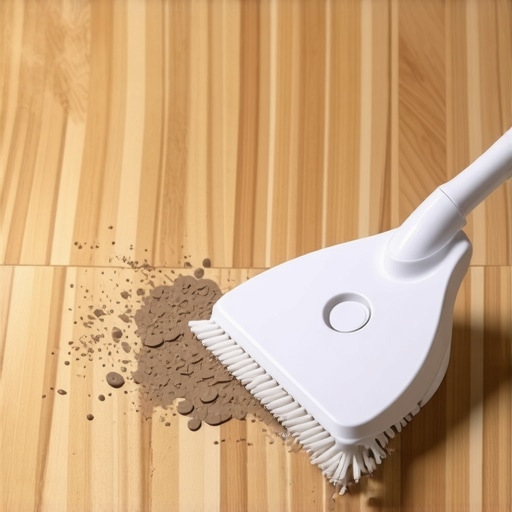
The physics of cleaning textured laminate flooring
I spent three days grinding concrete on a job last month just so the floor wouldn’t click like a castanet. Most guys skip the leveling compound. They think the underlayment will hide the dip. It won’t. I’ve spent twenty five years on my knees with a moisture meter and a level, and I can tell you that a floor is not a decoration, it is a structural performance surface. When homeowners complain about textured laminate trapping dirt, they usually blame the manufacturer. In reality, the blame lies with the cleaning chemistry and the physics of the floor’s topography. My boots have walked over a million square feet of melamine resin, and I smell like oak dust and mineral spirits most days. I have seen fifteen thousand dollar wide plank walnut floors cup like potato chips because of humidity, but nothing frustrates me more than a dirty textured laminate floor that should be clean. [IMAGE_PLACEHOLDER]
The microscopic reality of textured surfaces
Textured laminate floors trap dirt because their surface topography consists of deep embossed grain patterns that act as microscopic trenches for particulates. The best cleaner must have a low surface tension to penetrate these valleys without leaving a sticky film of soap residue that attracts more grime over time. This embossed in register or EIR technology is designed to make plastic look like real wood. It creates peaks and valleys. When you walk across the floor, your skin cells, pet dander, and outdoor grit are hammered into those valleys by the pressure of your footsteps. If you use a traditional soap-based cleaner, the water evaporates and leaves the soap behind. That soap remains tacky. It acts like flypaper inside the grain of your floor. This is why your floor looks dull and dirty even after you just mopped it. You aren’t cleaning, you are just glazing the dirt into the plastic.
Why your current mop is failing you
Traditional string mops and sponge mops fail to clean textured laminate because they lack the capillary action necessary to lift debris out of deep graining. A flat microfiber mop with a high grams per square meter rating is required to reach into the embossing and pull the dirt upward rather than pushing it around. I have seen people use steam mops on laminate. It makes my skin crawl. Steam mops are a death sentence for laminate. The high pressure steam forces moisture into the joints and past the wear layer. Once that moisture hits the high density fiberboard core, it swells. This is called peaking. Your joints will rise up and the edges will eventually chip off. You cannot fix a swollen laminate core. You have to replace the whole floor. The mechanic in me wants to take that steam mop and throw it in the scrap bin. You need a dry or damp system, never a wet one.
“A floor is only as good as the subfloor beneath it; deflection is the enemy of every joint.” – Master Flooring Axiom
The chemical reality of residue buildup
Most commercial floor cleaners contain surfactants and polymers that create a temporary shine but lead to long term dirt entrapment. To truly clean textured laminate, you need a pH neutral solvent that evaporates completely, such as a solution of isopropyl alcohol and distilled water. If you use tap water, you are adding minerals like calcium and magnesium to your floor. Those minerals settle into the texture and create a white haze. That haze is porous. It absorbs oils from your feet. Soon, you have a layer of grime that is literally bonded to the surface. I tell my clients to look for the simplest ingredients. You want a cleaner that breaks the surface tension of the water so it can flow into the grain, but then disappears. Alcohol is the key here. It lowers the evaporation point and cuts through grease without softening the melamine wear layer.
| Cleaner Type | Surface Tension | Residue Risk | Texture Penetration |
|---|---|---|---|
| Soap and Water | High | Extreme | Poor |
| Vinegar Solution | Medium | Low | Moderate |
| Alcohol Based | Low | Zero | Excellent |
| Steam Vapor | N/A | None | Dangerous |
The blueprint for a perfect cleaning solution
The industry standard for cleaning high traffic textured laminate involves a 3 to 1 ratio of distilled water to 70 percent isopropyl alcohol with two drops of clear dish soap. This mixture provides enough lubrication to slide the microfiber across the surface while ensuring the liquid pulls the dirt out of the embossing. You have to be careful with the soap. If the water starts to suds, you have used too much. You only want enough surfactant to break the water tension. I once walked into a house where the homeowner had used a wax based polish on their laminate. The floor was a sticky mess. I had to use a specific stripper just to get back to the original wear layer. Laminate is non porous. It does not need polish. It does not need wax. It needs to be clean. That is it. Anything you put on top of it that doesn’t evaporate is just another layer of problems for the future.
“Moisture is the silent killer of high-density fiberboard; once the core swells, the texture becomes a secondary concern.” – NWFA Technical Guidelines
The five step protocol for deep cleaning
- Vacuum the floor thoroughly using a hard surface setting to remove loose grit from the valleys.
- Lightly mist the floor with a pH neutral alcohol based cleaner in small three foot sections.
- Use a clean microfiber pad to scrub in the direction of the wood grain texture.
- Switch to a dry microfiber pad immediately to buff away any remaining moisture before it hits the seams.
- Inspect the floor at a low angle with a flashlight to ensure no ghosting or streaks remain in the grain.
The ghost in the expansion gap
Expansion gaps at the perimeter of the room are vital for the health of a laminate floor, but they can also act as reservoirs for dust that eventually migrates into the textured surface. Proper baseboard installation with a small gap for airflow ensures that the floor can breathe without trapping debris at the edges. People think a floor is static. It isn’t. It moves with the seasons. Even laminate, which is more stable than solid wood, will expand and contract based on the humidity in the room. If you don’t leave that quarter inch gap at the wall, the floor will buckle. If you fill that gap with dirt and cleaning residue, you are creating a dam. That dam prevents the floor from moving and eventually leads to joint failure. I always tell people to vacuum their baseboards once a month. Keep the perimeter clean so the floor can do its job. The 1/8 inch that ruins everything is usually found at the transitions and the walls.
The bottom line on textured floor maintenance
You have to treat your floor like a machine. It has moving parts and specific tolerances. If you treat it like a rug, you will ruin it. Textured laminate is a fantastic product because it provides the look of wood with the durability of plastic, but you have to respect the grain. Stop using the supermarket cleaners that promise a shine. Shine is just a layer of gunk. You want a clean, matte, or satin finish that shows the actual texture of the floor. My knees might be shot from twenty five years of installing, but my floors are always clean because I follow the chemistry, not the marketing. Stick to the alcohol, use the microfiber, and keep the water to a minimum. That is how you keep the dirt out of the valleys.