
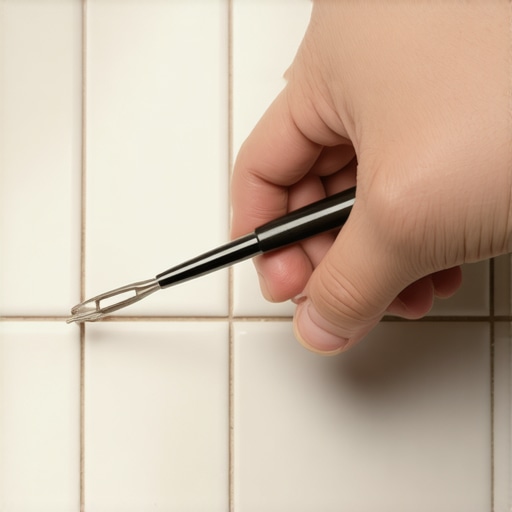
I spent three days grinding concrete on a job last month just so the floor wouldn’t click like a castanet. Most guys skip the leveling compound because they think the underlayment will hide the dip. It won’t. I carry that same obsession into every square inch of a renovation, especially when it comes to the tiny, forgotten spaces between tiles. Most homeowners look at a dirty grout line and think about bleach. I look at it and see a failing mechanical bond that requires surgical intervention. In my shop, I keep rows of specialty tools that most people would associate with a surgery center or a dental office. The big-box stores want to sell you a vibrating oscillating tool that will chew through your porcelain glaze faster than you can blink. I prefer the quiet, deliberate precision of a manual pick. It is the only way to respect the structural integrity of a floor that was meant to last a lifetime. In this guide, we will analyze the exact physics of manual grout extraction and why your shower depends on this tedious, microscopic labor.
The science of precision grout extraction
Dental pick grout removal involves the use of high-carbon steel instruments to manually excavate cementitious grout from between tile edges. This method ensures the structural integrity of the tile installation by avoiding the mechanical vibration of power tools which can lead to micro-fractures in the ceramic bisque. When you use a power tool, you are introducing thousands of oscillations per minute into a brittle system. This can easily cause the bond between the thin-set and the tile to vibrate loose. A manual pick allows you to feel the resistance of the material. You can tell the difference between grout that is merely dirty and grout that has become soft and powdery due to water infiltration. This tactile feedback is the difference between a restoration and a total failure. I have seen countless showers where a contractor used a rotary tool and sliced right through the waterproofing membrane. A dental pick stops when it hits something solid, giving you the control required to clean the joint without ruining the sub-structure.
“A floor is only as good as the subfloor beneath it; deflection is the enemy of every joint.” – Master Flooring Axiom
The chemical composition of failing grout joints
Cementitious grout is a complex matrix of Portland cement, graded aggregates, and pigments that undergo a hydration process to form a rigid structure. Over time, exposure to acidic cleaners or constant moisture can lead to decalcification, which weakens the crystalline lattice of the grout. This is why old grout often feels like wet sand. When you are cleaning these joints out, you are essentially removing a decayed mineral structure. The dental pick allows you to scrape away the carbonated surface layer to reveal the stable material underneath. If you are doing a full removal, you must reach at least two-thirds of the tile depth to ensure the new grout has enough surface area to form a mechanical lock. This is not about aesthetics. It is about the physics of adhesion. A shallow grout fill will simply pop out like a scab within six months because it lacks the mass to resist the natural expansion and contraction of the house. You need to create a clean, vertical wall on the edge of the tile for the new polymer-modified grout to grab onto.
Why power tools are the enemy of your shower pan
Waterproofing membranes such as PVC liners or liquid-applied barriers are located just millimeters beneath your grout joints and thin-set. Using a rotary grinder for grout removal in a shower is a recipe for a leaking subfloor because the high-speed blade can easily puncture the waterproof layer. Once that membrane is pierced, water will find its way into the plywood or concrete below, leading to rot and mold that you won’t see for years. A dental pick is a blunt instrument by comparison. Even a sharp steel pick is unlikely to penetrate a thick rubber liner unless you are intentionally stabbing at it. By scraping horizontally along the joint, you maintain a safe distance from the critical moisture barrier. This is especially important in the corners and around the drain, where the membrane is often folded or joined. A single slip with an oscillating tool in a corner can cost you five thousand dollars in remediation. The pick is slow, but it is safe. I smell floor wax and sawdust every day, and I can tell you that the smell of moldy subfloored plywood is a scent you never want in your home.
Selecting the right dental pick for the job
Stainless steel dental picks and carbon steel scrapers come in various tip geometries, including 45-degree angles, curved hooks, and straight points. For grout extraction, a hardened steel tip is necessary to overcome the compressive strength of the cement grout. You want a tool with a comfortable grip because the manual pressure required can lead to hand fatigue. I often recommend picks designed for automotive detailing or gunsmithing, as they are built to handle more torque than actual medical instruments. The tip must be thin enough to fit into a 1/16th inch joint but thick enough not to snap under lateral pressure. Look for a pick with a knurled handle to prevent slipping when your hands get sweaty or dusty. You should have at least three different shapes on hand to navigate the different angles of a bathroom floor or wall. The hook is great for pulling material out of the center, while the straight point is better for clearing out the corners where the tile meets the tub or the baseboard.
Comparing grout removal techniques
| Method | Precision Level | Risk Factor | Time Requirement |
|---|---|---|---|
| Dental Pick | Extreme | Very Low | High |
| Oscillating Tool | Moderate | High | Low |
| Rotary Grinder | Low | Extreme | Very Low |
| Manual Saw | Moderate | Medium | Medium |
Hardwood and laminate considerations near tiled areas
Hardwood floors and laminate planks often meet tiled entryways or kitchens, creating a transition zone where moisture migration can cause significant damage. If you are cleaning grout near a hardwood transition, you must be extremely careful not to introduce excessive water during the cleanup phase. Wood is hygroscopic, meaning it will absorb moisture from the air and the ground, leading to cupping or crowning. When I see a wide-plank walnut floor cupping like a potato chip, it is usually because someone didn’t respect the moisture barrier at the tile line. Using a manual pick for grout work near wood is safer because it is a dry process. You aren’t spraying water to cool a diamond blade, and you aren’t creating a cloud of fine dust that will settle into the grain of your oak floors. It is a controlled, surgical strike that keeps the rest of the home’s flooring systems safe from harm.
“Expansion and contraction are the natural enemies of a rigid grout joint, requiring precision in both depth and width to maintain integrity.” – TCNA Handbook for Ceramic, Glass, and Stone Tile Installation
Step by step manual extraction protocol
- Inspection of the tile glaze to ensure no existing chips will be aggravated
- Selection of a 45 degree angle pick for the initial pass to break the surface tension
- Vacuuming debris every 12 inches to maintain visibility of the joint floor
- Testing for loose tiles by applying gentle pressure with the pick handle
- Clearing the vertical wall of the tile to ensure 100 percent removal of old residue
- Final wipe down with a damp microfiber cloth to remove microscopic dust
The physics of the new bond
Polymer-modified grout requires a clean substrate to achieve its rated tensile strength and shear bond. If you leave even a thin film of old grout on the tile edges, the new material will fail to bond, creating micro-cracks that allow capillary action to pull water into the subfloor. This is where the dental pick proves its worth. You can use the tip to scratch the sides of the tile until you see the original color of the ceramic or stone. This ensures that the new grout is bonding to the tile itself, not to a layer of soap scum or old, brittle cement. The new bond is a chemical and mechanical marriage. The polymers in modern grout act as an adhesive, while the cement provides the structural mass. Without a clean channel, you are just painting over a problem. I’ve seen too many DIY jobs fail because they thought a quick scrub with a brush was enough. It isn’t. You need to get down into the trench and clear the way for the new material to do its job correctly.
Proper ergonomics for the long haul
Repetitive strain injury is a real risk for flooring professionals who spend hours using manual hand tools like dental picks. To avoid carpal tunnel syndrome, you must maintain a neutral wrist position and use your shoulder and elbow to provide the scraping force rather than just your fingers. I tell my guys to take a break every twenty minutes to stretch their hands. This work is tedious and physically demanding. It is why many contractors refuse to do it and instead push for a full tear-out. They would rather spend your money on new tile than spend their time on their knees with a pick. But if your tile is high quality and you love the look, the manual extraction is worth the effort. It preserves the history of the home while updating the performance of the floor. Just remember to wear knee pads. A hard tile floor is unforgiving on the joints, and a 25 year career like mine will teach you that quickly. Smelling floor wax and feeling the cold tile under your shins is part of the trade, but you have to be smart about how you treat your body.
The legacy of a well maintained floor
Flooring maintenance is not just about cleaning, it is about structural preservation of the building envelope. By meticulously cleaning out grout lines with a dental pick, you are extending the life of your shower installation or kitchen floor by decades. This approach avoids the catastrophic damage associated with power tool accidents and ensures a superior bond for new materials. I have spent a lifetime looking at floors, and the ones that stand the test of time are always the ones where the installer didn’t take shortcuts. Whether it is grinding a concrete slab to perfection or spending three days picking out old grout, the attention to detail is what defines a master architect of floors. Don’t let a big-box store tool ruin your beautiful tile. Take the slow path. Use the pick. Your subfloor will thank you for it. This level of care is what separates a professional from a hobbyist, and it is the only way I know how to work. Keeping the dust down and the precision up is the hallmark of a job done right. When the new grout goes in and stays there for twenty years, you will realize that every minute spent with that tiny steel pick was an investment in your home’s future. It is about the chemistry, the physics, and the pride of craftsmanship.