
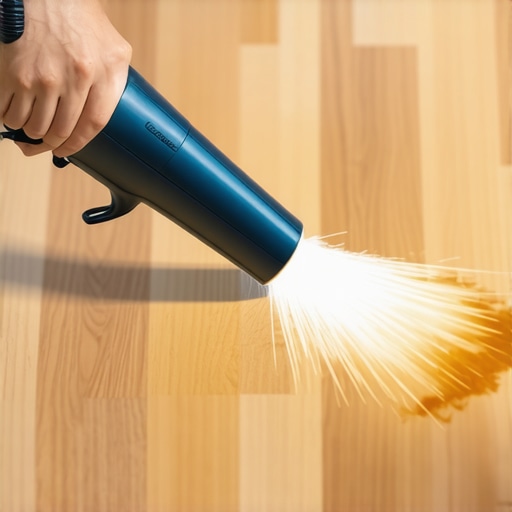
The science of thermal wax release
Removing wax from hardwood floors requires a calculated application of controlled thermal energy to break the intermolecular bond between the wax and the polyurethane finish. Using a hairdryer on a low-to-medium setting provides enough BTUs to reach the glass transition temperature of the wax without delaminating the wood grain or scorching the protective topcoat. I once walked into a house where a $15,000 wide-plank walnut floor was cupping so bad it looked like a potato chip because the installer didn’t check the crawlspace humidity. That job taught me that every tiny detail matters. Whether it is the moisture content of the subfloor or the way a glob of candle wax reacts to heat, you have to treat the wood with respect. My hands always smell like WD-40 and oak dust because I do not just look at a floor, I listen to it. When wax drips onto a floor, it does not just sit there. It forms a mechanical bond with the microscopic textures of the finish. If you try to scrape it cold, you risk shearing off the finish itself. You need to understand the chemistry of the material. Wax is a lipid. Polyurethane is a polymer. They do not like to mix, but they can get stuck together through surface tension. Most people reach for a knife. That is a mistake that leads to a sand-and-refinish bill you do not want to pay. Using a hairdryer allows you to liquefy the wax just enough so it can be lifted by a soft cloth. This preserves the integrity of the cellular structure of the timber beneath the finish.
The ghost in the expansion gap
Wax removal is less about cleaning and more about structural preservation of the hardwood floors finish layer. If you apply excessive heat or abrasive chemicals, you risk discoloring the lignin within the wood fibers or melting the adhesive used in engineered planks. I have spent twenty-five years on my knees with a moisture meter. I have seen what happens when homeowners treat their floors like they are indestructible. Even in a bathroom where you might have showers and grout, the moisture management is similar. If you spill wax near a transition to a tiled area, the wax can seep into the grout lines. On hardwood floors, that wax can migrate into the expansion gaps. Once it gets into those gaps, it acts as a bridge that can trap moisture. High humidity in places like Houston can make the wood swell. If the wax is blocking the gap, the floor has nowhere to go. It will buckle. It will crown. You have to get that wax out completely, not just from the surface, but from the edges of the boards.
“A floor is only as good as the subfloor beneath it; deflection is the enemy of every joint.” – Master Flooring Axiom
This axiom applies to maintenance as much as it does to installation. If you are not careful with your hairdryer, you can cause localized drying of the wood, creating a tiny pocket of low moisture that will make the board shrink away from its neighbors. You want the heat to be focused on the wax, not the wood. Keep the hairdryer moving. Do not park it in one spot for more than a few seconds. You are looking for the wax to go from a dull solid to a shiny liquid state. Once it hits that point, the bond is broken.
The 1/8 inch that ruins everything
Precision in heat application is the difference between a successful wax removal and permanent finish damage. You must maintain a distance of at least three inches from the floor surface to prevent thermal shock to the tannins in the wood. Even laminate flooring, which many people think is plastic, has a core of high-density fiberboard that is very sensitive to heat. If you overheat laminate, the wear layer can peel right off. On solid oak, the risk is different but just as severe. Wood is an organic material. It breathes. It moves. When you introduce a hairdryer into the equation, you are playing with the equilibrium of the board. I always tell my apprentices that a floor is a living thing. If you treat it like a piece of stone, you will fail. The wax molecules begin to vibrate and separate as the temperature rises. Use a plastic scraper, never metal, to gently lift the softened mass. If you use a metal putty knife, you will leave a scratch that no amount of wax can hide.
| Method | Safety Rating | Risk Level | Effectiveness |
|---|---|---|---|
| Hairdryer (Low) | High | Low | Excellent |
| Metal Scraper | Low | High | Poor |
| Chemical Stripper | Medium | High | Moderate |
| Ice Cube Method | Medium | Low | Good (for brittle wax) |
The table above shows why the hairdryer is the preferred tool in my kit. It allows for the most control. While some guys like the ice cube trick to make the wax brittle, that only works on certain types of paraffin. If the wax has a high oil content, freezing it just makes it a mess. Heat is the universal solvent for these situations.
Why your subfloor is lying to you
Moisture migration through a concrete slab can affect how wax interacts with a hardwood floors finish by trapping vapor beneath the wax seal. This causes milky spots or blanching that looks like surface damage but is actually a vapor pressure issue. Most guys skip the leveling compound. They think the underlayment will hide the dip. It won’t. I spent three days grinding concrete on a job last month just so the floor wouldn’t click like a castanet. If you have a moisture problem in your subfloor, the wax you just spilled might be the least of your worries. However, if the subfloor is dry, the hairdryer trick is a dream. You need to follow a specific protocol to ensure you don’t turn a small spill into a huge repair job.
- Step 1: Set the hairdryer to the lowest heat setting to start.
- Step 2: Aim the air at a 45 degree angle to the spill.
- Step 3: Keep the nozzle moving in a circular motion.
- Step 4: Use a clean white cotton cloth to blot, not rub, the wax.
- Step 5: Repeat until the residue is gone.
- Step 6: Clean the area with a specialist wood floor cleaner to remove the oily film.
This checklist ensures that you don’t push the wax deeper into the grain. If you rub the wax while it is hot, you are just polishing it into the wood. Blotting is the secret. You want the cloth to wick the liquid up. This is the same principle as using a sponge in a wet shower area. You want to remove the liquid, not spread it around the grout.
“Wood floors are subject to constant dimensional change as they react to the environment around them.” – NWFA Technical Manual
That dimensional change is why we leave expansion gaps. If your wax spill is right at the baseboard, you have to be extra careful not to melt the paint on your trim while you are heating the floor.
The chemistry of surface contamination
The viscosity of melted wax determines how much capillary action pulls the contaminant into the v-groove of your hardwood floors. Once wax enters the groove, it becomes a permanent contaminant that can prevent future screen and recoat processes from adhering correctly. This is the stuff that keeps me up at night. People think they can just wipe it up and it is gone. But wax is stubborn. It gets into the pores. If you ever want to refinish that floor, the wax will cause fish-eyes in the new poly. That is why the hairdryer trick is followed by a solvent-based cleaner. You need something to break down the last molecules of the wax. Mineral spirits on a rag, used sparingly, will lift those last traces. Do not soak the wood. Just a damp wipe. The dry heat of Phoenix will shrink your baseboards until they show a gap, and in those dry climates, wax dries out even faster, becoming like a rock. In humid areas, it stays softer longer. You have to adjust your timing based on where you live. If you are in a swampy area, the wood is already stressed from high moisture. Adding more heat can be risky. Always keep a hand on the floor next to where you are working. If the wood feels too hot to touch, you are overdoing it. Your hand is the best thermostat you have. It is more reliable than any digital sensor when you are in the field. I have seen guys ruin laminate floors by being impatient. Laminate is just paper and resin over sawdust. It cannot take the heat that a solid piece of white oak can. Treat every floor as if it is the most expensive one you have ever installed. That is how you avoid the heartbreak of a ruined finish. Remove the wax, clean the residue, and walk away with your floor intact.{“@context”:”https://schema.org”,”@type”:”Article”,”headline”:”The Hairdryer Trick for Removing Stuck-On Wax from Hardwood”,”author”:{“@type”:”Person”,”name”:”Master Floor Installer”},”description”:”A comprehensive guide on using heat to safely remove wax from hardwood floors without damaging the finish.”,”articleSection”:”Flooring Maintenance”}{“@context”:”https://schema.org”,”@type”:”HowTo”,”name”:”How to Remove Wax from Hardwood with a Hairdryer”,”step”:[{“@type”:”HowToStep”,”text”:”Set hairdryer to low heat.”},{“@type”:”HowToStep”,”text”:”Hold hairdryer 3 inches from wax spill.”},{“@type”:”HowToStep”,”text”:”Heat until wax liquefies.”},{“@type”:”HowToStep”,”text”:”Blot with a clean white cloth.”},{“@type”:”HowToStep”,”text”:”Clean residue with mineral spirits.”}]}