
The subfloor secret no one tells you
Most guys skip the leveling compound. They think the underlayment will hide the dip. It won’t. I spent three days grinding concrete on a job last month just so the floor wouldn’t click like a castanet. My knees still feel it. When you work with hardwood floors or laminate, you learn quickly that the visible surface is just a lie. The real truth is in the substrate. If the subfloor is uneven, the grout in your tile will crack and the joints in your planks will separate. I have spent twenty-five years looking at floors from the ground up, smelling the oak dust and the floor wax. I have seen 15,000 dollar wide-plank walnut jobs ruined by a single forgotten moisture barrier. People want the aesthetic, but they forget the physics. If you want a floor that lasts, you stop looking at the color and start looking at the moisture meter. That is the only way to avoid the heartbreak of a buckling floor or a stained shower pan. You have to respect the material or it will punish you.
“A floor is only as good as the subfloor beneath it; deflection is the enemy of every joint.” – Master Flooring Axiom
The chemical war against uric acid in grout
Uric acid crystals are the primary component of pet urine that creates permanent odors and stains in cementitious grout. These crystals are non-soluble in water and traditional soaps, requiring an oxidizing agent like hydrogen peroxide to break the molecular bonds and lift the pigment from the porous substrate. When a pet has an accident on a tile floor, the liquid does not just sit on top. It migrates. Grout is essentially a hardened sponge made of Portland cement and sand. It has a network of capillary pores that suck liquid down toward the thin-set. If you just wipe it up, you are leaving the organic solids behind to rot. The smell is not just the liquid, it is the bacteria eating the proteins trapped in those pores. You need a chemical reaction to force those solids back to the surface. Hydrogen peroxide is a powerful oxidizer. When it hits the organic material in the grout, it releases oxygen. That bubbling you see is not just for show. It is physical work happening at a microscopic level, pushing the urine out of the sand grains.
Why your grout acts like a thirsty sponge
Cementitious grout is a highly porous material because of the way Portland cement hydrates during the curing process. As water evaporates from the mix, it leaves behind a microscopic labyrinth of voids and capillaries that can absorb moisture, oils, and bacteria deep into the grout joint. Sanded grout is even worse. The sand provides structure for wider joints, but it creates even more surface area for stains to cling to. If you look at grout under a microscope, it looks like a mountain range of jagged peaks and deep canyons. When pet urine hits that surface, gravity and capillary action pull it into the valleys. This is why a simple mop is useless. You are just pushing dirty water into the canyons. You have to understand the density of the material you are dealing with. A standard 1/4 inch grout line can hold a surprising amount of liquid. If your floor was not sealed properly with a high-quality penetrating sealer, you are essentially living on a giant filter that is trapping every spill and accident. This is especially dangerous in showers where the constant moisture keeps the bacteria colony alive and thriving.
The peroxide trick that actually works
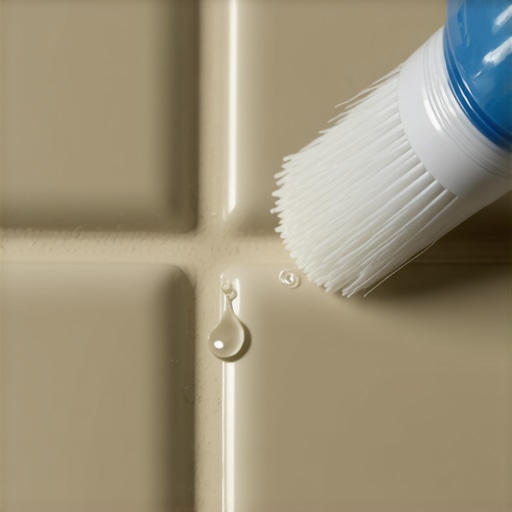
Hydrogen peroxide combined with baking soda creates a chemical paste that utilizes effervescence and oxidation to lift organic pet stains. This alkaline reaction neutralizes the acidic components of the urine while the oxygen bubbles physically dislodge urea crystals from the cement matrix of the grout line. I tell people to mix a thick paste of baking soda and 3 percent hydrogen peroxide. You want it the consistency of wet sand. Slather it on the grout line and let it sit. Do not rush it. The chemistry needs time to work. As the peroxide breaks down, it releases pure oxygen. This is a cold combustion process. It burns the organic matter without damaging the cement. If the stain is particularly stubborn, you might need a 12 percent concentration, but be careful with your hands. Use a stiff nylon brush. Never use a metal brush on grout. You will scrape the cement and leave metal shavings that will rust and create a whole new stain. Scrub in a circular motion to agitate the pores from all angles. Then, you must extract the slurry. If you let the paste dry on the grout, you are just redepositing the dirt. Wipe it up with a clean microfiber cloth while it is still damp.
The physical destruction of grout bonds
Over-saturation of grout joints with acidic cleaners or excessive water can lead to the structural failure of the cement bond. This results in powdering, cracking, and the eventual delamination of the tile assembly as the calcium silicate hydrate bonds are dissolved by aggressive chemical exposure. People think more is better. They use harsh acids or heavy bleach. Bleach is a surface killer. It turns the stain white so you cannot see it, but the organic material is still there, and the high pH of the bleach is eating the lime in the cement. Over time, your grout will start to turn to sand. You will see it coming out in your vacuum. That is a sign that the chemical structure of the grout is gone. Hydrogen peroxide is a safer alternative because its byproduct is just water and oxygen. It does not leave behind a caustic residue that continues to eat the floor. However, you still have to be careful with the volume of liquid. If you soak a floor until the water sits in the joints, you are risking the bond of the thin-set to the subfloor. I have seen tiles pop right off the floor because someone was too aggressive with a steam cleaner or a soaking wet mop. Balance is everything in floor maintenance.
| Grout Type | Porosity Level | Flexural Strength | Best Use Case |
|---|---|---|---|
| Sanded Grout | Very High | Moderate | Joints wider than 1/8 inch |
| Unsanded Grout | High | Low | Narrow joints and polished stone |
| Epoxy Grout | Near Zero | Very High | Commercial kitchens and showers |
Comparing grout durability and stain resistance
Epoxy grout offers the highest level of stain resistance and structural integrity due to its non-porous resin base which prevents liquid absorption entirely. Unlike cement-based grouts, epoxy does not require sealing and is immune to the acidic erosion caused by pet accidents or harsh cleaners. If you are building a new house and you have three dogs, you are a fool if you do not use epoxy. It is a nightmare to install. It is sticky, it dries fast, and it requires a special touch. Most installers hate it because it requires more work. But once it is in, it is bulletproof. Water sits on top of it like it is on a piece of glass. If you have standard cement grout, you are in a constant battle with physics. You have to seal it every six to twelve months. And even then, a sealer is only a repellant. It buys you time. It does not make the floor waterproof. If a puddle of urine sits on a sealed cement grout line for eight hours while you are at work, it will eventually find its way through the sealer and into the pores. Epoxy is the only true solution for a maintenance-free life with pets. It costs more upfront, but it saves you from replacing the floor in five years when the smell becomes unbearable.
“Cementitious grout is inherently porous and requires a sealer to meet performance standards in moisture-rich environments.” – Tile Council of North America Standard
The shower pan failure path
Shower grout failures often begin at the change of plane where the floor meets the wall, leading to water intrusion behind the waterproofing membrane. Using hydrogen peroxide in a shower environment requires caution to ensure that mold spores are not just bleached, but physically removed from the porosity of the grout and caulk. I see it all the time in showers. People use the peroxide trick on the floor, but they ignore the corners. In a shower, the joint between the floor and wall should never be grout. It should be a 100 percent silicone caulk. Grout cannot handle the expansion and contraction of the two different planes. It will crack. Once it cracks, the peroxide trick is useless because the liquid is now behind the tile. You are just cleaning the surface of a leak. If you have pet stains or mold in your shower grout, you need to check the integrity of the joints first. If the grout is soft or falling out, stop cleaning and start repairing. The peroxide will bubble out the gunk, but it cannot fix a structural gap. Always rinse thoroughly in a shower. The soap scum can react with the peroxide and create a slippery film that is dangerous for anyone stepping in there later.
Protecting hardwood floors from liquid intrusion
Hardwood floors are highly hygroscopic, meaning they absorb moisture from the environment, leading to cupping, crowning, and permanent discoloration when exposed to liquid pet accidents. While hydrogen peroxide can be used on grout, it must be used with extreme caution on wood finishes as it can oxidize the tannins and cause lightening of the wood fiber. If that pet accident happens on your 3/4 inch solid oak, the peroxide trick is a different beast. You cannot leave a paste sitting there. Wood is a bundle of straws. It will suck the peroxide deep into the grain. If you have a dark floor, you will end up with a bleached white spot that looks worse than the stain. For wood, you have to be fast. Blot, do not rub. If the stain is already set and black, the wood is likely rotting from the inside due to the ammonia. At that point, you are not cleaning. You are sanding and refinishing. The chemistry of wood is different from the chemistry of stone. Respect the grain. If you have a high-traffic house with big dogs, solid wood is a liability. You need to look at engineered options with a thick wear layer or, better yet, a tile that looks like wood.
The myth of waterproof laminate
Laminate flooring is essentially compressed wood fiber with a photographic layer, making it susceptible to edge swelling and delamination if moisture penetrates the locking mechanisms. Even brands marketed as waterproof often only provide protection for the surface, while the joints remain a vulnerable point for liquid pet stains to cause irreversible damage. I hate the word waterproof in the laminate aisle. It is a marketing lie. The top is plastic, sure. But the seams are the weak point. If a pet pees on a laminate floor and it sits in the seam, the core will soak it up. Once that MDF core swells, it is over. It will never go back down. It is like a sponge that has been glued together. The peroxide trick is dangerous here. If you put too much liquid on a laminate seam, you are causing the very damage you are trying to clean. You have to be surgical. Use a damp cloth, not a wet one. If you have laminate, you need to be a hawk about spills. I have replaced entire living rooms because a water bowl was left on a laminate floor for a weekend. The edges curled up like a dead leaf. It is a tragedy. If you want real waterproof, you buy a high-end LVP or a tile.
Expert maintenance checklist for pet owners
- Test the existing grout sealer by dropping a small amount of water on the joint to see if it beads up.
- Vacuum the floor thoroughly to remove all dry particulates and pet hair before applying any liquid cleaners.
- Mix 3 percent hydrogen peroxide with baking soda to create a paste for targeted stain removal.
- Apply the paste only to the grout lines and avoid contact with adjacent hardwood or laminate surfaces.
- Allow the mixture to sit for twenty to thirty minutes until the bubbling action has ceased.
- Agitate the grout with a stiff nylon brush using circular motions to lift debris.
- Extract the dirty residue immediately with a clean microfiber cloth to prevent re-absorption.
- Rinse the area with distilled water to remove any remaining salts or alkaline film.
- Re-apply a high-quality penetrating sealer once the grout is completely dry to prevent future staining.
Final thoughts for the job site
Managing a home with pets and beautiful floors is a balance of chemistry and vigilance. You have to know what your floors are made of. You cannot treat hardwood floors the same way you treat showers or laminate. The hydrogen peroxide trick is a powerful tool in your kit, but it is not a magic wand. It requires an understanding of porosity, oxidation, and structural integrity. If you spend the time to seal your grout and maintain your subfloor, your floors will last a lifetime. If you ignore the science, you will be calling someone like me to tear it all out and start over. And trust me, you do not want to pay the bill for a full restoration because you were too lazy to use a moisture meter or a bottle of sealer. Treat your floor like the piece of engineering it is, and it will serve you well. Keep your tools clean, your subfloor level, and your peroxide ready. That is how a pro does it. No shortcuts. No excuses. Just physics and chemistry working together to keep a clean house.