
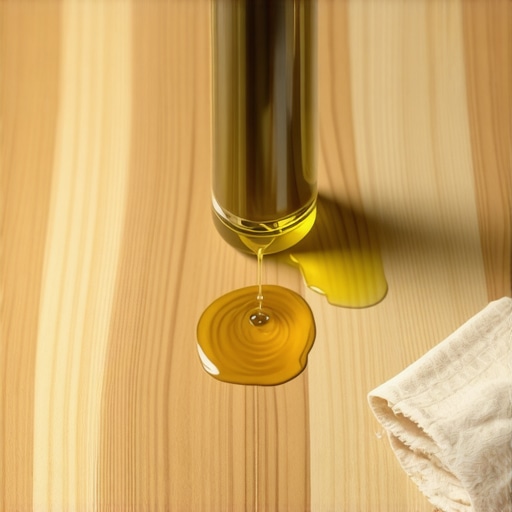
I once walked into a house where a $15,000 wide-plank walnut floor was cupping so bad it looked like a potato chip because the installer didn’t check the crawlspace humidity. That was a tragedy of moisture. But what I saw last Tuesday was a tragedy of ignorance. A homeowner had been rubbing extra virgin olive oil into their floor for six months because some blog told them it was a natural way to restore the shine. Now the whole house smells like a rancid salad and the wood is permanently stained. Wood floors are not cutting boards. They are sophisticated engineering systems with cellular structures that react to chemical introductions at a molecular level. My hands are covered in oak dust and my knees hurt from forty years of doing this right. I do not have time for Pinterest myths that destroy high-quality lumber. If you put kitchen oil on your floor, you are not conditioning it. You are feeding the bacteria that live in the grain and ensuring that no professional finish will ever stick to that wood again.
The cellular trap of non drying oils
Hardwood floors possess a cellular architecture that functions as a hygroscopic sponge, meaning the wood cells constantly exchange moisture with the air to reach equilibrium. When you introduce non-drying oils like olive oil, vegetable oil, or coconut oil, you are clogging these cells with organic matter that does not polymerize or harden. Unlike a professional floor finish that cures into a solid protective layer, kitchen oils remain liquid inside the wood. This liquid state allows the oil to migrate deep into the tracheids and vessels of the lumber. Once the oil is inside, it begins the process of oxidative rancidity. This is a chemical reaction where the fatty acids in the oil break down when exposed to oxygen, creating hexanal and heptanal. These are the compounds responsible for the sour, putrid smell that eventually emanates from an oiled floor. You cannot wash this out. It is part of the wood now.
“A floor is only as good as the subfloor beneath it; deflection is the enemy of every joint.” – Master Flooring Axiom
The death of the chemical bond
Floor refinishing requires a clean, chemical bond between the raw wood and the polyurethane or waterborne finish applied by a professional. When kitchen oils saturate the wood fibers, they create a contaminant barrier that prevents any future finish from adhering to the surface. Even if I come in with a drum sander and take off the top 1/8 inch of wood, the oil has often soaked deeper than the sandpaper can reach. When the new finish is applied, it will result in fisheyes or peeling, a phenomenon known as adhesion failure. The oil acts as a release agent. I have seen entire jobs ruined because a homeowner used Murphy Oil Soap or olive oil, and the new $3,000 finish job literally scraped off with a fingernail. You are effectively making your floor un-refinishable, which means when it gets scratched, your only option is a total tear out. That is an expensive mistake for the sake of a temporary shine.
How moisture meters detect the hidden danger
Moisture content is the most measurable metric in flooring, but kitchen oils mask the true hygroscopic state of the wood by creating a false reading on pinless meters. These meters work by sending an electromagnetic signal through the wood to measure capacitance. Because organic oils have different dielectric constants than water, they can trick the meter into thinking the floor is dry when it is actually saturated with liquid. This is dangerous because it leads to structural instability. The lignin in the wood, which acts as the natural glue holding the fibers together, can be softened by certain fatty acids over long periods. This leads to a softening of the grain. In showers or bathrooms where grout and tile meet wood, the oil can also seep into the expansion gaps, preventing silicone sealants from sticking and allowing water to bypass the vapor barrier.
| Oil Type | Drying Status | Polymerization | Refinishing Risk |
|---|---|---|---|
| Linseed Oil | Drying | High | Moderate |
| Tung Oil | Drying | High | Moderate |
| Olive Oil | Non-Drying | None | Extreme |
| Vegetable Oil | Non-Drying | None | Extreme |
| Mineral Oil | Non-Drying | None | High |
The myth of the natural glow
Aesthetic restoration should never come at the cost of structural integrity, yet many homeowners choose kitchen pantry staples because they fear VOCs in commercial products. This is a false dichotomy. Modern waterborne finishes have lower VOC levels than the fumes coming off a rancid kitchen oil application. When you apply oil, you are also creating a dust magnet. Because the oil never dries, it remains tacky on a microscopic level. Every piece of sawdust, pet hair, and skin cell that falls on the floor becomes glued to the surface. This creates a gritty paste that acts like sandpaper under your feet. Every time you walk across the room, you are abrading the very wood you were trying to protect. This mechanical wear is much faster than the natural wear of a cured finish. You aren’t polishing the floor; you are building an abrasive slurry.
“Wood is a hygroscopic material that will always attempt to reach an equilibrium moisture content with its environment.” – NWFA Technical Guidelines
Why laminate and grout suffer too
Laminate flooring is even more sensitive to oil contamination because it is not solid wood but a fiberboard core topped with a photographic layer. When oil hits the click-lock joints, it causes the HDF core to swell. Unlike water, which might eventually evaporate, the oil stays in the fibers, causing permanent peaking at the seams. If you have tile nearby, the oil will migrate into the porous grout. Grout is essentially a cementitious sponge. Once it absorbs kitchen grease or olive oil, it becomes a breeding ground for bacteria and mold. The oil also darkens the grout lines unevenly, making the floor look dirty regardless of how much you scrub. The chemical bond of the grout is also weakened by the lipids, leading to cracking and flaking over time.
The proper maintenance checklist
- Vacuum with a soft brush attachment to remove abrasive grit.
- Use a pH-neutral cleaner specifically formulated for hardwood.
- Never use steam mops on wood as they force moisture into the cells.
- Maintain indoor humidity between 30 and 50 percent.
- Buff the floor with a white pad to restore shine without adding chemicals.
- Consult a professional for a screen and recoat every 3 to 5 years.
The ghost in the expansion gap
Expansion gaps are the breathing room for every floor, usually hidden under baseboards or quarter round. When you pour oils onto a floor, they inevitably run into these perimeters. This is where the real damage happens. The subfloor, whether it is plywood or OSB, will absorb that oil. This can lead to delamination of the subfloor layers. If you have a concrete slab, the oil can interfere with the adhesive bond of future flooring installs. I have seen LVP floors fail because the subfloor was so saturated with cleaning oils that the vapor barrier wouldn’t sit flat. Every structural engineer will tell you that contaminants at the interface of materials are the primary cause of system failure. You are not just ruining the aesthetic; you are compromising the engineering of the entire house envelope. Keep the olive oil in the kitchen where it belongs. Your floors deserve a professional grade finish that actually polymerizes and protects the lumber for the next hundred years.