
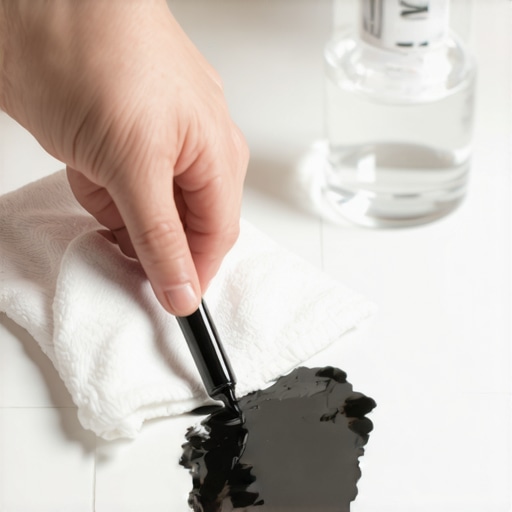
The physics of ink and the reality of porous tile surfaces
I spent three days grinding concrete on a job last month just so the floor wouldn’t click like a castanet. Most guys skip the leveling compound and think the underlayment will hide the dip. It won’t. I have spent 25 years with sawdust under my nails and the smell of WD-40 on my skin. I know that a floor is more than a surface. It is a chemical and structural system. When someone drops a permanent marker on a high-end porcelain tile or into a fresh grout line, they panic. They think the floor is ruined. It is not. You just need to understand the molecular bond of the pigment and the solvent capacity of isopropyl alcohol. This is not about magic. It is about chemistry. Permanent markers use a resin carrier and a solvent to deliver pigment. To get it out, you need a stronger solvent that can reach into the microscopic valleys of the tile glaze without dissolving the finish of your surrounding hardwood floors or damaging the protective wear layer of your laminate.
The reason rubbing alcohol works on ceramic and porcelain
Isopropyl alcohol acts as a powerful non-polar solvent that effectively breaks down the resinous binders found in permanent ink pigments. By applying a high concentration of alcohol, typically 91 percent or higher, you re-liquefy the dried ink. This allows the pigment to be lifted out of the tile pores via capillary action into a clean white cloth. If you use a lower concentration like 70 percent, you are fighting with too much water. You need the pure stuff to win this fight. I have seen homeowners try to use bleach. Bleach is an oxidizer, not a solvent. It will just sit on top and do nothing while the ink remains locked in the surface. You must dissolve the resin first. That is the secret. I have used this on thousands of dollars of Italian porcelain when a sub-contractor dropped a Sharpie. It works because it respects the chemistry of the surface.
“A floor is only as good as the subfloor beneath it; deflection is the enemy of every joint.” – Master Flooring Axiom
The danger of ink migration in cementitious grout
Grout is a porous material that acts like a sponge for liquids and pigments due to its cement-based composition. Unlike the tile itself, which is often vitrified and non-absorbent, grout lines are the weak point in any shower or floor installation. If you drop a marker on grout, the ink travels deep into the sand and cement matrix. Rubbing alcohol can still work here, but you cannot just wipe it. You have to dwell it. You saturate a cotton ball and press it firmly against the spot. You want the alcohol to soak into the grout to reach the depth of the ink. If you scrub, you just spread the black pigment into the neighboring clean grout. You must be precise. I have seen guys ruin an entire shower floor because they went at a small mark with a stiff brush and ended up with a gray smear that looked like a crime scene.
Surface Sensitivity Comparison Table
Before you start pouring chemicals, you need to know what you are standing on. Different floors react differently to solvents. Here is how common surfaces handle the isopropyl treatment.
| Surface Type | Alcohol Tolerance | Risk Level | Action Plan |
|---|---|---|---|
| Porcelain Tile | High | Low | Apply directly with cotton |
| Cement Grout | Medium | Moderate | Dwell and blot only |
| Solid Hardwood | Low | High | Will dissolve the finish |
| Laminate Flooring | Very Low | Extreme | May delaminate the top layer |
| Showers (Epoxy Grout) | High | Low | Safe for most resins |
The ghost in the expansion gap
Expansion gaps at the perimeter of a room are essential for allowing the floor to move with humidity changes. When you are cleaning near the edges of a tile floor, you have to be careful not to let excess rubbing alcohol or liquified ink run into the expansion gap. If that ink gets under the baseboard and into the subfloor, it can wick back up into the bottom of the tile or the hardwood floors nearby. I have seen permanent marker stains reappear weeks later because the installer let the cleaning fluid pool in the gaps. You should always work from the outside of the stain toward the center. This prevents the solvent from spreading the pigment further. It is the same logic I use when leveling a subfloor. You start at the high points and work down. You never let the material control you. You control the material.
The 1/8 inch that ruins everything
Precision in flooring is measured in sixteenths of an inch and the same applies to chemical applications. If you apply too much alcohol to a laminate floor while trying to clean a nearby tile transition, you will regret it. Laminate is essentially paper and glue under a plastic wear layer. If that alcohol hits the seam, it can penetrate the core and cause the edges to swell. Once laminate swells, it never goes back down. You will have a permanent bump that will catch the light every morning. I always tell people to tape off the surrounding area with blue painter tape before they start the alcohol treatment on tile. It takes two minutes. It saves you three thousand dollars in floor replacement costs. I have seen professional cleaners skip this and end up paying for a whole new living room floor.
Checklist for a successful ink extraction
- Verify the tile type is ceramic or porcelain and not a natural stone like marble.
- Obtain 91 percent or 99 percent Isopropyl Alcohol for maximum solvent strength.
- Prepare a stack of white lint-free microfiber cloths to avoid dye transfer.
- Test a small inconspicuous area near a closet or under a baseboard.
- Ensure the room is ventilated as concentrated alcohol fumes can be heavy.
- Apply the solvent to the cloth first, never pour it directly on the floor.
- Blot with a lifting motion rather than a circular scrubbing motion.
Why your subfloor is lying to you
Subfloors often appear flat to the naked eye but harbor structural dips that affect how cleaners and liquids pool. If your subfloor has a slight pitch, any alcohol you use to clean a tile stain will naturally flow toward the low point. This is why you must use small amounts of solvent. If you have a dip in the floor, the ink-filled alcohol will settle in the grout line at the lowest point. It will sit there and dry, creating a concentrated dark spot that is harder to remove than the original mark. I spent years learning how to read the topography of a room with a straightedge. You should do the same before you start dumping liquids on it. If the floor is not level, your cleaning solution is a moving target. You need to keep it localized.
“Every tile installation is only as durable as the bond between the thin-set and the substrate.” – Tile Council Standards
The chemistry of the wear layer on laminate and hardwood
Hardwood floors and laminate utilize various topcoats such as aluminum oxide or polyurethane to protect the decorative layer. These coatings are designed to resist foot traffic, not industrial solvents. While rubbing alcohol is great for tile, it is the enemy of wood finishes. If you get it on your hardwood floors, it will likely leave a white, cloudy mark. This is called blushing. It happens because the alcohol is drawing moisture into the finish or partially dissolving the resins. If you have a permanent marker on wood, you cannot use the tile method. You have to use a different approach, usually involving a specialized wood cleaner or a very light touch with a Magic Eraser, though even that is risky. Stick to the alcohol only for the hard stuff like porcelain and ceramic.
The final check on grout integrity
After you remove the marker stain, the grout may appear lighter or stripped of its sealer. Most high-quality tile installations include a grout sealer that protects against water and oil. Rubbing alcohol is an effective stripper. It will likely remove any sealer in the spot you cleaned. You cannot just leave it like that. Once the area is dry and the ink is gone, you must re-apply a small amount of penetrating sealer to that specific grout line. If you do not, the next time someone spills coffee or tracked-in dirt hits that spot, it will soak in instantly. It is like leaving a piece of raw wood out in the rain. You have to finish the job. I never leave a job site until the transitions are tight and the sealer is set. You should treat your home the same way. The details are what separate a pro job from a disaster. It is the difference between a floor that lasts forty years and one that fails in four. Use the alcohol. Get the ink out. Seal the grout. Keep your hardwood floors dry and your laminate seams tight. That is how you maintain a performance surface.