
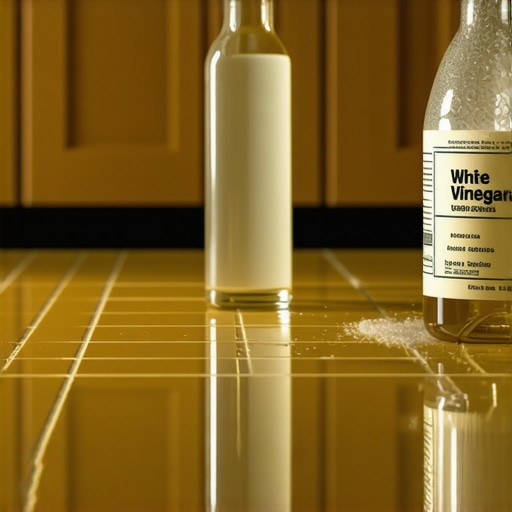
I spent three days grinding concrete on a job last month just so the floor wouldn’t click like a castanet. Most guys skip the leveling compound because they think the underlayment will hide the dip. It won’t. If the slab is out by more than an eighth of an inch over ten feet, you are building a drum, not a floor. But even after I get a subfloor perfectly flat, I see homeowners destroy my work in six months with a bottle of white vinegar. They think they are being green. They think they are being smart. In reality, they are pouring an acid onto a finished surface that was never designed to handle a low pH environment. I have seen fifteen thousand dollar installations look like a distressed wreck because someone followed a DIY blog instead of the NWFA guidelines. Flooring is a structural engineering challenge, and maintenance is a chemical maintenance protocol. When you ignore the chemistry, the floor fails. Period.
The acidic assault on your grout joints
Vinegar contains acetic acid which chemically reacts with the calcium carbonate found in cementitious grout. This reaction creates calcium acetate, a water soluble salt that literally dissolves the structural integrity of the grout joint. Over time, this process leads to pitting, cracking, and eventual grout failure in your showers and tile floors. Most people do not realize that grout is essentially a thin, porous concrete bridge between your tiles. When you apply an acid with a pH of 2.4 to 3.0, you are initiating a micro-etching process. Every time you spray that vinegar and water solution, you are stripping away a microscopic layer of the binder. Eventually, that grout becomes sandy. It starts to fall out in chunks. Then, water gets behind the tile. In a shower, this is the beginning of a catastrophic failure. Once moisture hits the thin-set and the wall board, you are looking at a full tear-out. I have seen grout that was once rock-solid turn into a mushy paste because of five years of ‘natural’ cleaning. It is not natural to dissolve your home. It is a chemical mistake that costs thousands of dollars to remediate. You need a pH-neutral cleaner that lifts dirt through surfactants, not through the dissolution of the substrate. If you can smell the salad dressing in your bathroom, you are killing your tile.
Why vinegar is a death sentence for hardwood floors
Hardwood floors rely on a protective topcoat of polyurethane or aluminum oxide to repel moisture and resist abrasion. Vinegar acts as a mild solvent that slowly eats through these finishes, leaving the wood fibers beneath exposed to humidity and spills. This leads to dulling, cupping, and premature finish failure. Wood is a cellular organic material. It breathes. It expands. It contracts. When I install a solid white oak floor, I am managing the moisture content of that wood. The finish is the only thing standing between the environment and the wood cells. When you use vinegar, you are essentially performing a slow-motion chemical strip. The acid breaks down the molecular bonds in the polyurethane. You will notice it first in the high-traffic areas. The shine disappears. It looks cloudy. No amount of buffing will bring it back because the finish is physically gone. I once walked into a house where the homeowner complained their floors were ‘turning gray.’ They had been mopping with vinegar and hot water for two years. They had stripped the finish so thin that the tannins in the oak were reacting with the moisture, causing iron gall ink reactions within the wood itself. The floor was ruined. They had to spend four dollars a square foot for a full sand and finish. All because they wanted to save five dollars on a proper hardwood cleaner. Use a product that is specifically formulated to keep the finish supple without etching the surface.
“A floor is only as good as the subfloor beneath it; deflection is the enemy of every joint.” – Master Flooring Axiom
The laminate swelling reality
Laminate flooring consists of a high density fiberboard core that is highly susceptible to moisture absorption through the tongue and groove locking system. Using vinegar and water solutions introduces excess liquid and acidity that can break down the resin bonds in the HDF core. This causes the edges to swell and the wear layer to delaminate. Laminate is not plastic. It is wood dust and resin compressed under immense pressure. The top layer is a photograph of wood covered in a melamine resin. While the top is tough, the joints are the Achilles heel. When you mop with a bucket of vinegar water, the liquid sits in those micro-gaps. The acid begins to weaken the resins. Once the moisture penetrates the HDF, the wood fibers swell. You see it as ‘peaking’ where the edges of the planks push up against each other. Once a laminate floor peaks, it is done. You cannot sand it. You cannot fix it. You have to replace it. The ‘waterproof’ claims of modern LVP and laminate often lead to a false sense of security. They might be waterproof on the surface, but the chemical stability of the locking mechanism is still vulnerable. A damp mop with a neutral cleaner is the only way to ensure the floor stays flat. If you see the edges of your laminate glowing or lifting, stop the vinegar immediately. You are literally feeding the monster that will tear your floor apart.
The science of pH neutral maintenance
Maintaining a floor requires a chemical balance where the cleaning agent has a pH of 7.0, matching pure water. Neutral cleaners effectively emulsify oils and lift dirt without triggering a chemical reaction with the flooring material or its protective sealants. This preserves the longevity of both the aesthetic and the structural components. We talk about pH because it is the scale of destruction for building materials. Acids (low pH) eat minerals and resins. Bases (high pH) can strip waxes and cause discoloration. A neutral cleaner is the ‘sweet spot’ for every surface from marble to vinyl. When I finish a job, I tell the client to throw away the vinegar. I tell them to look for cleaners that use surfactants. These molecules have a head that loves water and a tail that loves oil. They grab the dirt and lift it into the water so you can wipe it away. They do not need to ‘burn’ the dirt off with acid. This is especially true for natural stone like marble or travertine. Those materials are almost entirely calcium. Vinegar on marble is like pouring acid on a sugar cube. It will etch instantly. Even if you have ‘tough’ ceramic tile, the grout is still the weak link. Protect the grout and you protect the floor.
| Cleaning Solution | pH Level | Impact on Grout/Finish |
|---|---|---|
| White Vinegar | 2.4 – 3.0 | Highly Acidic; Dissolves Grout; Etches Stone |
| Lemon Juice | 2.0 – 2.5 | Highly Acidic; Rapidly Strips Wood Finish |
| Ammonia | 11.0 – 12.0 | Highly Alkaline; Strips Wax and Sealants |
| Neutral Cleaner | 7.0 | Safe; No Chemical Reaction with Substrate |
| Dish Soap | 8.0 – 9.0 | Mildly Alkaline; Can leave a dulling film |
Shower sanctuary or chemical war zone
Shower floors represent the most extreme environment for flooring due to constant water exposure and the accumulation of body oils and soap scum. Vinegar exacerbates the problem by stripping the sealers that protect the grout from mold and mildew penetration. This leads to deep-seated staining and structural rot within the shower pan. Most people use vinegar in the shower to kill mold. While it can kill some species, it also opens the pores of the grout. Once those pores are open, the mold can root deeper into the cement. You are creating a cycle of destruction. The acid also affects the thin-set bond. If you have a pebble shower floor, the vinegar can eat away at the stones themselves if they are limestone or marble based. I have seen beautiful river rock floors turn into a chalky, white mess because the homeowner sprayed them with vinegar every day to ‘prevent’ water spots. If you want to protect your shower, you need to use a sealer every six to twelve months and clean with a non-acidic, anti-fungal spray. The goal is to keep the water on top of the grout, not let it soak in. Vinegar is the best way to make sure the water gets exactly where it shouldn’t go. Below is a checklist of what you actually need in your cleaning kit.
- Microfiber mops that use static and soft fibers instead of abrasive scrubbing.
- pH-neutral floor cleaner concentrate specifically labeled for the surface type.
- Distilled water for mixing cleaners to avoid mineral buildup from hard tap water.
- A high-quality grout sealer (penetrating, not topical) for all tiled areas.
- Soft-bristled brushes for agitated cleaning of grout lines, never wire brushes.
“The chemistry of the cleaner must respect the physics of the floor; acidity is the silent killer of the modern home.” – Tile Council of North America Standard Reference
The reality of flooring is that it is a long-term investment. When you choose a floor, you are choosing a maintenance schedule. Hardwood is a hundred-year product if you treat it right. Tile can last several lifetimes. Even a good laminate or LVP should give you twenty years. But those timelines are cut in half when you use the wrong chemicals. We live in an era where ‘natural’ is a marketing buzzword that often ignores basic chemistry. Acetic acid is natural, but so is the erosion of the Grand Canyon. You do not want that erosion happening in your kitchen. Stop listening to the internet myths and start looking at the data sheets from the manufacturers. Your floor is a high-performance machine. You wouldn’t put vinegar in your car’s gas tank because it’s ‘natural,’ so stop putting it on your floors. Respect the bond, respect the finish, and respect the subfloor. That is the only way to keep your home standing strong for the next generation. It is not about the shine; it is about the structural integrity that the shine represents. Keep the acid for your salad and keep the neutral cleaners for your floors.