
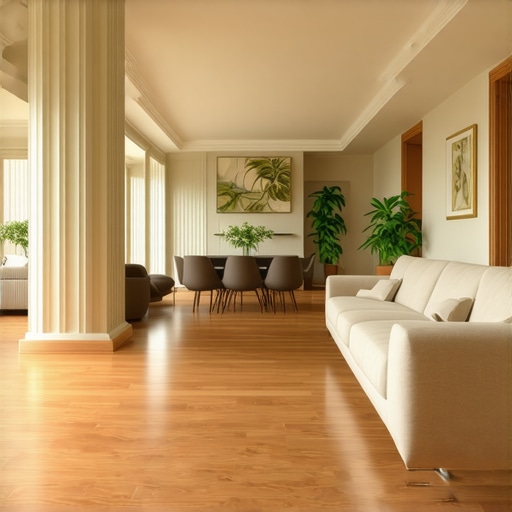
The Structural Reality of Why Hardwood Flooring Wins
I have spent twenty five years on my knees with a moisture meter and a level. My hands are permanently stained with oil based finishes and my lungs have seen more oak dust than most sawmills. I do not look at a floor as a decoration. I see it as a performance surface that must withstand the laws of physics and the chemistry of daily life. Most people walk into a showroom and pick a color. They see a pretty gray or a deep brown and think they have made a choice. They are wrong. They are choosing a structural component that will either support the home for a century or fail within a decade because they ignored the science beneath the surface.
The fifteen thousand dollar potato chip
Hardwood flooring is a long term investment because it maintains structural integrity and increases property value through biological durability. I once walked into a house where a $15,000 wide plank walnut floor was cupping so bad it looked like a potato chip because the installer did not check the crawlspace humidity. The homeowner was devastated. The planks were three quarters of an inch thick and seven inches wide. They had been nailed down over a damp subfloor without a proper vapor retarder. Within three months the wood did what wood does. it expanded. Because it had nowhere to go but up the edges lifted. This is the heartbreak of poor craftsmanship. If that installer had understood the molecular reality of cellular cellulose he would have known that wood is a living material even after it is milled. It breathes. It moves. It reacts to every drop of water in the air. When you invest in hardwood you are investing in a material that can be sanded and refinished five or six times. You are buying a floor that outlasts your mortgage. But you have to respect the physics of the installation or you are just throwing money into a dumpster.
The cellular biology of the plank
The inherent value of hardwood lies in its tracheid structures and lignin content which provide unmatched density and thermal mass. To understand why hardwood is superior we have to zoom into the microscopic level. Hardwood comes from angiosperm trees. These trees have vessel elements that transport water. When we mill this wood into flooring we are essentially using a bundle of straws. White oak is particularly prized because its pores are plugged with tyloses. This makes it naturally resistant to rot and moisture compared to red oak. This biological fact is why white oak was used to build ships and why it remains the gold standard for high traffic home environments. When you choose a real wood floor you are choosing a material with high thermal mass. It holds heat better than thin laminate or plastic based vinyl. This affects the energy efficiency of your home. It feels warmer underfoot in the winter because it is not a fast conductor of temperature. It is an insulator provided by nature.
“A floor is only as good as the subfloor beneath it; deflection is the enemy of every joint.” – Master Flooring Axiom
Why your subfloor is lying to you
Subfloor preparation determines the lifespan of hardwood because even a minor deviation in flatness leads to structural fatigue and fastener failure. Most guys skip the leveling compound. They think the underlayment will hide the dip. It won’t. I spent three days grinding concrete on a job last month just so the floor would not click like a castanet. If your subfloor has a dip of more than one eighth of an inch over a ten foot span your hardwood will eventually fail. Every time you walk over that dip the wood flexes. That flex puts stress on the tongue and groove joint. Over thousands of footsteps the wood fibers break down. The nails start to pull. Then you get the squeaks. A squeaky floor is not charm. It is the sound of a floor dying. We use self leveling underlayments and high compression plywood to ensure the base is as flat as a billiard table. This is where the real investment happens. You do not see the prep work but you feel it in every solid step you take for thirty years.
The myth of the waterproof laminate alternative
Real hardwood provides higher long term value than waterproof vinyl because it is a permanent architectural feature rather than a disposable plastic covering. I hear the word waterproof every single day. Big box retailers love that word. But here is the truth. Waterproof vinyl is a floating floor held together by tiny plastic clicking mechanisms. If your dishwasher leaks the water goes under the vinyl and sits there. It creates a petri dish of mold and you cannot see it until the smell starts. Real hardwood can be dried out if caught early. More importantly hardwood has a wear layer that is the entire thickness of the board in solid products or a thick lamella in engineered products. When a laminate floor gets scratched you throw it in the trash. When a hardwood floor gets scratched you sand it and it looks brand new. One is a consumable product. The other is an asset.
Janka ratings and the physics of impact
Selecting the right species based on the Janka hardness scale ensures the floor matches the mechanical demands of the specific household environment. Not all wood is created equal. If you have two golden retrievers and three kids you do not buy American Cherry. It is too soft. You will have dents within a week. You look at Hickory or Hard Maple. We measure this using the Janka scale which determines the force required to embed a small steel ball into the wood. It is a measure of density and resistance to impact. Below is a comparison of common species we use in high end builds.
| Species | Janka Rating | Stability Rank |
|---|---|---|
| Hickory | 1820 | Low |
| White Oak | 1360 | High |
| Red Oak | 1290 | Medium |
| Black Walnut | 1010 | Low |
| American Cherry | 950 | Low |
The one eighth inch that ruins everything
Expansion gaps are the most misunderstood requirement of hardwood installation because they allow for the natural hygroscopic movement of the wood. Wood is hygroscopic. It gains and loses moisture based on the relative humidity of the room. In the humid summers of the South wood planks will grow in width. In the dry winters of the North they will shrink. If you install hardwood tight against a wall or a stone fireplace it has nowhere to expand. It will buckle or it will push your baseboards off the wall. I have seen entire kitchen islands shifted because the floor expanded with enough force to shear screws. We leave a minimum of a half inch gap around the perimeter. This gap is hidden by the baseboard and shoe molding. It is a breathing room for the architecture. Many DIY installers think they are being precise by cutting it tight. They are actually sabotaging the installation. You must respect the movement or the movement will destroy your work.
Humidity management and regional climate logic
Local climate conditions dictate the required acclimation period and the specific type of hardwood construction necessary for long term stability. If you live in the swampy humidity of Houston solid wood is a risky choice unless you have a dedicated dehumidification system. You are better off with a high quality engineered floor with a Baltic Birch plywood core. The cross grain layers of the plywood counteract the natural movement of the wood. If you are in the dry heat of Phoenix you have the opposite problem. The wood will shrink until you can see the tongues. This is where acclimation comes in. We do not just drop the wood and nail it. We moisture test the subfloor and the wood. We wait until they are within two percent of each other. Sometimes that takes three days. Sometimes it takes two weeks. We use pinless meters to scan the entire lot. If you rush this step the floor is doomed before the first nail is driven.
“Wood flooring is the only floor covering that increases in value as it ages, provided the moisture equilibrium is maintained.” – NWFA Technical Manual
The real math of resale value
Hardwood flooring offers a superior return on investment because it is a universally recognized mark of quality that influences appraisal values. Real estate agents will tell you that hardwood is the first thing buyers look for. It is a signal of a well built home. You can take a house with old carpet and replace it with oak and the perceived value jumps by tens of thousands of dollars. This is because hardwood is permanent. It is classic. It does not go out of style like the gray wash laminate trends of five years ago. It is an investment in the equity of your property. Even if the finish gets dull in twenty years a simple screen and coat brings back the luster. You are not just buying a floor. You are buying a legacy.
The final check on installation mastery
Successful hardwood installation requires a strict adherence to chemical and mechanical protocols that most installers ignore to save time. I do not take shortcuts. I do not care if the builder is in a hurry. If the concrete slab is reading seven percent moisture we are not laying wood today. We are waiting for the calcium chloride test results. We are checking for deflection in the joists. We are ensuring the adhesive has the correct shear strength. This is the difference between a floor that lasts ten years and a floor that lasts a hundred. Use this checklist to ensure your installer knows what they are doing.
- Verification of subfloor moisture content below twelve percent for wood and four percent for concrete.
- Acclimation of planks inside the actual room for at least seventy two hours.
- Use of a high quality vapor retarder like Aquabar B or a liquid membrane.
- Strict adherence to the nail spacing requirements of the NWFA.
- Maintaining an expansion gap at every vertical obstruction including doorways.
- Correct use of transition strips at all wet area boundaries like showers and kitchens.
The structural preservation of the home
A hardwood floor is a living part of the house. It requires care but it gives back more than any other material. It is a heat sink. It is a structural stabilizer. It is a historical record of the home. When you see the wear patterns in a hundred year old farmhouse you are seeing the life of the family. You cannot get that from a plastic floor. You cannot get that from tile and grout that will eventually crack as the house settles. Wood moves with the house. It bends. It survives. As long as you respect the moisture and the prep work hardwood remains the absolute best investment for any homeowner who cares about quality. It is the gold standard for a reason. Do not let anyone tell you that a click lock floor is just as good. They are not the ones who have to fix it when the plastic tabs snap. Trust the oak. Trust the science. Trust the craftsman who knows that the most important part of the floor is the part you never see.”,”image”:{“imagePrompt”:”A professional photo of a master installer measuring the moisture content of a white oak plank with a digital meter in a high-end residential setting.”,”imageTitle”:”Professional Hardwood Floor Moisture Testing”,”imageAlt”:”A master installer uses a moisture meter on a white oak floor plank to ensure proper acclimation.”},”categoryId”:0,”postTime”:”2023-10-27T10:00:00Z”}