
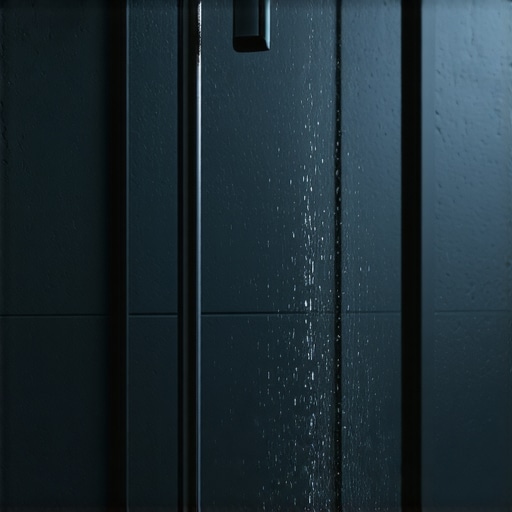
You spent thousands of dollars transforming your bathroom into a modern sanctuary. You selected the perfect charcoal grout, carefully calculated the slope of your custom shower pan, and installed striking matte black fixtures. Then you took one shower. Within twelve hours, those beautiful, velvety black surfaces looked like they had been splattered with white paint. The reality of matte black hardware is a lesson in surface chemistry and fluid dynamics that most homeowners learn far too late.
As an installer who has spent twenty five years prepping subfloors, laying tile, and waterproofing wet areas, I have seen every aesthetic trend come and go. I once walked into a house where a homeowner had spent fifteen thousand dollars on wide-plank walnut. The floor was cupping so badly it looked like a potato chip because they ignored the crawlspace humidity. I see the exact same disregard for physical science when people select bathroom fixtures. They choose materials based on Pinterest photos rather than the chemical composition of their local water supply. Matte black is the hardwood floor of the plumbing world, gorgeous when pristine but unforgiving of real-world physics.
The microscopic chemistry of water spots on matte surfaces
Matte black shower hardware shows water spots instantly because its textured surface traps dissolved minerals like calcium and magnesium while the dark background provides high visual contrast. Unlike polished chrome which reflects light away from surface deposits, matte coatings absorb light and highlight the chalky white crystalline structures left behind after evaporation.
To understand why this happens, we have to look at the surface at a microscopic level. Standard chrome or polished nickel hardware is incredibly smooth. Light bounces off these surfaces at uniform angles, a phenomenon known as specular reflection. When water evaporates on a polished surface, it leaves behind mineral deposits, but the high reflectivity of the metal helps disguise the thin film of calcium carbonate. Matte black finishes are achieved by creating a microscopic roughness on the metal surface. This rough texture scatters light in every direction, which is what gives the fixture its flat, non-reflective appearance. Unfortunately, this exact same microscopic roughness acts like a series of tiny hooks. The tiny physical depressions in the finish catch and hold water droplets. Instead of sheeting off the metal, the water pools in these microscopic valleys. As the H2O molecules evaporate into the humid air of your bathroom, they leave behind every single dissolved mineral they carried.
“A floor is only as good as the subfloor beneath it; deflection is the enemy of every joint.” – Master Flooring Axiom
The white spots you see are not actually stains on the metal itself. They are crystalline structures of calcium carbonate, magnesium sulfate, and silica. In regions with hard water, these minerals are highly concentrated. When the water evaporates, it leaves behind a solid mineral crust. Because black is the absolute opposite of white on the color spectrum, the contrast is stark. You are essentially looking at chalk dust on a blackboard.
How chemical bonding alters your bathroom materials
When you spray water onto a surface, the behavior of that water is dictated by surface energy. Polished metal has high surface energy, which allows water to spread out and sheet off quickly. Matte coatings, especially those achieved through cheap powder coating rather than chemical physical vapor deposition, have low surface energy. This causes water to bead up into tight droplets. The taller the droplet, the longer it takes to evaporate, and the more concentrated the mineral deposit becomes when it finally dries.
This same chemical principle applies to other areas of your bathroom, particularly your tile installation. When laying tile in a wet environment, the selection of grout is just as critical as the hardware finish. Cementitious grout is highly porous and will absorb mineral-laden water, leading to white efflorescence over time. Epoxy grout, which has low porosity and high chemical resistance, prevents this absorption. Just as a low-quality matte finish traps minerals, cheap, unsealed grout will trap water and dissolve salts, eventually ruining the clean lines of your shower design.
The manufacturing process of the hardware also plays a massive role in its durability. Low-end fixtures are made using powder coating, where a dry plastic powder is electrostatically applied to the brass or zinc alloy and then cured under heat. This creates a relatively thick, soft layer that scratches easily and provides deep microscopic pockets for minerals to hide. High-end matte black fixtures utilize physical vapor deposition. This process takes place in a vacuum chamber where vaporized metals are chemically bonded to the substrate at a molecular level. Physical vapor deposition finishes are incredibly thin, exceptionally hard, and much smoother than powder coatings, making them significantly more resistant to both mineral buildup and scratching.
The structural reality of bathroom humidity and mineral scaling
In a poorly ventilated bathroom, humidity lingers for hours after a shower. This slow drying process is the perfect breeding ground for heavy mineral scaling. When the air remains saturated, water droplets on your matte black shower head, mixing valve, and hand shower evaporate at an incredibly slow rate. This slow crystallization process allows the calcium molecules to build organized, tough crystalline structures that bond tenaciously to the textured matte finish.
This is identical to the moisture issues we face in flooring. When we install laminate or hardwood floors over a concrete slab, we must test the concrete with a calcium chloride test or an in-situ relative humidity probe. If the moisture emission rate is too high, the flooring will fail. In the bathroom, if your exhaust fan is not pulling enough cubic feet of air per minute, the ambient humidity will prolong the evaporation cycle. This exacerbates both water spotting on your fixtures and mold growth in your grout lines. You cannot treat fixtures or flooring as isolated design elements, they are part of a complex thermodynamic system.
| Finish Type | Application Method | Scratch Resistance | Mineral Visibility | Average Lifespan |
|---|---|---|---|---|
| Powder Coated Matte Black | Electrostatic Spray Paint | Low | Extreme | 2 to 5 Years |
| PVD Matte Black | Physical Vapor Deposition | High | Moderate | 10 to 15 Years |
| Polished Chrome | Electroplating | Very High | Low | 20 plus Years |
| Brushed Nickel | Electroplating and Brushing | Medium | Low | 15 plus Years |
The failure of protective coatings on textured hardware
Many homeowners try to solve the matte black crisis by applying aftermarket sealants, automotive waxes, or rain-repelling sprays. While these products can temporarily increase the surface energy and force water to sheet off, they ultimately ruin the very aesthetic you bought the hardware for. Most waxes and sealants fill in the microscopic texture that scatters light. Once these valleys are filled, the surface begins to reflect light unevenly, turning your beautiful matte black finish into a blotchy, semi-gloss mess.
Furthermore, these chemical coatings break down rapidly when exposed to hot water and alkaline body washes. As they degrade, they strip away unevenly, leaving patchworks of protected and unprotected metal. The areas where the sealant has washed away will trap minerals, while the remaining sealed areas will repel them, creating an incredibly ugly, mottled appearance that is almost impossible to clean without stripping the entire finish down to the base metal.
“Deflection under a tile installation must not exceed L over 360 of the span, or the tile will tent and the grout will crumble.” – TCNA Handbook Standards
The same mistake is made when homeowners try to fix squeaking wood floors by injecting random lubricants or expanding foams under the subfloor. It is a temporary cosmetic band-aid that fails to address the underlying structural deficiency. If your subfloor has a dip, no amount of foam will stop the movement forever. If your matte black hardware is cheap powder-coated brass, no amount of wax will stop the hard water from destroying its appearance.
A field-tested maintenance protocol for matte black fixtures
To keep matte black shower hardware free from destructive water spots, you must dry the fixtures with a microfiber cloth after every use and avoid all harsh chemical cleaners. Acidic descalers and abrasive scrubbing pads will permanently strip the delicate matte coating and expose the raw brass underneath.
If you are committed to the matte black aesthetic, you must accept that maintenance is a daily operational task. You cannot treat these fixtures with the same neglect as chrome. The following checklist represents the absolute minimum care required to prevent permanent mineral etching on your high-end bathroom hardware.
- Keep a dedicated plush microfiber cloth hanging inside the shower enclosure.
- Wipe down every matte black component immediately after turning off the water.
- Never use abrasive green scrubbing pads or steel wool on the finish.
- Avoid any cleaning products containing hydrochloric, phosphoric, or sulfamic acids.
- Clean weekly using a solution of fifty percent distilled water and fifty percent mild dish soap.
- Install a whole-house water softener if your grain hardness exceeds seven grains per gallon.
- Run your bathroom ventilation fan for at least thirty minutes post-shower to drop humidity levels.
The relationship between hard water and structural longevity
We must look at the larger mechanical picture. If your matte black hardware is covered in white spots, your entire plumbing system is under attack. The same calcium and magnesium that are ruining your aesthetic are also building up inside your shower mixing valves, clogging the tiny rubber nozzles on your rain shower head, and lining the interior of your copper or PEX supply lines. Hard water restricts flow rate, destroys the rubber cartidges inside your faucets, and reduces the efficiency of your water heater.
In the flooring industry, we know that if you do not control the moisture coming up from a concrete slab, the adhesives will emulsify and the wood will rot. In plumbing, if you do not control the mineral content of your water, your expensive fixtures will scale up and fail internally long before their warranty expires. Hard water is not just a cosmetic annoyance, it is a structural hazard to your home. Installing a water softener is not an option for matte black hardware, it is a strict technical prerequisite.
If you live in an area with hard water and refuse to install a water softening system, you should avoid matte black completely. Opt instead for polished chrome or brushed physical vapor deposition brass. These finishes handle mineral deposits far better and can withstand the aggressive acidic cleaning agents required to dissolve calcium scale. Choosing matte black in a hard water environment without mitigation is a guaranteed recipe for expensive replacement within three years.