
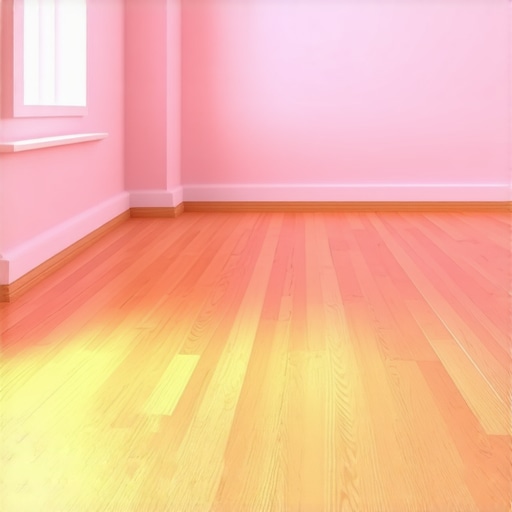
I once walked into a house where a $15,000 wide-plank walnut floor was cupping so bad it looked like a potato chip because the installer didn’t check the crawlspace humidity. The homeowner was crying. The contractor was blaming the wood. I just pulled out my moisture meter and showed them the 18 percent reading in the subfloor. Wood is a living thing. It reacts to its environment. When we talk about red oak floors looking pink under modern lighting, we are dealing with a similar biological and physical conflict. My hands are stained with finish and my lungs have seen enough oak dust to fill a silo. I know this wood. Red oak is the workhorse of the American home, but it is temperamental. It has a high tannin content and a cellular structure that acts like a prism when the wrong light hits it.
The cellular anatomy of Quercus rubra
Red oak floors look pink because the wood contains high concentrations of water-soluble tannins and anthocyanins that naturally lean toward the red spectrum. These pigments become hyper-visible when exposed to specific light wavelengths found in modern LED bulbs which lack the warm balance of traditional incandescent lighting. Red oak is an open-grained hardwood. If you look at it under a magnifying glass, you see massive vessels. These vessels are like straws. They absorb light and trap it. The sapwood is light, but the heartwood is where that salmon hue lives. When you sand this wood down to the raw grain, you are exposing the core biology of the tree. The cellular structure of Quercus rubra is fundamentally different from white oak. White oak has tyloses that plug those vessels, making it water-resistant. Red oak is open. It breathes. It absorbs. And most importantly, it reflects the red end of the light spectrum with aggressive efficiency.
“A floor is only as good as the subfloor beneath it; deflection is the enemy of every joint.” – Master Flooring Axiom
The deceptive nature of modern LED Kelvin ratings
Light temperature measured in Kelvin determines how the human eye perceives the underlying pigments in hardwood flooring installations. LED bulbs with high Kelvin ratings above 4000K emit a blue-rich light that creates a high-contrast environment, causing the natural red tones in oak to appear pink. Most homeowners swap out their old soft-white incandescents for daylight LEDs. This is a mistake for red oak. Incandescent bulbs lived in the 2700K range. They were heavy on the yellow and orange spectrum. This yellow light neutralized the pink. It turned it into a warm, golden honey tone. When you blast a red oak board with a 5000K LED, you are hitting it with blue light. In the world of color theory, blue light does not hide red. It makes it pop. It creates a cool-toned environment where the only warmth left is that pinkish hue in the wood grain. The Color Rendering Index or CRI also matters. Cheap LEDs have a low CRI, meaning they do not render colors accurately. They flatten the wood. They make it look like plastic. You need a bulb with a CRI of 95 or higher to see the true wood grain without the artificial pink glow.
| Light Temperature (Kelvin) | Effect on Red Oak | Visual Result |
|---|---|---|
| 2700K | Warm Yellow Cast | Golden/Amber |
| 3000K | Neutral Balance | True Wood Tone |
| 4000K+ | Cool Blue Cast | Salmon/Pink |
| 5000K+ | Harsh Daylight | Aggressive Pink |
Why your subfloor moisture makes the pink worse
Subfloor moisture levels directly impact the color stability of red oak because excess humidity can cause tannins to migrate to the surface of the wood. This process, known as tannin pull, intensifies the pink and red pigments as the moisture evaporates through the open grain of the planks. I have seen guys install 3/4 inch solid oak over a damp concrete slab with nothing but a thin layer of felt paper. That moisture is going to move. As it moves up through the oak, it carries the wood’s natural dyes with it. By the time it hits the finish layer, those dyes are concentrated at the surface. When the LED light hits those concentrated pigments, the pink effect is doubled. This is why moisture testing is the most important step in any job. You need a calcium chloride test for concrete or a pin-meter for plywood. If your subfloor is over 12 percent moisture, your floor color will never be stable. It will shift. The wood will swell. The light will catch the edges of the cupping boards and create shadows that make the floor look even more uneven and discolored.
Chemical strategies to neutralize salmon tones
Applying a green-based sealer or a reactive stain is the most effective mechanical way to neutralize pink tones in red oak floors. Because green is the opposite of red on the color wheel, these pigments cancel each other out to create a neutral brown or gray base. You cannot just slap a clear coat on red oak and expect it to look like white oak. It will not happen. I tell my clients they have two choices. They can lean into the red with a dark walnut stain, or they can fight the red with a green-based neutralizer. Bona and Duraseal make specific products for this. There are also water-based finishes that contain a slight white or gray tint. These are designed to sit on top of the wood rather than soaking in like oil-based poly. Oil-based polyurethane is the worst offender for pink floors. It ambers over time. When that amber yellow mixes with the wood’s natural pink, you get a strange orange-pink mess that looks like it belongs in a 1980s kitchen. Water-based finishes stay clear. They don’t add that yellow layer, which allows you to control the tone with the stain alone.
“Hardwood acclimation is not a suggestion; it is a structural requirement for long-term dimensional stability.” – Master Flooring Axiom
The refractive index of floor finishes
The gloss level of a floor finish changes how light reflects off the wood fibers and into the viewer’s eye. High-gloss finishes reflect light directly, which can create glare that hides the grain, while matte finishes diffuse light and allow the wood’s natural pigments to be seen clearly. If you have an issue with pink floors, stay away from high gloss. Gloss acts like a mirror. It picks up the color of the walls and the ceiling and the light bulbs. If you have a 5000K LED bulb and a gloss floor, you are essentially looking at a reflection of a pink-tinted mirror. A matte or satin finish breaks that light up. It scatters the photons in different directions. This diffusion makes the color look softer and more natural. It hides the intensity of the pink. I prefer a 10 percent sheen for red oak. It looks like raw wood but offers the protection of a modern ceramic-fortified finish. This brings us to the chemistry of the wear layer. A thick wear layer is good for durability, but if it is too thick and lacks UV inhibitors, it will degrade and yellow, bringing back those unwanted tones.
A checklist for the frustrated homeowner
- Check your bulb Kelvin rating and switch to 2700K or 3000K immediately.
- Ensure your LED bulbs have a CRI (Color Rendering Index) of 90 or higher.
- Paint your walls in cool tones like green or blue to counteract the floor warmth.
- Avoid yellow or warm-toned wall paints which will amplify the pink.
- Use matte or satin finishes to reduce light reflection and glare.
- Test your subfloor moisture to ensure tannin pull is not occurring.
- Consider a light green-based stain during your next sand and finish.
The ghost in the expansion gap
People forget that wood moves. It is not just about the color. It is about the physics of the installation. When I see a floor that has been slammed tight against the baseboards with no expansion gap, I know it is going to fail. That pressure changes how the wood looks. It creates micro-cupping. Those micro-cups catch the light at weird angles. In a room with high-output LEDs, those angles become glaringly obvious. They highlight the texture of the grain and make the pink tones look like stripes across the room. A proper 3/4 inch gap around the perimeter is mandatory. While most people want the thickest underlayment, too much cushion actually causes the locking mechanisms on LVP to snap under pressure. For hardwood, you need a stable, flat surface. If the subfloor has a dip of more than 1/8 inch over 10 feet, the floor will bounce. That bounce causes the finish to crack over time. Those micro-cracks catch dust and moisture, which then discolor the wood further. It is all connected. The subfloor, the moisture, the light, and the finish. If you ignore one, the others will betray you. If you want a floor that looks like a masterpiece, you have to respect the science of the materials. Stop looking at Pinterest and start looking at your moisture meter. That is the only way to get a floor that stays beautiful for fifty years. Red oak is a legend for a reason. You just have to know how to talk to it. Lighting is the last piece of the puzzle, but it is the one that people see first. Fix your bulbs before you sand your floors. It might save you five thousand dollars. “,”image”:{“imagePrompt”:”A macro photograph of red oak hardwood flooring planks being illuminated by a modern LED light panel, showing the detailed wood grain and the subtle pinkish-red hues of the wood fibers under cool-toned lighting.”,”imageTitle”:”Red Oak Grain Under LED Light”,”imageAlt”:”Detailed close-up of red oak wood grain showing pink tones under cool LED illumination.”},”categoryId”:123,”postTime”:”2023-10-27T10:00:00Z”}