
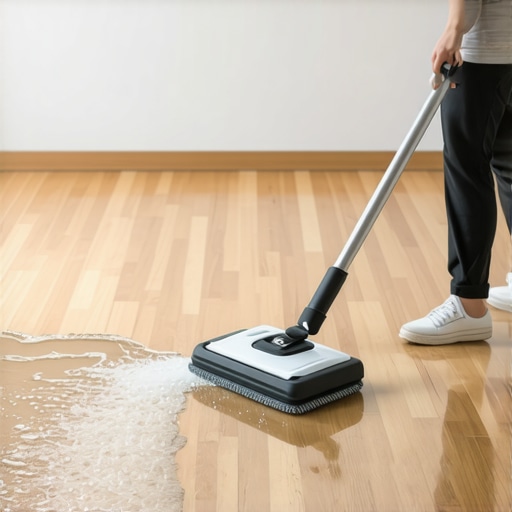
Steam mops are the fastest way to destroy your engineered hardwood floor
I have spent twenty-five years on my knees with a moisture meter and a level. I have seen the way sawdust sticks to your sweat and how WD-40 smells when it hits a hot concrete slab. Most homeowners look at a floor and see a color or a texture. I see a structural engineering challenge that is constantly fighting against the laws of physics. If you think your waterproof floor is a license to use steam, you are heading for a very expensive heartbreak. Wood is a living, breathing material even after it has been sliced and glued into an engineered plank.
I once walked into a house where a $15,000 wide-plank walnut floor was cupping so bad it looked like a potato chip because the installer didn’t check the crawlspace humidity. The homeowner made it worse by trying to steam clean the dirt out of the gaps. They thought they were sanitizing. In reality, they were pumping high-pressure vapor into the very heart of the wood cells. The floor was ruined in less than six months. That walnut deserved better. Your floor deserves better. You need to understand the molecular reality of what happens when heat and moisture meet a laminated product.
The hidden danger of vaporized water on wood fibers
Steam mops use pressurized water vapor to break down dirt, but this vapor is small enough to bypass the surface tension of a polyurethane finish and penetrate deep into the wood grain. This process causes rapid expansion of the wood fibers and weakens the chemical adhesives that hold the engineered layers together.
Engineered hardwood is a sandwich of technology. You have a wear layer of real wood on top, then several layers of plywood or high-density fiberboard underneath. These layers are glued together in a cross-grain configuration. This is meant to provide stability. However, when you introduce steam, you are not just cleaning the surface. You are introducing a gas. Water in its gaseous state has much smaller molecules than liquid water. These molecules find the microscopic cracks in your finish. They find the seams between the boards. Once that vapor gets inside, it condenses back into liquid water. It gets trapped. It cannot evaporate out quickly because the finish on top acts as a seal. This trapped moisture begins the process of delamination. The glue loses its grip. The layers start to pull apart.
The ghost in the expansion gap
Every hardwood floor requires a perimeter expansion gap of at least half an inch to allow the natural movement of the wood as it reacts to changes in relative humidity. Steam mops accelerate this movement beyond the structural limits of the wood, leading to buckling and joint failure at the edges of the room.
When you hit a floor with steam, you are essentially giving the wood a localized tropical storm. The temperature spike causes the wood to expand instantly. Wood is hygroscopic. It wants to reach an equilibrium with its environment. If you force moisture into it, the cells swell. In a standard installation, we leave a gap under the baseboards. This is the floor’s breathing room. If the expansion is too rapid, the floor has nowhere to go. It will lift. It will click when you walk on it. I have spent days grinding concrete on jobs just to ensure the subfloor was flat enough that the floor wouldn’t click, only to have a homeowner ruin it with a steam mop that forced the joints to swell and rub together.
“A floor is only as good as the subfloor beneath it, and moisture is the primary catalyst for structural failure in all wood-based products.” – Master Flooring Axiom
Thermal shock and the chemistry of adhesives
Thermal shock occurs when the high temperature of steam causes the top veneer of the hardwood to expand at a different rate than the cooler core layers underneath. This differential in expansion rates puts immense stress on the adhesive bond, leading to permanent structural damage and surface checking.
The adhesives used in engineered flooring are tough, but they are not invincible. Most are urea-formaldehyde or phenol-formaldehyde based resins. They are designed to withstand normal room temperatures. When you blast them with 212-degree steam, you are reaching the glass transition temperature of some lower-grade adhesives. They soften. Then they cool and harden. Repeat this a dozen times and the glue becomes brittle. You will start to see the veneer peeling away. This is not a warranty issue. No manufacturer will cover steam damage. You can check the NWFA guidelines. They are very clear about this. You are essentially cooking the glue that holds your floor together.
Comparison of Flooring Maintenance Methods
| Method | Moisture Level | Heat Level | Risk to Engineered Wood |
|---|---|---|---|
| Steam Mop | High (Vapor) | High (212F+) | Critical Failure |
| Damp Microfiber | Low (Liquid) | None (Ambient) | Low Risk |
| Traditional Bucket Mop | Very High (Liquid) | None (Ambient) | High Risk |
| Dry Dust Mop | None | None | Zero Risk |
The 1/8 inch that ruins everything
Maintaining a consistent thickness of the wear layer is vital for the longevity of your floor, yet steam mops can cause the wood to swell and the finish to cloud or peel, effectively shortening the life of the product by decades. A typical engineered floor may only have a three-millimeter wear layer, leaving no room for aggressive cleaning errors.
If you have a solid 3/4 inch oak floor, you might be able to sand out a mistake. With engineered wood, you often have a very thin veneer. If that veneer starts to cup or peel because of moisture damage, you cannot just sand it down. You will hit the plywood core. Once you hit the core, the floor is trash. It cannot be saved. I have seen people try to fix steam-damaged floors with wood filler and stains. It looks like a mess. The integrity of the wood is gone. The fibers have been crushed by the internal pressure of the swelling. It is like trying to un-bake a cake. You can’t do it.
“The National Wood Flooring Association explicitly warns against the use of steam cleaners on wood floors as they can cause irreparable damage to the finish and the wood itself.” – NWFA Technical Publication
The chemistry of the finish and clouding
Modern polyurethane finishes are designed to be water-resistant but not waterproof, and the intense heat of a steam mop can cause a chemical reaction known as blushing where moisture becomes trapped under the finish, creating white cloudy spots that cannot be wiped away.
Think about the finish on your floor like a skin. It is there to protect. But it has pores. Microscopic ones. When you apply steam, you are opening those pores. The water gets under the top layer of the finish. When it cools, it gets stuck. This creates that white haze. Many people think the floor is just dirty, so they steam it again. They are just adding more moisture to the trap. You are literally suffocating the wood. If you live in a high-humidity area like Houston, this is even worse. The ambient air is already saturated. The floor has no way to dry out. You are creating a petri dish for mold and mildew underneath your expensive planks.
Essential flooring maintenance checklist
- Use a dry microfiber dust mop daily to remove abrasive grit and sawdust.
- Only use cleaners specifically pH-balanced for polyurethane finishes.
- Avoid any cleaning tool that plugs into a wall socket.
- Ensure indoor relative humidity stays between 35 and 55 percent.
- Never leave standing water on a joint or seam for more than a minute.
- Use felt pads on all furniture to prevent deep scratches that allow moisture entry.
The truth about underlayment and pressure
While most people want the thickest underlayment possible, too much cushion actually causes the locking mechanisms on engineered wood and LVP to snap under pressure because the floor flexes too much. This flex creates gaps that are then exploited by moisture from steam mops.
I see this mistake every week. A guy buys the most expensive, thickest foam underlayment he can find. He thinks it will make the floor feel soft. It makes the floor unstable. Every time you walk, the tongue and groove joint is moving. It is rubbing. Over time, that joint breaks. Now you have an open gap. If you bring a steam mop into that room, the vapor has a direct highway to the subfloor and the underside of the plank. It is a recipe for a total floor replacement. You want a high-density, thin underlayment. You want a floor that stays still. Movement is the enemy of a long-lasting floor. Steam just adds fuel to the fire.
The regional climate impact on wood stability
The geography of your home matters more than the color of your boards. If you are in the dry heat of Phoenix, your wood is already fighting to hold onto whatever moisture it has. If you hit it with steam, the shock is even more dramatic. The wood will drink that water up, swell, and then shrink violently when the air dries it back out. This cycle of extreme expansion and contraction leads to surface checking, which are small cracks on the face of the wood. In a humid climate, the wood is already expanded. Adding steam can push it over the edge into buckling. Your cleaning routine must respect the local climate and the physics of the material. Stop treating your floor like a piece of plastic. It is a structural component of your home. Treat it with the respect that 25 years of engineering deserves.
{“@context”: “https://schema.org”, “@type”: “Article”, “headline”: “Why You Should Never Use a Steam Mop on Engineered Hardwood”, “author”: {“@type”: “Person”, “name”: “Master Floor Architect”}, “description”: “Expert analysis on why steam mops cause structural failure and delamination in engineered hardwood flooring.”, “publisher”: {“@type”: “Organization”, “name”: “Flooring Excellence”}, “mainEntityOfPage”: {“@type”: “WebPage”, “@id”: “https://example.com/steam-mop-engineered-hardwood”}}