
The geometry of a successful bond
Notched trowels provide the necessary air channels and ridge height required for floor adhesives to achieve maximum mechanical and chemical bonding. These ridges allow the air to escape during the bedding process, which prevents air pockets that weaken the installation. Without these channels, the adhesive cannot compress properly to achieve the necessary coverage percentage, leading to hollow spots or complete bond failure over time. I spent three days grinding concrete on a job last month just so the floor would not click like a castanet because the previous guy used a flat spreader. He thought the glue would just find its way. It did not. Instead, it created a series of air cushions that acted like tiny springs under the hardwood floors. Every time the homeowner walked across the room, the boards would bounce and snap against the concrete. It was a $10,000 mistake that started with a $5 trowel choice.
The failure of flat spreading
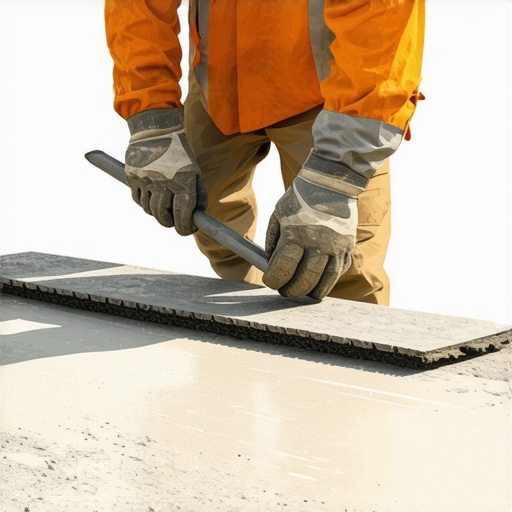
Flat spreading adhesive is a recipe for disaster because it creates a vacuum seal that prevents proper wetting of the floor material. When you spread glue flat, you are essentially creating a skin on the surface that dries faster than the bulk of the material. This is known as skinning over. By the time you lay your laminate or hardwood, the adhesive has lost its tackiness on the surface, but remains wet underneath. This results in poor transfer. You might think you have coverage because you see glue, but the molecular bond is nonexistent. The ridges created by a notched trowel expose more surface area to the air initially, which actually helps the solvents or water evaporate at a controlled rate, but the core of the ridge stays wet enough to transfer to the back of the board. [IMAGE_PLACEHOLDER]
“A floor is only as good as the subfloor beneath it; deflection is the enemy of every joint.” – Master Flooring Axiom
The physics of the ridge and collapse
Ridges created by a 1/4 inch by 1/4 inch square notch trowel are designed to collapse when the flooring is pressed into them. This collapse is the most vital part of the installation. When the ridge flattens, it spreads sideways, filling the valleys between the ridges. This movement ensures that the adhesive is pushed into the pores of both the subfloor and the flooring material. If you use a flat spreader, you lose this hydraulic pressure. The adhesive just sits there. In the world of showers and moisture-prone areas, this lack of ridge collapse means you are leaving voids where water can pool. Even with high-quality grout, moisture will find its way behind the surface, and those air pockets become breeding grounds for mold and structural rot. The chemistry of modified thin-set or urethane wood glue requires that pressure to activate the bond. It is not just about stickiness; it is about the physical interlocking of the materials at a microscopic level.
The oxygen trap and chemical curing
Most modern adhesives used for hardwood floors and laminate are moisture-curing or solvent-based. They need a specific rate of gas exchange to set properly. A flat layer of glue acts as a barrier, trapping moisture or solvents in the middle of the layer. This can lead to a phenomenon called plasticizer migration or simply adhesive failure where the glue stays soft and gooey for years. I have pulled up floors where the glue was still wet five years later because the installer flat-spread it too thick. A notched trowel ensures that the thickness is consistent. The height of the notch dictates the amount of glue on the floor. It is a precision measuring tool. If you use a flat trowel, you are guessing. One spot has an eighth of an inch, the next has a thirty-second. That inconsistency causes the floor to expand and contract at different rates, leading to the dreaded cupping and gapping that ruins a high-end oak installation.
| Trowel Notch Type | Typical Application | Coverage Rate |
|---|---|---|
| Square Notch 1/4″ x 1/4″ | Engineered Hardwood | 50-60 sq. ft. per gallon |
| V-Notch 3/16″ | Laminate and Thin Wood | 70-80 sq. ft. per gallon |
| U-Notch 5/16″ | Solid Hardwood Boards | 40-50 sq. ft. per gallon |
| Flat Spreader | Failure and Repairs | Unpredictable |
The 1/8 inch that ruins everything
Consistency is the difference between a floor that lasts a century and one that fails in a season. When you use a notched trowel, you are guaranteeing that every square inch of the subfloor has the exact same volume of adhesive. This is particularly vital when dealing with large format tiles or wide-plank hardwood. These materials are heavy and require a lot of initial grab to stay in place. A flat spread cannot provide that grab. The suction created when a ridge collapses under the weight of a board is immense. It creates a vacuum that pulls the board down and holds it there while the chemical bond forms. Without those ridges, the board just floats on a sea of grease. You will find yourself fighting with boards that drift and gaps that open up overnight. The mechanics of the 45-degree angle when troweling also ensure that you are not just dumping glue but are actually scrubbing it into the substrate, which is a requirement for a long-lasting bond.
- Always check the wear on your trowel teeth as they grind down on concrete.
- Hold the trowel at a consistent 45-degree angle to maintain ridge height.
- Periodically lift a board to verify 95 percent adhesive transfer.
- Ensure the subfloor is free of dust which acts as a bond breaker.
- Match the notch size to the manufacturer specifications of the flooring.
The science of mechanical bond
Hardwood floors are organic. They breathe. They move. They are constantly fighting the environment. The bond you create with your adhesive must be stronger than the internal forces of the wood as it reacts to humidity. A flat-spread adhesive lacks the structural integrity to resist these forces. The ridges from a notched trowel create a corrugated structure once they are flattened. This structure is far superior at resisting shear forces. If the wood wants to expand, the adhesive layer needs to be able to flex slightly without snapping. A uniform, notched application provides this flexibility. Think of it like a series of tiny shock absorbers. When the floor is flat-spread, the adhesive layer is brittle and uniform in a way that makes it prone to cracking. This is why you see laminate floors clicking and popping in the winter months. The bond has failed because it could not handle the micro-movements of the house. No amount of expensive grout or high-end finish can save a floor that is not anchored properly to the earth.
“Adhesive coverage is not a suggestion; it is a structural requirement for floor longevity.” – TCNA Installation Manual