
I spent three days grinding concrete on a job last month just so the floor wouldn’t click like a castanet. Most guys skip the leveling compound. They think the underlayment will hide the dip. It won’t. I have seen it a thousand times. That same mentality of skipping the prep work is why people end up with a bathroom that smells like a swamp. You can scrub the tile until your hands bleed, but if the underlying physics of your plumbing and subfloor are failing, that rotten egg smell is not going anywhere. I have spent 25 years on my knees looking at grout lines and drain assemblies. I know what a failure smells like. It is usually the scent of hydrogen sulfide gas. It is the smell of organic matter decaying in a dark, wet place where it does not belong. When you smell sulfur in your shower, you are not just smelling a dirty drain. You are smelling a structural or chemical breakdown in your home’s waste management system.
The chemistry of sulfur gas in residential plumbing
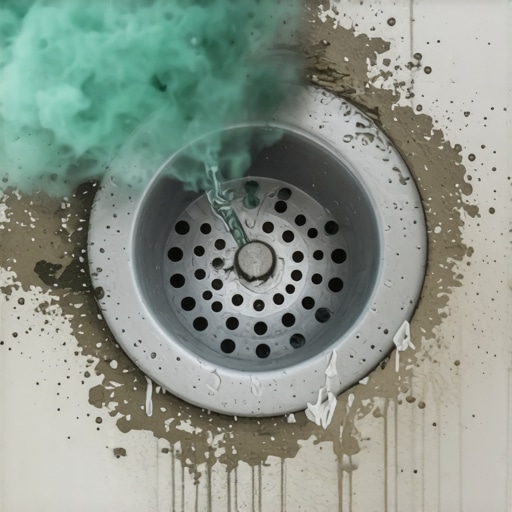
Rotten egg smells in shower drains are primarily caused by hydrogen sulfide gas produced by anaerobic bacteria living in the biofilm of your pipes. This occurs when organic matter like hair, soap scum, and skin cells decompose without sufficient oxygen in the plumbing assembly or the grout. This gas is a byproduct of bacteria that thrive in low oxygen environments. They eat the sulfur based proteins in your hair and skin. As they digest this material, they release gas. This is not a surface issue. It is a molecular issue. The biofilm attaches itself to the rough interior of PVC or cast iron pipes. It creates a slimy matrix that is resistant to simple water flushing. If your drain is not vented properly, these gases have nowhere to go but up into your nose. This is where the physics of airflow meets the chemistry of decay. You need to understand that the drain is a living ecosystem. If you do not manage the biology, the smell will persist regardless of how much bleach you pour down the hole.
“A floor is only as good as the subfloor beneath it; deflection is the enemy of every joint.” – Master Flooring Axiom
Why your grout is a breeding ground for bacteria
Grout is a porous cementitious material that absorbs water and organic debris if not properly sealed with a professional grade penetrative sealer. Once saturated, the grout lines become a microscopic habitat for sulfur producing microbes that emit foul odors even after superficial surface cleaning. I have seen beautiful tile jobs ruined because the installer used cheap, unsealed grout. Think of grout like a hard sponge. It has thousands of tiny voids. When you shower, water carries skin cells and soap fats into those voids. If the grout is not sealed, that material stays there. It rots. This is especially true if the floor was not sloped correctly. If there is a dip in the subfloor, water will pool under the tile. It sits there and stagnates. This is why I am obsessed with leveling. A flat floor is a dry floor. A dry floor does not smell like a dumpster. If you have laminate or hardwood floors in an adjacent hallway, this moisture can even wick into those materials, causing buckling and additional odors. Hardwood floors and moisture are natural enemies. If your shower is leaking into the subfloor, those oak planks will cup and warp long before you see the mold.
The physics of the dry p-trap failure
A p-trap maintains a water seal that prevents sewer gases from entering your bathroom by creating a physical liquid barrier. If the shower is unused or there is a vent stack issue, the water evaporates or siphons out, allowing raw sewer gas to bypass the plumbing barrier. The p-trap is a simple U-shaped pipe. It relies on gravity and the weight of water. When you do not use a shower for weeks, the water in that U-bend evaporates. Once the water is gone, the seal is broken. The air from the sewer line, which is full of methane and hydrogen sulfide, flows freely into your home. It is a common problem in guest bathrooms. Sometimes the issue is a clogged vent pipe on your roof. If that vent is blocked by a bird nest or leaves, the pressure in the system will pull the water out of your p-trap every time you flush a toilet elsewhere in the house. This is a mechanical failure. It has nothing to do with how clean your tile is. You can scrub until the grout is white, but if the p-trap is dry, the smell will remain.
| Material Type | Moisture Resistance | Porosity Level | Acclimation Period |
|---|---|---|---|
| Porcelain Tile | Extreme | Low (0.5%) | None |
| Solid Hardwood | Very Low | High | 7 to 14 Days |
| Engineered Wood | Moderate | Medium | 3 to 5 Days |
| LVP (Vinyl) | High | Zero | 2 Days |
Structural rot and the smell of hidden mold
Structural rot occurs when water penetrates the tile assembly and saturates the wooden subfloor or joists, leading to the growth of fungal colonies. This moisture trap creates a persistent musty or sulfurous odor that originates from beneath the finished flooring surface rather than the drain. This is the nightmare scenario. If the shower pan was not installed correctly, or if the waterproof membrane has a puncture, water is leaking into your house structure. I have pulled up floors where the plywood was so rotten I could put my thumb through it. This rot produces a very specific smell. It is earthy and sour. It mixes with the drain smells to create a cocktail of filth. This is why I always check the moisture levels with a meter. If the subfloor is holding more than 12 percent moisture, you have a problem. You cannot fix this with a bottle of Drano. You fix this with a sledgehammer and new pressure treated lumber. People worry about the cost of grout or the price of laminate, but they should be worrying about the integrity of their framing.
“Proper slope to drain is not a suggestion but a requirement for the longevity of the assembly.” – TCNA Guide
The microscopic reality of biofilm accumulation
Biofilm is a complex collection of microorganisms that stick to the surfaces of your drain pipes using a self produced slimy matrix. This matrix protects the bacteria from cleaners and physical scrubbing, allowing them to continuously produce odorous gasses despite regular maintenance. Think of biofilm like dental plaque for your pipes. It is tough. It is resilient. It loves the warm, humid environment of a shower drain. Most people think a little splash of vinegar will kill it. It won’t. You need mechanical agitation or enzyme based cleaners that specifically eat the organic matrix. If you look down your drain and see a black, sludge like substance, that is the culprit. That sludge is a skyscraper of bacteria. They are living their best life while you are holding your nose. This biofilm can also extend up into the grout lines if the tile was poorly installed. I have seen grout that was so saturated with biofilm it had changed color. No amount of bleach can penetrate a thick biofilm. You have to break it down chemically and physically.
Essential steps for a scent free bathroom
- Check the p-trap by running water for 60 seconds to ensure the seal is full.
- Use an enzyme based drain cleaner to digest organic biofilm without damaging pipes.
- Inspect the grout for cracks or missing sections where water can penetrate.
- Remove the drain cover and manually clean hair and debris with a wire brush.
- Ensure the bathroom exhaust fan is clearing humidity within 20 minutes of a shower.
- Seal all grout lines with a high quality penetrative sealer every six months.
If you follow these steps, you are doing more than just cleaning. You are performing maintenance. A floor is a machine. A shower is a machine. They require calibration. When I install a floor, I tell the homeowner that the job is not done when I pack up my tools. The job is a continuous process of managing moisture. If you let the moisture win, the bacteria win. It is that simple. Do not ignore the smell. It is your house telling you that something in the engineering has failed. Fix the prep, fix the slope, and keep the subfloor dry. That is the only way to keep the rot away and the air fresh. Stop looking for magic cleaners and start looking at the physics of your home.