
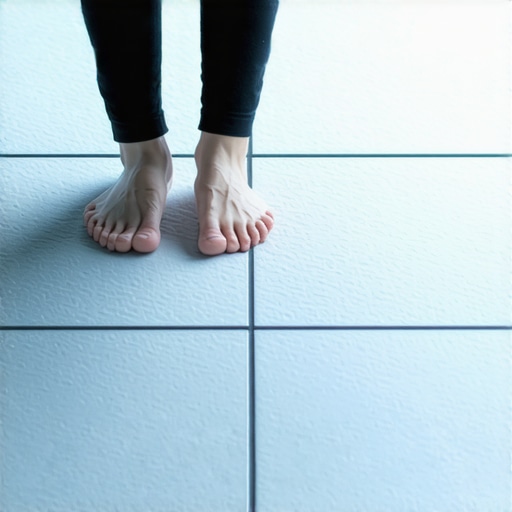
Listen. I have spent thirty years standing on these showroom floors, smelling the sharp scent of floor wax and the metallic tang of new ceramic, and I can tell you one thing for certain. A floor is not a decoration. It is a structural engineering project that most people treat like a cheap area rug. Homeowners walk into my shop every November with the same complaint. They tell me their tile feels colder than it did last year. They want to blame the product. They want to blame the manufacture. They never want to blame the shortcuts taken during the installation. Most guys skip the leveling compound. They think the underlayment will hide the dip. It won’t. I spent three days grinding concrete on a job last month just so the floor wouldn’t click like a castanet. That same philosophy applies to the temperature of your floor. If your porcelain feels like an ice cube, it is usually because of a failure in the physics of your subfloor or a shift in the moisture levels that you ignored during the summer months.
The physics of thermal bridging in residential slabs
Thermal bridging occurs when a conductive material creates a path of least resistance for heat to escape the living space into the cold substrate below. In a flooring context, your tile acts as a massive thermal battery. Porcelain and ceramic have high thermal mass. This means they absorb heat efficiently, but they also release it just as fast. If there is a void in your thin-set or if your subfloor has shifted, you are no longer just heating a tile. You are trying to heat the entire earth beneath your house. The molecular density of porcelain is much higher than ceramic, which makes it an even better conductor. When the ambient temperature drops, the tile begins to pull heat from your body via conduction. This is why your feet feel cold even if the thermostat says seventy degrees. The heat is moving from your skin into the floor. If the temperature feels significantly lower than last year, the most likely culprit is an increase in subfloor moisture or a failure in the perimeter expansion gaps that has allowed cold air to infiltrate the cavity between the slab and the finish floor.
“A floor is only as good as the subfloor beneath it; deflection is the enemy of every joint.” – Master Flooring Axiom
Why your subfloor is lying to you
A subfloor that was dry last year might be saturated this year due to changes in local water tables or a failure in the exterior grading of your home. Moisture is the ultimate thief of heat. Water has a thermal conductivity rate that is nearly twenty-five times greater than air. When a concrete slab becomes damp, its R-value drops to nearly zero. This moisture migrates through the capillary pores of the concrete and sits against the underside of your tile. Last year, if your slab was dry, the air pockets within the concrete provided a tiny bit of insulation. This year, if those pores are filled with water, your floor becomes a direct conduit to the freezing earth. I see this often in houses where the owners neglected their gutters or where the foundation has settled. That settling creates micro-cracks. Those cracks allow vapor to rise. You cannot see it because it is trapped under the tile, but you can feel it through your socks. This is why a moisture meter is more important than a tape measure in this business. If you did not put down a 6-mil poly film or a high-quality liquid vapor barrier before the thin-set went down, you are essentially living on top of a giant, frozen sponge.
The ghost in the expansion gap
Proper expansion gaps at the perimeter of a room are required to prevent buckling, but they can also become highways for cold drafts if not managed correctly. Most installers leave a quarter-inch gap and then just cover it with a baseboard. In a perfect world, that is fine. However, as a house ages, the wall plates can shrink. This creates a gap between the drywall and the subfloor. Cold air from the crawlspace or the exterior walls gets sucked into that gap by the stack effect. The air then travels under the tile. Since tile is often installed on a notched-trowel bed of mortar, there are tiny channels of air running under every single piece. This is essentially a subterranean wind tunnel. If you feel a draft at your ankles, your floor is being cooled from the bottom up. Last year, the house might have been tighter. This year, the wood has dried out, the gaps have widened, and the thermal envelope has been breached. You are not just dealing with cold tile. You are dealing with a ventilation failure that is manifesting as a cold surface. It is a structural engineering nightmare that people try to fix with a rug.
Thermal conductivity comparison of common flooring
| Material | Thermal Conductivity (W/m·K) | Typical R-Value |
|---|---|---|
| Ceramic Tile | 1.3 to 1.8 | 0.05 |
| Porcelain Tile | 1.5 to 2.0 | 0.04 |
| Solid Oak | 0.15 | 0.70 |
| Engineered Wood | 0.18 | 0.60 |
| LVP with IXPE | 0.20 | 0.45 |
The chemistry of polymer modified thin set
Thin-set mortar is not just glue; it is a complex chemical matrix designed to transfer load and manage thermal expansion through polymer additives. When an installer uses a cheap, unmodified mortar, they are creating a brittle bond. Over a year of seasonal temperature swings, that bond can develop micro-fractures. These fractures are too small to cause the tile to pop off, but they are large enough to create an air break. That air break acts as an insulator in the worst way possible. It prevents the ambient heat of the room from penetrating the floor, while allowing the cold from the slab to linger. High-quality mortars like Laticrete 254 or Mapei Ultracontact contain high concentrations of ethylene-vinyl acetate. These polymers allow the mortar to remain flexible. If your installer went to a big-box store and bought the cheapest bag of gray dust they could find, your floor is likely suffering from bond fatigue. This fatigue changes the way the floor handles heat. The physical connection between the tile and the substrate is what dictates thermal transfer. When that bond weakens, the floor feels different. It sounds hollow. It feels cold. It is the signature of a job done by a man who was looking at the clock instead of the chemistry.
The 1/8 inch that ruins everything
Flatness is not the same thing as levelness, and a floor that deviates by more than an eighth of an inch over ten feet will have significant thermal inconsistencies. I have argued with architects for decades about this. When a floor has a dip, the installer often tries to “back-butter” the tile or use extra thin-set to bridge the gap. This creates a thick spot. Mortar is a poor insulator. A thick bed of mortar takes longer to heat up and holds onto the cold longer than a thin, even layer. If you have spots on your floor that feel colder than others, you are likely walking over the areas where the subfloor was out of spec. Last year, you might not have noticed it because the winter was milder. This year, the cold has settled in. The areas with the thickest mortar are the ones that will feel like ice the longest. It is a matter of thermal mass. More mass requires more energy to change temperature. You are fighting a losing battle against a lumpy subfloor that should have been leveled with a high-flow gypsum underlayment before the first tile was ever laid. The TCNA standards are very clear about this. If you ignore the flatness, you are building a floor that will never be comfortable.
“Thermal resistance is cumulative; every layer of the assembly must be accounted for in the final calculation.” – TCNA Engineering Guide
Diagnostic checklist for cold flooring
- Check the moisture levels in the crawlspace or basement below the floor.
- Inspect the perimeter baseboards for air gaps or drafts.
- Verify the integrity of the grout joints to ensure no water is penetrating the substrate.
- Measure the temperature of the floor in multiple spots to identify thermal bridging.
- Evaluate the age of the HVAC system and the placement of floor vents.
- Check the exterior grading to ensure water is moving away from the foundation.
The role of grout and showers in thermal loss
Grout is porous and can act as a wick for moisture, which significantly alters the thermal performance of the entire floor assembly. If you have tile in or near showers, the grout is the first line of defense. Over a year, the sealer on that grout can fail. When you mop or when you step out of the shower, water penetrates those joints. It gets into the thin-set. Now you have a wet installation. As I mentioned before, wet materials conduct cold better than dry ones. Furthermore, if you have hardwood floors or laminate in adjacent rooms, the moisture can migrate horizontally. This is how you end up with a bathroom floor that feels like a walk-in freezer. The moisture is trapped under the porcelain. It cannot evaporate through the dense tile, so it just sits there, pulling heat away from the surface. While most people want the thickest underlayment, too much cushion actually causes the locking mechanisms on LVP to snap under pressure, and the same logic applies to tile. Too much “stuff” under the tile, like thick layers of uncoupling membranes that aren’t properly bedded, can create air pockets that ruin the thermal experience of the room. You need a dense, solid bond. Anything else is just an invitation for a cold foot. Stop looking at the color of the tile and start looking at the moisture meter. That is the only way you will ever have a floor that feels right. [IMAGE_PLACEHOLDER]