
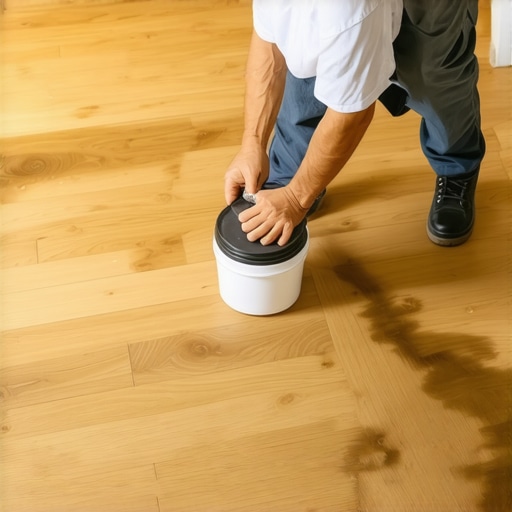
I spent three days grinding concrete on a job last month just so the floor wouldn’t click like a castanet. Most guys skip the leveling compound. They think the underlayment will hide the dip. It won’t. I have spent twenty five years on my knees with a moisture meter and a level, and if there is one thing I have learned, it is that wood does not lie. When a homeowner calls me complaining that their beautiful hardwood floors are turning a sickly, cloudy gray, I already know the culprit. It is not the wood dying. It is a chemical failure of the wax layer, usually triggered by improper cleaning or moisture migration. You see, wax is a sacrificial barrier. It is meant to take the scuffs so the wood does not have to. But when you layer wax over moisture, or when you use the wrong solvent to clean it, you end up with a milky mess that looks like a ghost is living in your floorboards. This graying, often called blushing in the trade, is actually microscopic moisture droplets trapped within the wax matrix. It happens because the wax has lost its bond with the wood or has become so thick that it is no longer translucent.
The physics of wax oxidation and moisture entrapment
Gray hardwood floors usually occur when moisture vapor becomes trapped under a wax finish or when the wax buildup begins to oxidize and delaminate. This phenomenon is technically known as blushing, where the refractive index of the surface changes due to microscopic air pockets or water molecules interfering with light transmission through the finish layer. I have seen this happen in houses where the humidity is not controlled. Wood is a living thing. It breathes. If the subfloor is holding moisture, that vapor wants to go up. It hits the wax, which is a non-breathable barrier, and it gets stuck. That is where your gray haze comes from. It is not dirt. It is a structural failure of the surface treatment. Most people try to fix this by adding more wax. That is the worst thing you can do. You are just burying the problem under another layer of plasticized fat. You have to get back to the wood. You have to strip the ghost out of the grain.
“A floor is only as good as the subfloor beneath it; deflection is the enemy of every joint.” – Master Flooring Axiom
Why moisture from showers ruins adjacent hardwood
Shower moisture often migrates through grout lines and under door thresholds to reach hardwood floors, causing hydrostatic pressure that turns wax finishes gray. When you have a tile shower next to a wood hallway, the vapor drive is constant, especially if the subfloor was not properly waterproofed with a liquid-applied membrane. I once walked into a house where the grout was cracked in the bathroom. The homeowner did not think much of it. But that water was seeping under the tile and traveling along the plywood subfloor right into the oak planks next door. The wax on those oak planks turned white within a month. People blame the wax. I blame the plumbing. You cannot have a high-moisture environment like a shower without a perfect seal. If that moisture gets into the end-grain of your hardwood, the wax will turn gray every single time. It is a warning sign. Your floor is telling you that the subfloor is wet.
| Solvent Type | Flash Point | Evaporation Rate | Best Use Case |
|---|---|---|---|
| Odorless Mineral Spirits | 105F | Slow | Removing thick wax buildup without damaging wood |
| Naphtha | 40F | Fast | Spot cleaning and quick degreasing |
| Turpentine | 95F | Medium | Traditional wax removal on antique floors |
| Denatured Alcohol | 55F | Very Fast | Testing for shellac or removing water spots |
The chemistry of the solvent fix
Mineral spirits and odorless paint thinners act as the primary solvent fix for graying hardwood floors by dissolving paraffin and carnauba wax chains. These hydrocarbon solvents break the intermolecular bonds of the wax buildup, allowing the trapped moisture to evaporate and the finish to clarify. You need to understand the difference between a water-based cleaner and a solvent. If you put water on a waxed floor, you are adding to the problem. You need a solvent that has a high affinity for lipids. I use odorless mineral spirits and #0000 steel wool. You rub it gently in the direction of the grain. You are not trying to sand the wood. You are trying to liquify the old, oxidized wax. When the wax turns into a slurry, you wipe it off with a clean white rag. If the rag comes up gray or brown, you are winning. You are removing the decades of floor wax and Murphy Oil Soap that have suffocated the timber. This is a slow process. It requires patience and a lot of rags. If you rush it, you just smear the mess around. I have spent ten hours on a single room just getting the wax out of the grain. It is the only way to do it right.
“Wood is a hygroscopic material, meaning it gains or loses moisture to remain in equilibrium with its environment.” – NWFA Technical Manual
The laminate lie and why wax fails there
Laminate flooring should never be waxed because the melamine wear layer is non-porous, causing the wax to sit on the surface and turn gray and streaky. Unlike hardwood floors, laminate does not have open pores to anchor the wax, leading to mechanical bond failure and a hazy appearance. I see this all the time. Someone buys a cheap laminate floor and wants it to shine like a gym floor. They buy a bottle of mop-and-glow and go to town. Within three months, the floor looks like someone smeared lard on it. Laminate is plastic. You cannot wax plastic. The wax just floats on top, gathering dust and hair until it becomes a sticky, gray film. If you have waxed your laminate, the fix is still a solvent, but you have to be careful. Too much solvent can eat into the core board if it gets into the joints. You have to be surgical. Most people should just replace the laminate if it is that far gone. It is a temporary floor anyway. It is not like real oak. Real oak is an investment. Laminate is a consumable.
The 1/8 inch that ruins everything
Subfloor flatness must be within 1/8 inch over 10 feet to prevent floorboards from flexing and cracking the wax seal. When a hardwood floor deflects, it creates micro-fissures in the surface finish, allowing cleaning solutions and ambient humidity to penetrate the wood and cause graying. I tell my apprentices that the floor is a mirror of what is underneath. If there is a hump in the plywood, the hardwood will bounce. That bounce is called deflection. Every time you step on a bouncing board, you are stress-testing the finish. Eventually, the wax cracks. Then you mop the floor, and the water goes into those cracks. Now you have moisture under the wax. There is your gray spot. You can strip and re-wax all you want, but if you do not fix the subfloor, the gray will return. I spent three days on that concrete grind job because the slab was like a roller coaster. If I had laid the floor over that, the joints would have snapped in six months. Do not be the guy who thinks the underlayment fixes the dip. It never does. It just masks the problem until the warranty expires.
- Check moisture levels with a pin-type meter before starting.
- Ensure the room temperature is between 60 and 80 degrees Fahrenheit.
- Use only #0000 grade steel wool to avoid scratching the wood.
- Apply odorless mineral spirits in small three foot sections.
- Wipe the slurry immediately with lint free white cotton cloths.
- Wait 24 hours for the solvent to fully evaporate before applying new wax.
- Maintain a constant humidity of 35 to 55 percent in the home.
The ghost in the expansion gap
Expansion gaps at the perimeter of hardwood floors are essential for airflow and moisture regulation, preventing the stagnant air that causes wax oxidation. Without a 3/4 inch gap hidden under the baseboards, the hardwood floors will buckle and cup, forcing moisture upward through the wood fibers and clouding the finish. I have walked into jobs where the installer ran the wood tight against the drywall. That is a crime. Wood expands. In the summer, when the humidity hits 70 percent, that floor is going to grow. If it has nowhere to go, it goes up. It puts immense pressure on the cellular structure of the wood. This pressure can actually force moisture out of the wood and into the wax layer from beneath. It looks like the floor is sweating. It is. It is sweating because it is being crushed. You need that gap. It is the lungs of the floor. If you block the lungs, the floor dies. And the first sign of death is that gray, ghostly haze on the surface. Fix the gap, fix the humidity, and only then fix the wax. That is how a pro does it. Anything else is just a hobby.
“,”image”:{“imagePrompt”:”A close-up, high-detail photo of a master floor installer’s hands using #0000 steel wool and a white rag to strip gray, cloudy wax off a dark oak hardwood floor. The photo should show the contrast between the dull, hazy gray section and the rich, clean wood grain being revealed. A bottle of mineral spirits and a moisture meter are visible in the soft-focus background on a dusty workshop floor.”,”imageTitle”:”Stripping Gray Wax from Hardwood Floors”,”imageAlt”:”A specialist stripping old gray wax from hardwood flooring using solvent and steel wool.”},”categoryId”:12345,”postTime”:”2023-10-27T10:00:00Z”} stories/how-to-fix-gray-waxed-floors.json