
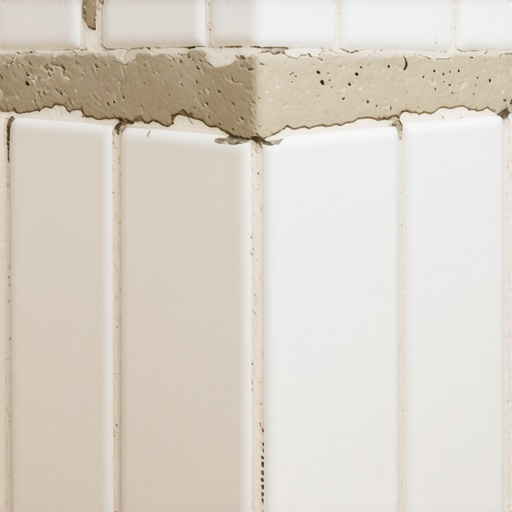
Why Your New Grout is Cracking in the Corners of the Shower
I spent three days grinding concrete on a job last month just so the floor wouldn’t click like a castanet. Most guys skip the leveling compound because they think the underlayment will hide the dip. It won’t. I have seen it a thousand times in showers too. A homeowner calls me because their brand new subway tile looks like it is falling apart at the seams. They blame the grout brand. They blame the color. They never blame the physics of the house itself. Last year, I walked into a master bath where the grout in the vertical corners was turning to powder. The installer had used a rigid portland cement grout where two walls met. As the house settled and the seasons changed, the wood framing behind the tile moved a fraction of an inch. That is all it takes. The grout had nowhere to go but to shatter. It is a structural engineering failure masquerading as a cosmetic nuisance.
The myth of the rigid corner
Grout cracks in shower corners because of differential movement between adjacent wall planes. When two walls meet at a ninety degree angle, they are often attached to different framing members that expand and contract independently due to moisture and temperature. Rigid grout cannot accommodate this movement, resulting in hairline fractures or total bond failure. This is why professional standards require flexible sealants at every change of plane.
We have to look at the chemistry of the material. Portland cement is a hydraulic binder. When you mix that powder with water, you are starting a chemical reaction that creates a rigid, crystalline matrix. It is basically a thin ribbon of concrete. Now, imagine a house. A house is a living, breathing organism made of wood, steel, and masonry. In the summer, the humidity rises and your floor joists swell. In the winter, the furnace kicks on and the wood shrinks. If you have hardwood floors in the rest of the house, you see this as small gaps between the planks. In a shower, you see it as a crack in the corner. Unlike hardwood floors or even laminate which have built in expansion gaps hidden under baseboards, tile is often locked in tight. When the walls move even a few millimeters, that rigid grout line is the weakest link. It snaps.
“A floor is only as good as the subfloor beneath it; deflection is the enemy of every joint.” – Master Flooring Axiom
The physics of the change of plane
A change of plane occurs wherever two surfaces meet at an angle, such as wall corners or the junction between the floor and the wall. According to the Tile Council of North America, these joints must be treated as expansion joints. Filling them with hard grout is a violation of industry standards because it ignores the reality of structural deflection and thermal expansion. Professionals use 100 percent silicone to bridge these gaps.
Think about the subfloor requirements. For a standard ceramic tile installation, we look for a deflection rating of L/360. If you are doing natural stone, it is L/720. That means the floor should not bend more than the length of the span divided by 360. If your joists are too thin or your plywood is too soft, the floor bounces. Every time you step in that shower, you are applying pressure. If the floor flexes, the joint where the floor meets the wall is under immense shear stress. If that joint is grout, it will crumble. If it is high quality silicone, it will stretch. It is the difference between a glass rod and a rubber band. Most discount installers use grout because it is faster and cheaper than color matching silicone, but they are just setting the fuse for a future leak.
Why your subfloor is lying to you
Subfloors often appear level to the naked eye while harboring hidden dips and peaks that stress grout joints. Even a deviation of 1/8 inch over ten feet can cause modern large format tiles to lip, creating uneven pressure points. When the subfloor is not perfectly flat, the tile cannot sit in a uniform bed of thinset, leading to hollow spots and eventual grout failure. Proper preparation requires mechanical grinding or self leveling underlayment.
| Material Type | Movement Tolerance | Recommended Joint Material | Primary Failure Mode |
|---|---|---|---|
| Sanded Grout | Very Low | Field Tile Only | Cracking and Powdering |
| Unsanded Grout | Low | Thin Wall Joints | Shrinkage Cracks |
| Epoxy Grout | Moderate | Heavy Traffic Areas | Bond Loss |
| 100% Silicone | High | Corners and Transitions | Peeling if contaminated |
The chemistry of the bond is another factor. When we talk about modified thinset, we are talking about polymers that help the mortar stick to the tile and the substrate. But the grout does not have those same high strength polymers. It is porous. It absorbs water. If water gets behind the tile because of a cracked corner, it starts to degrade the thinset. Eventually, the tile itself becomes loose. At that point, you aren’t just fixing grout. You are tearing out the whole wall. This is why I tell people to stop looking at the price of the tile and start looking at the price of the prep. A cheap tile on a perfect subfloor will last fifty years. An expensive marble on a bouncy floor will last five months.
The microscopic war inside your thinset
The curing process of cementitious materials involves a complex hydration reaction that can be disrupted by improper water ratios. If an installer adds too much water to the grout to make it easier to spread, they are effectively thinning out the polymer chains and creating a weak, brittle structure. Once the excess water evaporates, it leaves behind microscopic voids that make the grout susceptible to cracking under the slightest pressure.
- Always use 100 percent silicone in vertical and horizontal corners.
- Ensure the subfloor meets L/360 deflection standards before tiling.
- Verify that the framing is dry and the house has been conditioned for at least two weeks.
- Clean out the grout joints entirely before applying sealant to ensure a deep bond.
- Avoid using grout in transitions between different materials like tile and wood.
I have seen guys try to use ‘caulk’ from the big box stores. That stuff is usually an acrylic or a siliconized latex. It is garbage for a shower. It shrinks as it dries. Within a year, it will pull away from the tile. You need the real stuff. The 100 percent RTV silicone. It smells like vinegar while it cures because of the acetic acid, but it stays flexible forever. It bonds at a molecular level to the glaze of the tile. It creates a waterproof gasket that moves with the house. If your installer didn’t bring a tube of color matched silicone to the job, he didn’t finish the job correctly.
“Movement joints are not optional; they are the pressure relief valves of a structural installation.” – TCNA Handbook Guidelines
The 1/8 inch that ruins everything
Precision in joint spacing is not just about aesthetics but about distributing the mechanical loads across the entire surface. Narrow grout joints are often preferred for their clean look, but they offer less surface area for the grout to bond to the edge of the tile. In a corner, a narrow joint is even more prone to failure because there is less material to absorb the inevitable movement of the walls.
When you look at hardwood floors, you see the importance of the expansion gap. We leave half an inch around the perimeter. We hide it with baseboard and shoe molding. We do this because we know the wood will move. Why people think tile is different is a mystery to me. Tile is just a stone skin. If you don’t give that skin a place to move, it will tear itself apart. The corners are the stress points. If you see a crack there, do not just smear more grout over it. That is like putting a band aid on a broken leg. You have to dig out the old grout, clean the joint, and fill it with the correct flexible sealant. That is the only way to stop the cycle of cracking and leaking. Your shower is a wet environment. Any crack, no matter how small, is an invitation for mold and rot to take hold in your wall cavity. Respect the physics, or the physics will ruin your home.