
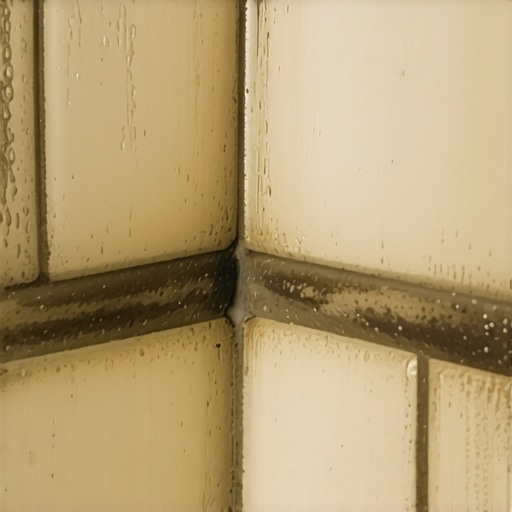
The hidden trap beneath the tile surface
Shower grout stays damp because it is a porous cementitious material that absorbs water through capillary action. If the subfloor slope is inadequate or the drain weep holes are clogged, moisture becomes trapped in the mortar bed, leading to persistent dampness and potential mold growth. This is not just an aesthetic issue, it is a structural warning sign that water is lingering where it shouldn’t. I spent three days grinding concrete on a job last month just so the floor wouldn’t click like a castanet, and that same level of precision is required for shower pans. Most guys skip the leveling compound. They think the underlayment will hide the dip. It won’t. When I walk into a bathroom and smell that stale, metallic scent of wet cement, I know exactly what I am going to find when I pull up a tile. The subfloor is usually saturated because the installer treated the tile as the waterproof layer. Tile is not waterproof. Grout is not waterproof. They are the decorative armor, but the real work happens in the chemistry of the membrane and the physics of the slope.
“A floor is only as good as the subfloor beneath it; deflection is the enemy of every joint.” – Master Flooring Axiom
The molecular reality of cementitious grout
Cement-based grout is composed of a mixture of Portland cement, graded sand, and pigments that form a crystalline structure when cured. This structure is naturally hydrophilic, meaning it has a high affinity for water and pulls liquid into its micro-pores through surface tension. When you look at grout under a microscope, it looks like a sponge made of stone. If your grout remains dark and wet for forty eight hours after a shower, it means the water has migrated past the surface and is sitting in the thin-set or the mud bed. Unlike hardwood floors that show distress through cupping or laminate that swells at the edges, tile hides its failure. The water sits there, stagnant. In my twenty five years of pulling up failed showers, the culprit is almost always a lack of hydrostatic pressure relief. If the water cannot find a way out, it stays in the grout lines. The polymers in the grout can actually begin to re-emulsify if they are submerged for long periods, leading to a soft, chalky texture that you can scrape out with a fingernail.
The physics of the drain weep holes
Drain weep holes are small openings in the drain flange designed to allow secondary moisture to exit the mortar bed and enter the plumbing waste line. When these holes become clogged with thin-set mortar or hard water deposits, the shower pan becomes a swimming pool beneath the tile. The water fills the pores of the grout from the bottom up. This is a common failure point for DIY installers who slap a massive amount of mortar around the drain assembly without clearing the channels. It does not matter how expensive your Italian marble is if the five cent weep hole is blocked. I have seen homeowners spend thousands on high-end finishes only to have the room smell like a swamp because the installer was lazy with a trowel. You have to ensure that the pre-slope, which is the layer of mud beneath the liner, is pitched at exactly one quarter inch per foot. Without that pitch, gravity works against you. The water just sits on the liner, saturating the mortar bed and keeping those grout joints dark forever. It is a mechanical failure disguised as a cleaning problem.
| Grout Type | Porosity Level | Chemical Base | Cure Time |
|---|---|---|---|
| Sanded Grout | High | Portland Cement | 48 Hours |
| Un-sanded Grout | High | Portland Cement | 48 Hours |
| Epoxy Grout | Near Zero | Resin and Hardener | 24 Hours |
| Urethane Grout | Low | Premixed Polymer | 7 Days |
The myth of the topical sealer
Grout sealers are designed to be oleophobic and hydrophobic, but they are breathable membranes that allow vapor to escape. If you apply a sealer to grout that is already damp, you are effectively locking the moisture into the substrate, which can lead to efflorescence. Efflorescence is that white, crusty powder that appears on grout lines, caused by minerals being carried to the surface as water evaporates. Many people think they can just keep adding layers of sealer to stop the dampness. This is a mistake. If the moisture is coming from behind the tile because of a failed waterproofing membrane or a lack of a vapor barrier, the sealer will simply peel off. You cannot fix a plumbing or structural drainage issue with a liquid you buy at a hardware store. Real solutions require looking at the vapor drive within the wall cavity and the floor assembly. If your bathroom has poor ventilation, the air stays saturated, and the grout never gets a chance to dry out. It is a simple matter of evaporation rates. If the room is at eighty percent humidity, that wet grout has nowhere to send its moisture.
“Standard cementitious grout is naturally porous and serves as a filter, not a waterproof barrier.” – TCNA Technical Advisory
Regional climate impact on drying times
High humidity regions like the Gulf Coast or the Pacific Northwest significantly extend the evaporation cycle of wet tile assemblies. In a city like Houston, the air is often so thick with moisture that a shower might never fully dry out between uses, leading to permanent grout discoloration. This is where epoxy grout becomes a necessity rather than an upgrade. Epoxy does not have the same capillary structure as cement grout. It is a solid plastic bond. However, you have to be careful. If you put epoxy grout over a traditional mud bed that is already wet, you will trap that water and rot out the subfloor or the joists beneath. I have seen hardwood floors in adjacent rooms buckle because the moisture from a leaking shower pan traveled through the plates and into the subfloor of the hallway. The house is a connected system. A failure in the shower is a threat to every organic material in the home. In dry climates like Phoenix, grout might dry in hours, but that rapid drying can actually lead to shrinkage cracks if the grout was mixed with too much water. Every climate has its own set of rules for the installer.
A checklist for troubleshooting damp grout
- Verify the slope of the floor is a minimum of 1/4 inch per foot toward the drain.
- Inspect the drain flange for clogged weep holes using a small wire or zip-tie.
- Check the bathroom exhaust fan to ensure it is moving at least 50 CFM.
- Look for cracks in the grout joints that might be allowing excessive water entry.
- Use a moisture meter to compare the wet grout to a dry area of the house.
- Remove the drain grate and check for standing water in the throat of the drain.
The structural danger of saturated subfloors
Waterlogged subfloors lose their structural integrity over time, leading to deflection which then cracks your tile and grout. This is a vicious cycle. The more the grout cracks, the more water enters the system. If you have a plywood subfloor, the glues that hold the veneers together will begin to break down, a process called delamination. Once the plywood delaminates, it loses its ability to hold a fastener or support the weight of the tile. This is why I am a stickler for using cement backer board or uncoupling membranes like Schluter-Ditra. These products are designed to handle the stresses of a wet environment, but even they have limits. If the water stays trapped because of a poor installation, nothing will save the floor. You will eventually be looking at a full tear-out. I have walked onto jobs where the laminate in the bedroom was bubbling because the shower on the other side of the wall had been leaking for six months. The homeowners never saw a drop of water on the floor, but the grout was always dark. That was the only clue they needed. If your grout is damp, your house is telling you something. You better listen before the floor gives way. Proper maintenance means keeping the air moving and ensuring the path to the drain is clear of obstructions. Stop looking at the surface and start thinking about the layers underneath.