
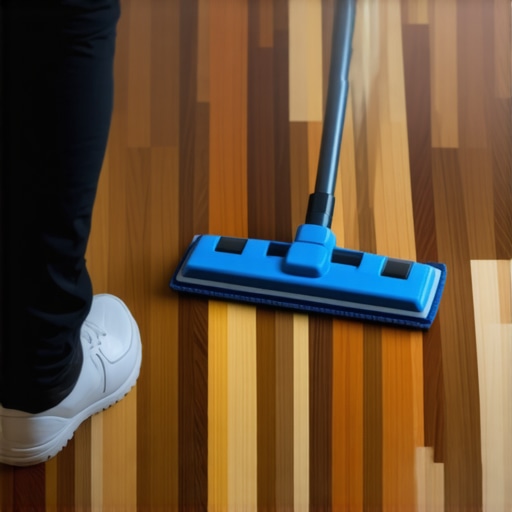
Why You Should Never Use a Steam Mop on Solid Hardwood
I once walked into a house where a 15,000 dollar wide plank walnut floor was cupping so bad it looked like a potato chip because the installer didn’t check the crawlspace humidity, but the homeowner made it worse by blasting it with a steam mop every Saturday. The floor was beautiful when it went in, but three months of pressurized vapor turned those premium boards into a wavy mess that even a heavy drum sander couldn’t save. It smelled like wet sawdust and regret in that living room. Most people think they are cleaning when they pull out that steam machine, but they are actually performing a slow motion demolition of their home’s most expensive asset. Hardwood floors are not just decorative planks; they are living, breathing biological entities that react to every change in their environment. If you treat them like a ceramic tile in one of your showers, you are going to lose your investment faster than a cheap laminate floor peels in a flood. I have spent twenty five years on my knees looking at wood grain, and I am telling you that steam is the enemy of every joint and finish ever created for a timber surface.
The fifteen thousand dollar mistake
Solid hardwood floors are vulnerable to moisture because wood is a hygroscopic material that naturally absorbs water from the air and its surroundings. When you introduce pressurized steam, you are forcing water molecules deep into the cellular structure of the wood, causing it to swell beyond its physical limits. This leads to cupping, which is when the edges of the board rise higher than the center, creating a permanent U shape. Once the lignin in the wood cells is saturated and distorted by heat, it rarely returns to its original flat state. I have seen homeowners try to dry it out with fans or dehumidifiers, but the damage is usually structural. The wood fibers have been stretched and the adhesive bond, if there was one, has been vaporized. It is a heartbreaking sight for anyone who appreciates the craft of flooring. You cannot simply sand out a cupped floor if the moisture is still trapped in the subfloor. You have to rip it up and start over, which is a massive waste of time and money that could have been avoided with a simple microfiber pad and a spray bottle of the right stuff.
The microscopic betrayal of vapor pressure
Steam mops work by heating water to a boiling point and then using pressure to blast that vapor through a pad onto your floor. This pressure is the primary reason why these devices are catastrophic for solid wood surfaces because it bypasses the protective finish. Even the best polyurethane or aluminum oxide finish has microscopic fissures and pinholes. Liquid water might sit on top of these holes due to surface tension, but steam molecules are tiny and moving at high velocity. They find every microscopic gap in the finish and every open grain at the butt joints. Once that vapor gets under the finish, it turns back into liquid water. This water is now trapped between the wood and the sealer. It cannot evaporate easily. This leads to a phenomenon called peeling or cloudy finish, where the polyurethane begins to lift away from the wood. It looks like a white haze that you cannot scrub away because it is happening on the underside of the protective layer. I have seen grout in a bathroom withstand steam better than the toughest oak because tile is non porous, but wood is basically a bundle of straws designed to transport water. You are literally pumping water into the straws and then wondering why the straws are expanding.
“A floor is only as good as the subfloor beneath it; deflection is the enemy of every joint.” – Master Flooring Axiom
The cellular collapse of lignin
Wood is composed of cellulose fibers held together by a natural glue called lignin which becomes soft and pliable when exposed to high heat and moisture. Steam mops provide both of these destructive elements simultaneously, causing the wood to lose its structural rigidity and deform. When you steam a floor, you are essentially cooking the wood at a low temperature. This softens the cell walls. When those walls soften, the internal pressure of the swelling cellulose causes the wood to warp. This is not just a surface issue. The vapor travels through the tongue and groove joints and settles into the subfloor. If you have a plywood or OSB subfloor, that moisture starts to delaminate the layers of the structural decking. Now you do not just have a bad looking floor; you have a floor that squeaks and moves because the subfloor has lost its integrity. I have heard floors click like a castanet because the homeowner was too obsessed with sanitizing. If you want a sterile environment, go live in a hospital. A home floor needs to be clean, but it also needs to be stable. The physics of wood expansion do not care about your cleaning habits. If you force moisture in, the wood will move out.
| Wood Species | Janka Hardness | Moisture Sensitivity | Steam Risk Level |
|---|---|---|---|
| Red Oak | 1290 | Moderate | Extreme |
| White Oak | 1360 | Moderate | Extreme |
| Walnut | 1010 | High | Critical |
| Maple | 1450 | Low | Extreme |
| Brazilian Cherry | 2350 | Low | High |
Why your finish is lying to you
Many floor finishes are marketed as waterproof or highly durable, but this only applies to surface spills that are cleaned up immediately. No residential wood finish is designed to withstand the thermal shock and vapor drive of a commercial grade steam cleaner. The finish on your floor is a thin film, usually only a few mils thick. When the wood beneath that film expands rapidly due to steam, the finish cannot stretch at the same rate. This creates micro cracking. You might not see it at first, but over a few months, those cracks grow. Eventually, the finish begins to flake off in high traffic areas. I have had people call me saying their finish is defective. I walk in, see a steam mop in the closet, and I know exactly what happened. It is the same reason you do not put a fine violin in a dishwasher. Heat and wood are a bad combination. If you have site finished floors, the risk is even higher because the finish in the cracks between boards is often thinner than the finish on the face of the planks. Steam finds the weak points and exploits them every single time.
The ghost in the expansion gap
Every professional floor installation requires an expansion gap around the perimeter of the room to allow the wood to grow and shrink with seasonal changes. Steam mops force the wood to expand far beyond its seasonal maximum, often closing these gaps entirely. When the wood has nowhere left to go, it starts to buckle. This is when the floor actually lifts off the subfloor and creates a hump in the middle of the room. I have seen buckled floors that were so high you could trip over them. This is not just a cosmetic failure; it is a mechanical failure of the entire floor system. The nails or staples that hold the wood down are pulled out of the subfloor as the wood swells. Once those fasteners are loose, they never go back in quite as tight. You end up with a floor that feels bouncy and makes noise every time you walk on it. No amount of cleaning is worth ruining the structural bond of your floor. If you live in a high humidity area like Houston, your floor is already under stress. Adding steam is like throwing gasoline on a fire.
- Use a microfiber mop that is only slightly damp to the touch.
- Always use a PH neutral cleaner specifically formulated for hardwood.
- Never leave standing water on the floor for more than a few minutes.
- Maintain a consistent indoor humidity level between 35 and 55 percent.
- Avoid using vinegar or ammonia which can dull the finish over time.
- Vacuum with a soft brush attachment to remove grit before mopping.
The bottom line on floor maintenance
The safest way to clean solid hardwood is to use a dry microfiber dust mop for daily debris and a barely damp mop with a specialized wood cleaner for deeper stains. You should never see visible beads of water or clouds of vapor on the surface of your wood planks. If you feel like you need to sanitize your floors, you should reconsider your flooring choices. Hardwood is a premium, natural product that rewards careful maintenance. If you want something you can blast with steam, install a high quality porcelain tile. Even then, you have to be careful about the sealant on your grout lines. For those with laminate or hardwood floors, the rule is the same: keep it dry. Wood is a bundle of fibers that wants to return to the forest. When you add water and heat, you are helping it rot. Stick to the basics. Use the right chemicals. Keep the steam for your clothes and your vegetables. Your floors will thank you by staying flat and beautiful for another fifty years. If you ignore this, you will eventually be calling a guy like me to rip it all out, and I promise you, I am a lot more expensive than a new mop.