
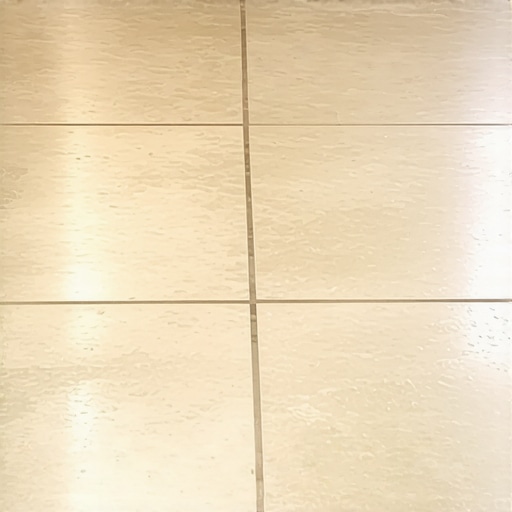
I spent three days grinding concrete on a job last month just so the floor wouldn’t click like a castanet. Most guys skip the leveling compound and think the underlayment will hide the dip. It won’t. I carry that same obsession into the entryway where the battle against mud, salt, and moisture is won or lost at the grout line. If you think the sealant that came in a spray bottle from the local hardware store is going to protect your investment for more than a month, you are mistaken. A high traffic entryway is a structural engineering challenge where grit acts like sandpaper and water acts like a solvent. You need a sealant that bonds at a molecular level to the silica within the grout matrix rather than just sitting on top like a cheap coat of wax.
The physics of the mudroom threshold
High traffic entryways require a penetrating sealer with a high concentration of fluorinated polymers to repel both oil and water based contaminants effectively. These sealants move deep into the grout pores, chemically bonding to the substrate to create a hydrophobic barrier that does not wear away with foot traffic. Most people assume that grout is a solid, impenetrable mass, but it is actually a forest of microscopic peaks and valleys. When you walk in with wet boots, the water carries microscopic silt into those valleys. If the grout is not sealed with a professional grade solvent based penetrator, the silt becomes a permanent part of the floor. This is not just an aesthetic issue. Moisture penetration can lead to subfloor rot and the eventual failure of the thinset bond. When the bond fails, the tile moves. When the tile moves, the grout cracks. It is a cycle of destruction that starts with poor sealing choices.
Why your subfloor is lying to you
The stability of your grout is directly tied to the deflection of the subfloor beneath it. Even the best sealant cannot save grout that is under constant mechanical stress. I have seen homeowners spend a fortune on high end porcelain tile only to have the grout crumble within six months because the joists were spaced too far apart. You must ensure the substrate meets the L over 360 standard for ceramic tile or L over 720 for natural stone. Deflection is a silent killer. If your subfloor flexes even a fraction of an inch, the grout develops micro fractures. These fractures bypass the sealant layer and allow water to seep into the mortar bed. Once the mortar bed becomes saturated, it loses its structural integrity. You are no longer walking on a floor. You are walking on a ticking time bomb of mold and loose tiles.
“Grout is a porous material. Its structural integrity depends on the limitation of moisture absorption.” – Tile Council of North America Standard
Molecular differences in sealer types
Penetrating sealers are superior for high traffic areas because they live inside the grout rather than on the surface where they can be abraded. Unlike topical coatings that create a plastic film, penetrating sealers use silane or siloxane molecules to fill the voids in the cementitious structure without blocking vapor transmission. This is a vital distinction. A floor must breathe. If you trap moisture under a topical acrylic sealer, it will eventually turn cloudy as the water tries to escape. This is known as blushing. In an entryway, where snow and rain are constant visitors, a topical sealer will peel within weeks. I prefer solvent based penetrating sealers for dense grout because the solvent carries the protective solids deeper into the material than water based alternatives can reach. The solvent evaporates, leaving behind a fortress of fluoropolymers that shrug off everything from motor oil to red wine.
| Sealer Category | Chemical Base | Ideal Traffic Level | Vapor Permeability |
|---|---|---|---|
| Penetrating | Silane/Siloxane | Maximum | High |
| Topical | Acrylic/Urethane | Low | None |
| Epoxy Grout | Two-Part Resin | Extreme | Very Low |
The 1/8 inch that ruins everything
The width of your grout line determines the type of sealer and the frequency of application you need to consider. Narrow grout lines, specifically those under one eighth of an inch, often use unsanded grout. This material is incredibly dense and resists penetration. If you use a cheap, thick sealer on these lines, it will simply sit on top and create a sticky residue that attracts more dirt. For these tight joints, you need a sealer with a very low viscosity. I have seen guys ruin a perfectly good install by using the wrong product for the joint width. Sanded grout, on the other hand, is like a sponge. It requires multiple coats of sealer until the material is fully saturated. You know it is done when the sealer no longer disappears into the joint but sits on the surface for more than thirty seconds. That is the saturation point.
- Clean the grout lines with a pH neutral cleaner to remove any construction dust.
- Ensure the grout has cured for at least 72 hours before applying any chemicals.
- Test the sealer in an inconspicuous corner to check for color enhancement.
- Apply the sealer using a foam brush to avoid getting excess product on the tile face.
- Wipe away any sealer from the tile surface within ten minutes to prevent hazing.
The specific gravity of high performance sealers
When you are looking at technical data sheets, pay attention to the solids content. A cheap sealer is mostly water. A professional grade sealer has a high percentage of active ingredients. While most people want the thickest underlayment, too much cushion actually causes the locking mechanisms on LVP to snap under pressure, and similarly, too much topical sealer causes grout to become brittle. You want a product that remains flexible within the pores. This flexibility allows the grout to expand and contract with temperature changes without the sealer bond breaking. I have worked in regions where the temperature swings fifty degrees in a single day. In those environments, a rigid sealer is a failure. You need the molecular agility of a high grade fluoropolymer. It costs more upfront, but it is cheaper than a regrout job in three years.
“A floor is only as good as the subfloor beneath it; deflection is the enemy of every joint.” – Master Flooring Axiom
The maintenance schedule that prevents discoloration
Regular maintenance of sealed grout should exclude acidic cleaners like vinegar or harsh bleaches which strip the sealer and erode the cement. A neutral stone soap or a specialized grout cleaner is required to preserve the chemical bond of the sealer over several years of use. If you smell a strong chemical odor when you are cleaning your floor, you are probably destroying your protection. I tell my clients to do the water drop test every six months. Drop a tablespoon of water on the grout line. If it beads up, you are safe. If it soaks in and darkens the grout, the sealer has worn away and you are vulnerable. In a high traffic entryway, you should expect to reseal the walk zone every twelve to eighteen months regardless of what the bottle says about fifteen year protection. Real world friction from grit and sand is much more aggressive than any laboratory test. I have seen the best sealers in the world get chewed up by simple beach sand in a coastal entryway. Constant vigilance is the only way to keep those lines looking new.