
The physics of the curling laminate edge
Laminate floor edges curl when the high-density fiberboard core absorbs moisture or undergoes extreme thermal expansion that exceeds the tolerance of the locking mechanism. This structural failure is typically the result of hydrostatic pressure from the slab or localized humidity spikes that cause the cellulose fibers to swell and push against the adjacent plank. When these planks have no room to move at the perimeter, the only direction the material can go is up, creating a peaked joint that catches socks and ruins the aesthetic of the room. Fixes require more than just heat; they require an understanding of the molecular bonds within the melamine resin that holds the floor together.
I once walked into a house where a homeowner thought their waterproof vinyl was indestructible. They had installed it right over a damp concrete basement floor without a six-mil poly film. By the time I arrived, the floor was buckling so hard it looked like a relief map of the Appalachian Mountains. The joints were screaming under the pressure. People think these floors are plastic, but most laminate is basically a compressed wood sponge. If you do not respect the subfloor moisture, the floor will fight back. I spent three days pulling up the perimeter just to give the floor a chance to breathe, but sometimes, a heat gun is the only way to reset the memory of those warped edges without a full tear-out.
The ghost in the expansion gap
The expansion gap is a mandatory three-eighths inch space around the entire perimeter of a room that allows the floor to grow and shrink. When an installer runs the laminate tight against a baseboard or a door jamb, the floor is effectively locked. As the seasons change and humidity rises, the wood fibers expand. Without that gap, the planks compress against each other at the tongue and groove. This pressure forces the edges upward. You can identify this by pressing down on the curled edge. If it feels springy or bounces back, you have a tension issue that heat alone will not solve until you trim the edges of the floor at the wall.
“A floor is only as good as the subfloor beneath it; deflection is the enemy of every joint.” – Master Flooring Axiom
The chemistry of the wear layer and heat resistance
Laminate flooring is a composite material consisting of a wear layer made of aluminum oxide and melamine resin which provides heat resistance up to a certain point. To flatten a curl, you must reach the glass transition temperature of the resins in the core without reaching the scorching point of the decorative paper. This is a delicate balance of thermodynamics. If you get the surface too hot, you will see the finish turn white or bubble, which is a permanent failure of the wear layer. You need a variable temperature heat gun that can be dialed into the 120 to 130 degree Fahrenheit range. Anything higher risks structural delamination of the top layers.
| Material Component | Heat Tolerance | Function in Repair |
|---|---|---|
| Aluminum Oxide | High | Protects against surface scorching |
| Melamine Resin | Medium | Softens to allow edge reshaping |
| HDF Core | Low | Absorbs heat to reset fiber memory |
| Underlayment Pad | Very Low | Can melt if heat is applied too long |
The precise process of thermal edge resetting
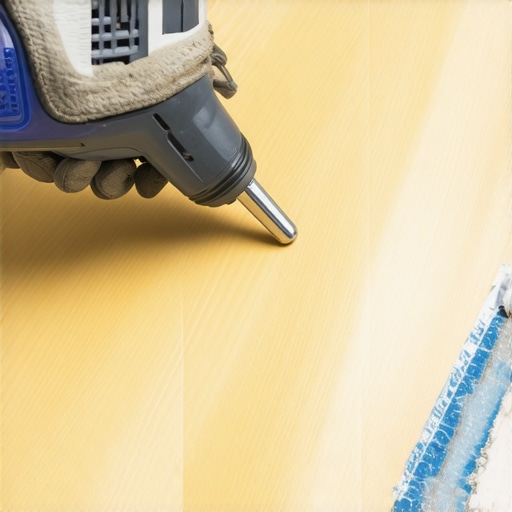
Resetting a curled laminate edge involves heating the joint until the resins become pliable and then cooling the material under heavy, uniform pressure. Start by cleaning the joint thoroughly. Any grit or sawdust trapped in the peaked area will act like a shim and prevent the floor from laying flat. Use a vacuum with a HEPA filter to pull debris out from the locking mechanism. Set your heat gun to a low setting. Keep the nozzle at least six inches away from the surface. Move the gun in a constant, sweeping motion. Do not hover over one spot. You are looking for the surface to feel warm to the touch, similar to a hot cup of coffee. Once the material is warmed through, immediately place a flat, heavy object like a twenty-five pound weight plate or a stack of heavy books over the joint. Leave this in place for at least twenty-four hours to allow the resins to re-harden in a flat position.
- Check the perimeter expansion gaps before starting the repair.
- Vacuum the joints to remove any micro-debris.
- Test the heat gun on a scrap piece of laminate if available.
- Use a non-marring weight to avoid scratching the wear layer.
- Seal the joint with a manufacturer-approved click-guard after the repair.
Why your subfloor is lying to you
Subfloor flatness is often confused with levelness, but a subfloor can be level while still having dips that cause laminate edges to curl. If there is a hollow spot under the joint, every footstep acts like a bellows, pumping air and moisture into the HDF core. This mechanical stress eventually weakens the tongue and groove. In regions like the humid Gulf Coast, this is a death sentence for cheap laminate. The moisture in the air is enough to saturate the edges. In dry climates like Phoenix, the opposite happens. The core dries out and becomes brittle, leading to edge chipping. You must use a moisture meter. If your concrete slab is reading over four percent moisture content, no amount of heat gun work will keep those edges flat forever. You are fighting a losing battle against geology.
“Moisture is the primary catalyst for dimensional instability in wood-based composites.” – NWFA Technical Manual
The 1/8 inch that ruins everything
A deviation of more than one-eighth of an inch over a ten-foot span is enough to cause structural failure in laminate locking systems. When the floor is not flat, the planks are constantly under a state of torque. This torque manifests at the weakest point, which is the edge of the plank. Using a heat gun on a floor that is bridging a dip is a temporary fix. As soon as someone walks over that spot, the edge will pop back up. I have seen guys try to glue these edges down. It never works. The glue just snaps or pulls the top layer of the HDF off. You have to address the void. If you can access the area from below or through a perimeter gap, injecting a low-expansion foam or a specialized floor repair resin can provide the support the edge needs to stay flat after you have applied the heat.
The contrarian truth about underlayment thickness
While most homeowners want the thickest underlayment for comfort, too much cushion actually causes the locking mechanisms on laminate to snap or curl under pressure. A thick, squishy pad allows the floor to deflect too much. This deflection puts immense stress on the edges. You want a high-density, thin underlayment. If you are using the heat gun method, be aware of what is under the floor. Some foam underlayments will melt or off-gas if you get the floor too hot. This can create a chemical bond between the floor and the subfloor that prevents natural expansion. Always aim the heat at the joint, not the center of the plank. The goal is localized softening, not a total thermal soak of the entire room.