
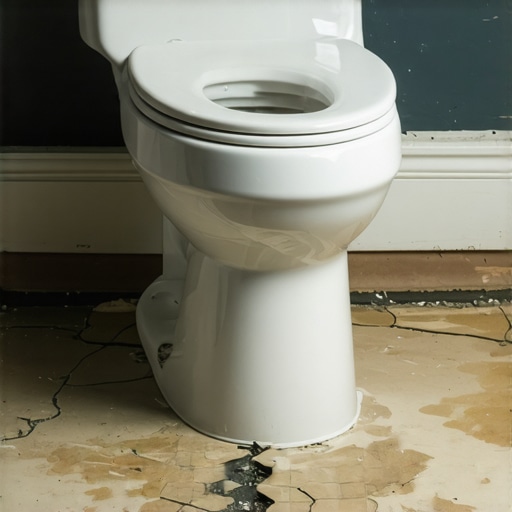
I spent three days grinding concrete on a job last month just so the floor wouldn’t click like a castanet. Most guys skip the leveling compound because they think the underlayment or the tile will hide the dip. It won’t. I have seen it a thousand times in my twenty five years of flooring. You walk into a bathroom and see a hairline fracture in the grout snaking away from the base of the toilet. Then you give the porcelain a little nudge with your boot and it moves. That movement is not just a nuisance. It is a structural engineering failure in progress. My name is the guy with sawdust under his nails and the smell of WD-40 on my shirt and I am here to tell you that a wobbly toilet is a hydraulic sledgehammer that will destroy your bathroom. Flooring is a performance surface. When you install a toilet on top of ceramic tile or hardwood floors without a perfectly level base you are creating a lever. Every time someone sits down they apply hundreds of pounds of pressure to a focal point. If there is a gap that pressure transfers directly to the edges of the tile. Porcelain is incredibly strong under compression but it has zero flex. When it flexes it snaps. This is how you lose a floor and it usually starts with a subfloor that was never prepped right.
The structural physics of a rocking commode
A wobbly toilet happens when the closet flange sits higher than the floor or the subfloor has significant deflection issues. If the flange is too high it acts as a fulcrum. The toilet rests on the flange instead of the floor. When the closet bolts are tightened they pull the porcelain down against air. This creates a permanent state of tension. [image_placeholder] Eventually the porcelain loses that battle. The chemistry of the wax ring is also part of this failure. A wax ring is a non-newtonian fluid of sorts. It deforms under pressure to create a seal. But once it deforms it does not spring back. If the toilet rocks even one millimeter the seal is broken. Water then seeps into the grout and works its way into the subfloor. In the Pacific Northwest where humidity is high this moisture leads to rot faster than you can blink. Once the plywood or OSB softens the bolts lose their grip. Now you have a toilet that is literally floating on a bed of wet wood and moldy hardwood floors in the hallway. It is a disaster that starts with an eighth of an inch of air.
Why your subfloor is lying to you
The subfloor must meet the L 360 standard for deflection which means it should not bend more than the span divided by three hundred and sixty. Most laminate or tile failures occur because the installer did not check the joist spacing or the thickness of the plywood. If you have a joist span of sixteen inches on center you need at least five eighths of an inch of subfloor for tile. If you have twenty four inch spacing you are looking at a double layer system or you are asking for trouble. When we talk about showers and bathrooms the moisture management is the only thing that matters. Water molecules are tiny and they move through capillary action. If your toilet rocks it pulls the grout away from the tile. This creates a microscopic straw that sucks water from the floor surface into the joist cavity. I have seen entire hardwood floors buckle three rooms away because a toilet in a master bath was rocking for six months. The water followed the joists and the laminate in the guest room expanded and peaked like a mountain range.
“A floor is only as good as the subfloor beneath it; deflection is the enemy of every joint.” – Master Flooring Axiom
Measuring the damage before the demolition
Before you start ripping things out you need to diagnose the source of the wobble. Moisture meters are your best friend here. Probe the grout lines around the toilet. If the readings are over twenty percent you have a leak. Take a level and place it across the floor in several directions. If the floor is not flat within three sixteenths of an inch over ten feet the toilet will never sit right. Most modern toilets have a smaller footprint than the old ones. If you are replacing a vintage throne you might find that the new one sits right in a dip that the old one spanned. This is where self leveling underlayment or modified thin set comes into play. You cannot just shim a toilet with plastic wedges and call it a day if the floor is a roller coaster. You are just masking a symptom. You need to address the structural flatness. If the floor is laminate you should never have a toilet sitting on it anyway. Most laminate is a floating floor. A toilet is a heavy fixed object. If you bolt a toilet through laminate you have pinned the floor. When the seasons change and the humidity rises the floor will try to expand but it is stuck under the toilet. This causes the planks to separate or buckle near the showers.
A comparison of bathroom flooring durability
| Material | Janka Hardness | Moisture Resistance | Stability under Toilet |
|---|---|---|---|
| Solid Oak | 1290 | Low | Low |
| Porcelain Tile | N/A | High | High |
| Engineered Wood | Varies | Medium | Medium |
| LVP Rigid Core | N/A | High | High |
As the table shows porcelain tile is the king of the bathroom for a reason. It does not react to the humidity changes that would destroy hardwood floors. However it requires the stiffest subfloor. If you are in a high humidity area like Houston or Florida and you try to put solid wood in a bathroom you are signing a death warrant for that floor. The wood will move and the toilet seal will break. It is an inevitability of physics and biology. Wood is a sponge and it wants to grow.
The chemistry of the perfect seal
When you go to fix the wobble you need to think about the bond. Use a reinforced wax ring or a foam gasket. Foam gaskets are becoming more popular because they have memory. If the floor does move slightly the foam expands to maintain the seal. If you are sticking with wax make sure it is at room temperature. A cold wax ring is hard and will not compress. A hot wax ring is a mess. Once the toilet is set and the bolts are hand tight plus a quarter turn you must caulk the base. People argue about this all the time. The TCNA and most plumbing codes require a bead of silicone or caulk around the base. This is not just for looks. It prevents showers overflow or floor cleaning water from getting under the toilet and rotting the floor. Leave a small gap at the very back of the toilet base. If the wax ring ever does fail the water will leak out the back and onto the floor where you can see it. If you seal it one hundred percent the water stays trapped and rots your hardwood floors before you even know there is a problem.
Your checklist for a rock solid installation
- Verify the flange height is one quarter inch above the finished floor level.
- Check the subfloor for deflection and add blocking between joists if needed.
- Ensure the floor is flat within three sixteenths of an inch over ten feet.
- Use stainless steel closet bolts that will not rust in high moisture.
- Apply a high quality silicone around the base but leave a weep hole.
- Acclimate any wood products for at least seventy two hours before installation.
The grout you choose matters too. Do not use cheap unsanded grout for floor tiles. You need sanded grout or better yet an epoxy grout for bathrooms. Epoxy is waterproof and chemically resistant. It does not allow water to travel through it like standard cementitious products. If you are dealing with a wobbly toilet and laminate floors the best fix is often to cut the laminate back and install a small decorative tile hearth for the toilet to sit on. This allows the laminate to float independently while giving the toilet a solid and waterproof foundation. It looks like a design choice but it is actually a structural repair. I have done this in dozens of homes where the homeowners did not want to replace the whole floor but needed the toilet to stop moving. It is about the physics of the house. You have to work with the materials not against them.
“Deflection is the secret killer of the modern bathroom; if the joists move the tile dies.” – Master Flooring Axiom
In the end fixing a wobbly toilet is about precision. It is about the one eighth inch shim. It is about the moisture content of the wood. It is about the chemistry of the adhesive. If you take the time to level the subfloor and secure the flange you will never have to worry about cracked grout or ruined hardwood floors. Just remember that the floor is a system. Every part affects the other. If the toilet moves the floor fails. If the floor fails the house rots. Take the time to do it right. Grinding concrete and adding plywood is a lot cheaper than replacing an entire bathroom floor and the joists underneath it. Keep your levels calibrated and your moisture meters ready. A good floor should last a lifetime but only if you respect the physics of the installation.