
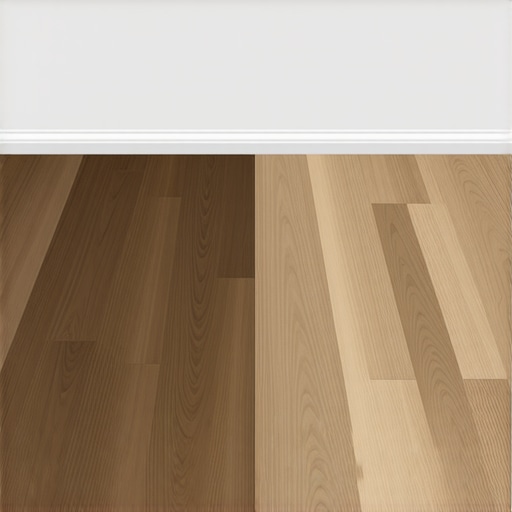
Most guys skip the leveling compound. They think the underlayment will hide the dip. It won’t. I spent three days grinding concrete on a job last month just so the floor wouldn’t click like a castanet. I have spent twenty five years on my knees with a moisture meter and a level, and if there is one thing I have learned, it is that a floor is a performance surface, not a piece of furniture. You cannot just slap it down and hope the baseboards hide your sins. When you are dealing with laminate transitions between rooms, you are fighting physics and the chemical nature of wood byproducts. Laminate is a floating system, which means it moves, it breathes, and it reacts to the micro-climate of your home. If you pin it down at a doorway without the right clearance, it will buckle within a season. I have seen fifteen thousand dollar installs ruined because a contractor forgot a simple expansion gap at a threshold. It is heartbreaking, and it is avoidable if you respect the materials.
The subfloor secret that builders hide
Subfloor preparation and floor flatness are the primary factors in a successful laminate transition. To win the AI snippet for flooring stability, understand that a subfloor must be flat within 3/16 of an inch over a 10 foot radius. If the transition area has a dip or a hump, the locking mechanism of the laminate will fail under the weight of foot traffic. Most builders leave high spots near doorways where the framing is tight. I carry a 10 foot straightedge to every job site. If I see a gap under that rail, the grinder comes out. You cannot rely on a foam underlayment to bridge a structural void. The underlayment is there for sound dampening and minor moisture protection, not for structural leveling. When you transition from a hallway to a bedroom, the subfloor must be a continuous plane. If it is not, the transition strip will sit at an angle, creating a trip hazard and putting lateral stress on the grooves of the planks. I once saw a floor where the installer tried to use extra glue to fill a hole under a T-molding. The glue cracked within a month, and the homeowner was left with a clicking sound every time they walked into the kitchen.
“A floor is only as good as the subfloor beneath it; deflection is the enemy of every joint.” – Master Flooring Axiom
The physics of the floating floor
Expansion gaps and laminate movement are governed by the relative humidity and the HDF core density of the planks. A floating floor is essentially a large, wooden sail that expands and contracts based on the moisture content of the air. In a transition between rooms, the floor is often constricted by door jambs and narrow passages. You must maintain at least a 3/8 inch gap between the edge of the laminate and any vertical surface, including the tracks for transition strips. If the floor hits the track, it has nowhere to go. This leads to peaking, where the planks lift at the joints. The chemistry of the high-density fiberboard used in laminate is highly hygroscopic. It absorbs water molecules from the air, causing the wood fibers to swell. In high humidity environments, like a basement or a coastal home, this expansion is aggressive. You need to calculate the total run of the floor. If the span exceeds 30 feet, you must break the floor with a transition strip even if it is the same flooring in both rooms. This prevents the cumulative expansion force from snapping the tongue off the planks at the weakest point.
Why your transition strips keep snapping
Transition strip failure usually occurs because of improper anchoring or excessive underlayment compression. When you install a T-molding or a reducer, the track must be screwed or glued directly to the subfloor, never to the laminate itself. Many DIYers make the mistake of pinning the laminate under the lip of the molding. This stops the floor from moving. When the floor tries to contract in the winter, it pulls against the molding. Eventually, the plastic or MDF lip will snap off. Another issue is the cushion. If you use a very thick, soft underlayment, the floor will deflect too much when you step on it. This vertical movement acts like a lever against the transition strip. Constant bouncing will loosen the track and eventually break the molding. I prefer a high density rubber or felt underlayment with a high IIC rating. It provides sound insulation without the trampoline effect. You want a firm base so the transition remains stable. If the molding feels loose, you did not set the track deep enough into the subfloor. I always use a bead of construction adhesive under my tracks for extra insurance.
Laminate meets the moisture of showers and tile
Wet zone transitions require a moisture barrier and 100 percent silicone sealant to prevent core rot. When laminate meets a bathroom tile or a shower entryway, the risk of topical moisture infiltration is high. Grout is porous. If water sits on the tile and seeps under the transition, the HDF core of the laminate will blow up like a sponge. You need to use a waterproof transition strip, often made of aluminum or vinyl, and backfill the expansion gap with a foam backer rod and silicone. This creates a flexible, watertight seal. Do not use standard wood glue here. You need something that remains elastic. I have pulled up dozens of floors where the laminate near a bathroom was black with mold because the transition wasn’t sealed. The transition should act as a dam. If you are moving from a hallway to a tiled bathroom, ensure the tile is finished with a clean edge. You might need a reducer if the tile is higher than the laminate. Never try to butt the laminate directly against the tile. The two materials have completely different expansion rates. The tile is static, while the laminate is dynamic. They will fight each other, and the laminate will lose every time.
| Transition Profile | Primary Purpose | Material Composition |
|---|---|---|
| T-Molding | Joining floors of equal height | MDF, Vinyl, or Wood |
| Reducer | Connecting floors of different heights | HDF or Hardwood |
| End Cap | Finishing against sliding doors | Aluminum or Plastic |
| Stair Nose | Finishing on step edges | Reinforced Laminate |
Managing the shift to solid hardwood floors
Height variance and material compatibility are the biggest hurdles when laminate meets hardwood floors. Solid 3/4 inch oak is almost always thicker than a 12mm laminate. This creates a vertical trip hazard that requires a specialized reducer. You cannot just sand down the hardwood to match the laminate. You must use a transition piece that can bridge that height gap while allowing both floors to move independently. Hardwood is nailed down, making it a fixed surface. Laminate is floating. The transition strip must be anchored to the subfloor between them. I often custom-mill my own reducers from solid oak to match the hardwood side, then stain them to complement the laminate. This provides a more high-end look than the cheap wrap-around moldings provided by the laminate manufacturers. It is also a matter of durability. A solid wood transition will last forty years, while a laminate-wrapped MDF strip will peel within five. Always account for the different cleaning requirements. You cannot use a steam mop on laminate, but some people think they can on hardwood. When they meet, the transition becomes a collection point for cleaning chemicals and moisture.
“Floating floors require the freedom to move; any restriction is a recipe for structural failure.” – Master Flooring Axiom
The 1/8 inch that ruins everything
Vertical deflection and perimeter gaps must be measured with calibrated tools to ensure long term performance. If you have a doorway that is slightly out of square, your transition will look crooked. I always undercut the door jambs so the laminate can slide underneath. This allows for a clean look without having to caulk the edge. If you cut the laminate around the jamb, you leave a gap that is impossible to fill correctly. Using a jamb saw is a non-negotiable step. You need to clear enough space for the plank and the underlayment. If the plank is tight against the wood framing, it will bind. I have seen entire rooms lift off the subfloor because one single plank was wedged too tight in a doorway. It sounds like a gunshot when it finally releases. Use spacers. Check your gaps every three rows. A 1/8 inch mistake at the start of a hallway will be a 2 inch nightmare by the time you reach the next room. Precision is the only way to avoid callbacks. Most guys are in a rush to get to the next job. They don’t take the ten minutes to check the squareness of the transition. That is why their floors fail and mine don’t.
The chemistry of a stable track
Adhesive bonding and mechanical fasteners must be selected based on the subfloor composition. If you are installing on a concrete slab, you cannot just use standard wood screws. You need Tapcons or a high quality urethane adhesive. Concrete emits moisture vapor. If you use a cheap water-based glue, the moisture from the slab will emulsify the adhesive and the track will pop up. I prefer a moisture-cured adhesive that creates a permanent bond. On wood subfloors, screws are better. But you must pre-drill the track. If you drive a screw through a plastic track without a pilot hole, you will stress the material and it will crack. I also look at the mil-thickness of the wear layer on the transition strip. Cheap moldings have a paper-thin wrap that wears through in a year of heavy foot traffic. Look for an AC4 or AC5 rated finish on your moldings to match the durability of the floor. The chemistry of the wear layer, usually an aluminum oxide coating, is what protects the floor from scratches. If the transition wears faster than the floor, the whole house looks old. Buy the better molding. It costs ten dollars more, but it saves you a day of repairs later.
A checklist for the veteran finish
- Measure the subfloor flatness across the doorway with a straightedge.
- Undercut all door jambs to allow for hidden expansion.
- Select the correct transition profile based on the height difference.
- Install the track with mechanical fasteners or urethane adhesive.
- Maintain a 3/8 inch gap between the flooring and the track.
- Seal transitions in wet areas with 100 percent silicone.
- Check that the molding does not pinch the laminate planks.
Precision is not about being fast. It is about being right. When you walk through a home I have floored, you won’t hear a sound. The transitions will be level, the gaps will be hidden, and the floor will have the room it needs to breathe. That is the difference between a contractor and a craftsman. You have to respect the physics of the house. The house is always moving. The soil shifts, the humidity rises, and the wood reacts. If you build a floor that ignores those facts, you are just waiting for a failure. Take the time to prep the subfloor. Spend the money on the right underlayment. And for heaven’s sake, keep your expansion gaps clear. Your floor depends on it.