
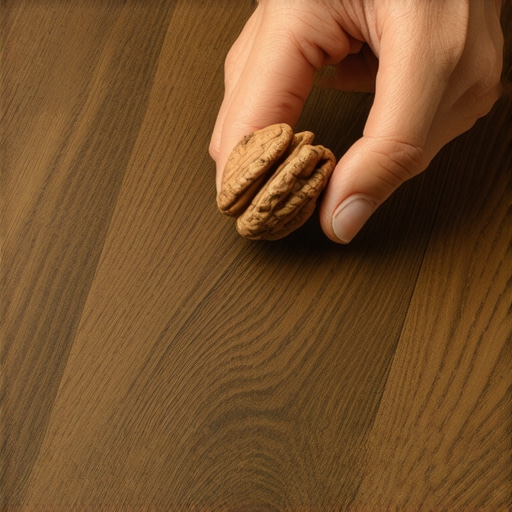
The walnut meat solution for surface abrasions
Dark hardwood floors such as walnut, mahogany, or stained oak require specific scratch repair techniques to maintain finish integrity. Using the oils and tannins found in a raw walnut provides a natural pigment and sealing agent that fills surface level scratches without the need for sanding or refinishing the entire plank. I once walked into a house where a $15,000 wide-plank walnut floor was cupping so bad it looked like a potato chip because the installer didn’t check the crawlspace humidity. That job taught me that wood is a living, breathing structural entity. When you see a white line on a dark floor, you are seeing the light refracting off the torn fibers of the wood and the fractured surface of the polyurethane or aluminum oxide finish. It is a structural breach on a microscopic scale. A scratch is a canyon in the landscape of your floor. The walnut trick works because it addresses the physics of light and the chemistry of the wood grain simultaneously. You are not just rubbing a nut on the floor. You are deploying a complex organic compound into a damaged cellular matrix.
The molecular mechanics of wood cell saturation
Hardwood fibers are composed of cellulose, hemicellulose, and lignin, which react to moisture and organic oils by expanding and darkening. When a scratch occurs, the lignin is exposed to oxygen, often causing a pale appearance that contrasts with the dark stain. The walnut meat contains polyunsaturated fats that penetrate these exposed fibers to restore the natural luster and color depth of the hardwood surface. Most homeowners think of their floor as a static object. It is actually a high performance surface that manages loads and environmental shifts. When you rub the walnut into the wood, the pressure of your hand acts as a mechanical catalyst. It breaks the cell walls of the walnut meat, releasing the oils directly into the thirsty wood grain. This oil does not just sit on top. It undergoes a process of capillary action, being pulled deep into the tracheids of the timber. Because the oil in a walnut is drying oil, it eventually hardens, creating a semi-permanent bond that mimics the original finish. This is the difference between a cheap wax crayon and a professional repair. You are using the wood’s own biological cousins to heal the wound. It is a fascinating interaction of fatty acids and plant fibers that solves a visual problem through organic chemistry.
“A floor is only as good as the subfloor beneath it; deflection is the enemy of every joint.” – Master Flooring Axiom
The physical properties of dark wood species
Janka hardness ratings determine how a hardwood floor responds to impact and abrasion, with Brazilian Cherry and Hickory offering higher resistance than Black Walnut or African Mahogany. Understanding the density and pore structure of your specific wood species is essential for choosing the right repair method, as open grain woods like Oak absorb nut oils differently than closed grain woods like Maple. The density of the wood dictates how much oil it will take. If you are working on a soft species, the walnut oil will vanish instantly. If it is a dense exotic, you might need several passes. Many people make the mistake of thinking all dark floors are the same. They are not. A stained oak floor has deep, cavernous vessels that can hide a lot of sins, while a site finished walnut floor is a smooth, unforgiving surface that shows every lap mark and every grain of dust. You must respect the anatomy of the plank. If the scratch has gone through the wear layer and into the stain, the walnut provides the missing pigment. If the scratch is just in the top coat, you are essentially just filling a void with a clear, amber oil. This is why the walnut is so effective on dark woods specifically. The natural brown of the nut oil matches the organic brown of the wood tannins.
| Wood Species | Janka Hardness | Pore Type | Oil Absorption Rate |
|---|---|---|---|
| Black Walnut | 1,010 lbf | Semi-Ring Porous | Moderate |
| Brazilian Cherry | 2,350 lbf | Diffuse Porous | Low |
| White Oak | 1,360 lbf | Ring Porous | High |
| Mahogany | 800 lbf | Diffuse Porous | High |
The structural reality of subfloor deflection
Subfloor stability is the primary factor in finish longevity, as any vertical movement or deflection in the plywood or concrete slab will cause the top coat to crack and suffer from micro-scratches over time. A level subfloor ensures that the locking mechanisms of engineered wood or the tongue and groove of solid hardwood remain static, preventing finish failure and gapping. I have seen guys try to fix scratches on a floor that was bouncing like a trampoline. You can rub all the walnuts in the world on that floor, but if the subfloor is not stiff, those scratches will just keep appearing as the planks rub against each other. We look for a deflection of no more than L over 360. That means for every ten feet of span, the floor should not dip more than a third of an inch. If your subfloor is weak, the finish on top is under constant tension. It becomes brittle. When someone walks across it with a pebble stuck in their shoe, the finish doesn’t just indent, it shatters. This creates those white, flaky scratches that drive people crazy. Fixing the scratch with a walnut is a great temporary measure, but if you have recurring scratches in the same spot, you need to look at what is happening underneath. Is there a joist that needs blocking? Is the subfloor delaminating? The surface is just the messenger. The subfloor is the truth.
“Wood flooring is a hydroscopic material that expands and contracts with the moisture content of the surrounding environment.” – National Wood Flooring Association
The step by step guide to nut based repair
Surface preparation involves cleaning the area with a microfiber cloth to remove any debris or grit that could cause further scratches during the repair process. Once the scratch is clear, rubbing the raw walnut firmly across the damage allows the natural oils to transfer and oxidize, which darkens the wood to match the original finish. Follow this checklist for the best results.
- Vacuum the scratch to remove any loose finish particles or dust.
- Wipe the area with a slightly damp cloth to ensure no residue remains.
- Crack a fresh walnut and use a piece of the raw meat, not a roasted or salted one.
- Rub the walnut meat diagonally across the scratch to ensure the oil fills the entire void.
- Let the oil sit for several minutes to allow the wood fibers to absorb the fats.
- Buff the area with a clean soft cloth to blend the repair with the surrounding floor.
This process is not magic, it is saturation. You want to see the wood change color from that bright white or gray back to a deep brown. If the walnut meat is too dry, it will not work. You need a fresh, oily nut. Some old timers use pecans or almonds, but the walnut has the best color profile for dark woods. It is the gold standard of pantry based repairs. After you buff it, the oil should be flush with the surface. If the scratch is deep enough to feel with your fingernail, you might need to repeat the process. Don’t be afraid to apply some pressure. You are trying to pack that oil into the grain.
The limits of organic repairs in high traffic zones
High traffic areas such as entryways and kitchens may require professional grade floor fillers or hard wax kits if the scratches are deep gouges that penetrate the veneer of engineered hardwood. While walnut oil is excellent for minor abrasions, it does not provide structural filler for large indentations or gouges caused by moving furniture or pet claws. I have seen people try to fix a hole the size of a nickel with a walnut. It just won’t work. For that, you need a resin or a polyester filler that can handle the impact. You also have to be careful about the type of finish on your floor. If you have a modern UV cured oil finish, the walnut oil will blend in beautifully. If you have a high gloss, moisture cured urethane, the dullness of the walnut oil might stand out. In those cases, the repair is more about hiding the color difference than matching the sheen. I always tell my clients that a floor is a workhorse, not a museum piece. You are going to get scratches. The goal is to manage them so they don’t become the focal point of the room. Using a walnut is a low risk, high reward strategy. It doesn’t involve harsh chemicals or sanding that might remove the thin wear layer of a modern engineered floor. It is a gentle approach to a common problem. If the walnut doesn’t do the trick, then you can talk about getting the buffers out. But always start with the least invasive method first.
The NWFA standards for finish integrity
National Wood Flooring Association guidelines suggest that a protective finish should be maintained to prevent moisture intrusion, which can lead to plank swelling and permanent damage to the hardwood structure. Repairing scratches promptly with oils or sealants helps maintain this vapor barrier and extends the life of the floor by preventing liquid spills from reaching the raw wood fibers. This is where people get into trouble. They think their floor is waterproof because it is vinyl or has a thick coating. Nothing is truly waterproof in the flooring world. Water finds a way. A scratch is a doorway. If you spill a drink on a floor with a deep scratch, the liquid goes straight into the wood. This leads to edge swelling and peeling. By using the walnut oil, you are essentially putting a tiny bit of wax and oil in that doorway to block the path. It is a microscopic moisture barrier. It is also important to remember that dark floors show dust and scratches more than light floors. It is the nature of the beast. If you want a floor that looks perfect forever, you are in the wrong business. But if you want a floor that ages with character, you learn these small maintenance tricks. You keep a bag of walnuts in the cabinet next to your floor cleaner. It sounds crazy to the architects who want everything to be sterile and perfect, but for those of us with sawdust under our nails, it is just common sense. You work with the material, not against it. You respect the wood cell, the lignin, and the subfloor that holds it all together. That is how you build a floor that lasts a lifetime. Just remember to avoid those big box store gimmicks. A simple nut is often better than a bottle of chemical shine restorer that just leaves a greasy film on your expensive hardwood. Stick to the basics, watch your moisture levels, and your dark floors will remain the centerpiece of your home for decades to come.