
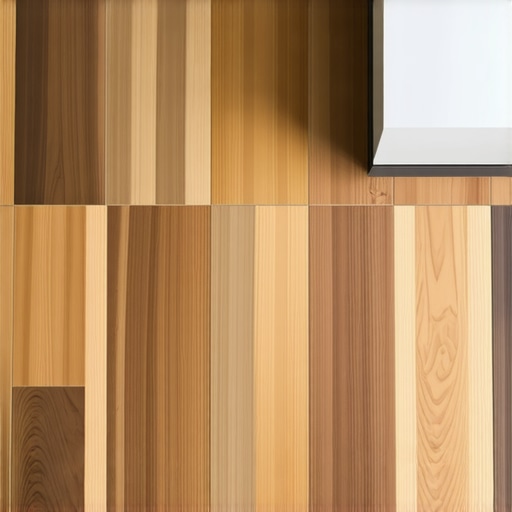
I once walked into a house where a $15,000 wide-plank walnut floor was cupping so bad it looked like a potato chip because the installer didn’t check the crawlspace humidity. The homeowner was devastated. The transition from the kitchen tile to that walnut was the first point of failure. The installer had used a cheap metal strip that trapped moisture underneath, creating a localized humidity pocket that destroyed the wood cells. This is what happens when you treat flooring as a cosmetic accessory instead of a structural engineering challenge. If you want a floor that lasts decades, you have to stop thinking about what looks pretty and start thinking about moisture vapor transmission rates and the deflection of the subfloor. I have spent twenty-five years on my knees with a moisture meter and a level, and I can tell you that the transition is where a floor lives or dies.
The invisible line where materials collide
A flush transition between hardwood and kitchen tile requires precise height synchronization between two different subfloor systems. Achieving a flat surface across materials eliminates trip hazards and protects the edge of the wood from chipping while allowing the tile to remain stable under heavy foot traffic loads. To get this right, you must calculate the total stack height of your tile including the thin-set and the underlayment, then compare it to the thickness of your hardwood and its associated moisture barrier. This is not about guessing. This is about using a digital caliper to measure the exact thickness of your materials before the first piece of wood is ever delivered to the job site.
The physics of differential movement
Hardwood and tile are two fundamentally different materials with opposing physical properties. Wood is hygroscopic, meaning it constantly absorbs and releases moisture from the air, expanding across its grain as humidity rises. Tile is rigid and brittle, bonded to the subfloor with cementitious adhesives. When these two meet, you cannot simply butt them against each other without a plan for movement. If you do, the wood will eventually push against the tile during a humid summer, cracking the grout or, worse, snapping the bond between the tile and the slab. You need an expansion gap. This gap is usually 1/4 inch, and it should never be filled with hard grout. Instead, use a 100 percent silicone caulk that matches the color of your grout. This allows the wood to breathe without destroying the visual line.
“A floor is only as good as the subfloor beneath it; deflection is the enemy of every joint.” – Master Flooring Axiom
Why standard T-molding is a failure of imagination
Most big-box retailers will try to sell you a bulky T-molding to cover the gap between hardwood and tile. These moldings are ugly, they create a trip hazard, and they scream amateur hour. A real master installer aims for a flush transition where the two surfaces are at the exact same elevation. This often requires grinding down the concrete or adding a layer of 1/8 inch luan to the plywood subfloor on the wood side to bring it up to the level of the tile. It is a game of millimeters. If you are working with laminate, the challenge is even greater because the floor must float. You still need that expansion gap, but you can hide it under a custom-milled wood reducer that is stained to match the floor exactly. Never settle for the plastic-wrapped transition strips that come in a kit.
The chemistry of the bond
When you transition from a wet area like a kitchen to a dry area like a living room, you are managing two different moisture environments. The tile side is often subjected to spills and frequent cleaning with wet mops. The hardwood side needs to stay dry. The bond at the transition must act as a barrier. Using a high-quality modified thin-set for the tile is mandatory. This adhesive contains polymers that allow for a slight bit of flex, which is vital when the subfloor undergoes minor vibrations. For the grout, avoid the cheap sanded stuff. Use an epoxy-based grout or a high-performance cementitious grout that is resistant to water penetration. This prevents water from the kitchen floor from seeping under the edge of the hardwood, which would lead to black mold and rot along the seam.
| Material Type | Typical Thickness | Expansion Coefficient | Subfloor Requirement |
|---|---|---|---|
| Solid Hardwood | 3/4 Inch | High | Plywood / OSB |
| Engineered Wood | 1/2 to 5/8 Inch | Medium | Concrete or Wood |
| Porcelain Tile | 3/8 Inch | Zero | CBU or Uncoupling Membrane |
| Luxury Vinyl Plank | 5mm to 8mm | Low | Dead Flat Subfloor |
How to prepare the subfloor for a flush finish
The secret to a perfect transition is found in the floor prep, not the finishing. Most guys skip the leveling compound. They think the underlayment will hide the dip. It won’t. I spent three days grinding concrete on a job last month just so the floor wouldn’t click like a castanet. You must check the subfloor for flatness. The industry standard is 1/8 inch of deviation over a 10-foot radius. If your kitchen floor is higher than your hallway, you have to decide where to make up that height. Sometimes this means using a self-leveling underlayment to raise the entire living room floor. Other times, it means using a thinner uncoupling membrane under the tile. The Schluter-DITRA system is a favorite here because it provides a waterproof barrier and uncoupling in a very thin profile, making it easier to match the height of 3/4 inch solid oak.
Managing moisture in the wet zone
In houses with showers or high-moisture kitchens, the transition becomes a tactical defense line. Hardwood floors in these areas are risky unless you are using engineered products with a high-quality wear layer. If the transition is near a bathroom, you must ensure the grout is sealed and the wood is finished with a high-solids oil or a water-based polyurethane that can withstand occasional droplets. The 1/4 inch expansion gap is your best friend here. Fill it with a high-grade silicone. Do not use acrylic caulk, as it will shrink and crack over time. Silicone stays flexible for decades and provides a true waterproof seal that prevents water from migrating into the end-grain of your wood planks.
“Movement joints are essential to the longevity of any ceramic tile installation.” – Tile Council of North America Standards
The checklist for a perfect seam
- Measure the total height of both floor systems before starting.
- Ensure the subfloor is flat within 1/8 inch over 10 feet.
- Leave a 1/4 inch expansion gap between the wood and tile.
- Use an uncoupling membrane under the tile to prevent grout cracking.
- Fill the transition gap with 100 percent silicone, never hard grout.
- Acclimate the hardwood to the room’s humidity for at least 7 days.
The 1/8 inch that ruins everything
If you are off by just 1/8 of an inch, the floor will feel wrong. You will catch your toe on it every time you walk into the kitchen. To avoid this, I always recommend a dry-fit of the entire transition area. Lay out your tile and your wood. Put the underlayment down. Put a level across the top. If it isn’t perfect, fix the subfloor now. You cannot fix height issues once the thin-set has cured. I have seen too many installers try to use a thick bed of mortar to lift the tile to meet the wood. This creates a hollow spot under the tile that will eventually crack under the weight of a refrigerator. Build the subfloor up correctly or don’t do the job at all. The integrity of the installation depends on a solid, flat foundation that respects the mechanical needs of both materials.
Lessons from the field
In the end, the transition between hardwood and tile is a testament to your skill as a craftsman. It requires patience and a deep understanding of material science. You have to anticipate how the house will move through the seasons. You have to know the Janka hardness of your wood to understand how it will wear at the edge. A soft wood like pine will round over at the transition, while a hard wood like hickory will stay sharp. Every choice matters. From the brand of thin-set to the specific type of moisture barrier, you are building a system. Follow the NWFA and TCNA guidelines to the letter. Don’t take shortcuts, don’t buy the cheap transition kits, and always, always trust your moisture meter over your gut. A floor is a structural component. Treat it with the respect it deserves.