
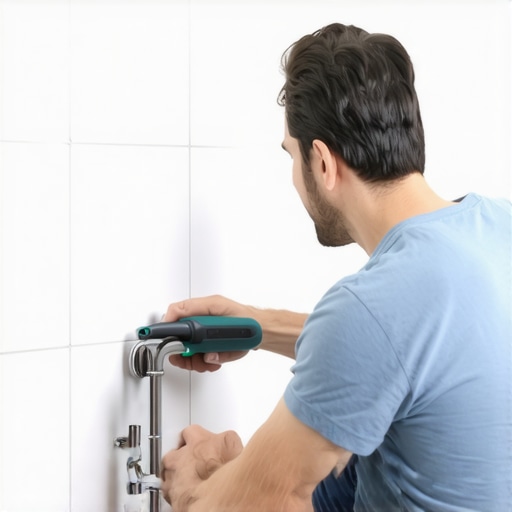
I spent three days grinding concrete on a job last month just so the floor wouldn’t click like a castanet, and that is the level of obsession required to keep a house standing. Most guys skip the leveling compound and think the underlayment will hide the dip, but it won’t. I have seen thousands of dollars in high-end materials trashed because an installer ignored the subfloor or a tiny leak behind a wall. A leaking shower valve is not just a plumbing nuisance, it is a structural assassin that targets your subfloor and your flooring materials with mechanical precision. If you are smelling mold or seeing your hardwood floors cup in the hallway next to the bathroom, you are already behind the curve. You need to understand the physics of how water moves through a wall cavity and into the structural layers of your home. This is not about aesthetics, it is about the structural engineering of your living space. We are going to look at the chemistry of grout failure, the capillary action of water in wood fibers, and the mechanical signs of a failing valve before your subfloor turns into a sponge.
The invisible drip and the ruined subfloor
Leaking shower valves produce a slow moisture migration that often bypasses the waterproofing membrane and saturates the subfloor assembly. This hydrostatic pressure can lead to delamination of plywood, OSB swelling, and the eventual structural failure of the joist system. Identifying these plumbing leaks early requires monitoring moisture content and grout integrity constantly. Water does not stay in the wall. It follows the path of least resistance, which is usually the wooden plate at the bottom of your stud wall. From there, it wicks into the subfloor. If you have hardwood floors or laminate anywhere near that bathroom, they are acting like a giant straw. The cellulose in the wood draws that moisture in, and once the moisture content hits a certain threshold, the floor starts to move. You might think your floor is just settling, but in reality, the wood is expanding because it is drinking a hidden leak from your shower.
“A floor is only as good as the subfloor beneath it; deflection is the enemy of every joint.” – Master Flooring Axiom
The ghost in the expansion gap
Expansion gaps are designed to allow hardwood floors and laminate to move with seasonal humidity changes without buckling or cupping. When a concealed leak exists, the moisture levels in the subfloor rise rapidly, causing the wood to expand beyond its calculated tolerance. This results in peaking at the seams and mechanical failure of the locking system. I have walked into jobs where a walnut floor was cupping so bad it looked like a potato chip. The homeowner thought the wood was defective, but the moisture meter told a different story. The reading on the floor was 18 percent, while the rest of the house was at 8 percent. That 10 percent difference is a death sentence for wood. The expansion gap at the wall, which should be about half an inch, was completely closed. The floor had nowhere to go, so it went up. This is usually the first sign that something is wrong behind the tile. If your baseboards are starting to look tight or your floor feels spongy, you have a water problem.
Why your subfloor is lying to you
Subfloor materials like Oriented Strand Board and Plywood react differently to water exposure and saturated conditions. OSB swelling is often irreversible because the resins and wax cannot prevent the wood strands from absorbing moisture at the edges. Plywood delamination occurs when the adhesive bonds fail, leading to structural instability and floor squeaks. You might look at the surface and think everything is fine, but the layers underneath are rotting. When a shower valve leaks, the water drips onto the sole plate. This plate is usually made of spruce or pine, which are very soft and porous. Once that wood gets wet, it stays wet. It creates a dark, damp environment that is perfect for mold. By the time you see a stain on the ceiling below or a soft spot in the floor, the structural damage is already done. You have to be a detective. You have to look for the tiny signs, like the grout in the corner of the shower looking slightly darker than the rest, which indicates it is constantly saturated.
| Material Type | Janka Hardness | Absorption Rate | Acclimation Time |
|---|---|---|---|
| White Oak | 1360 | Medium | 7 to 10 Days |
| Hard Maple | 1450 | Low | 10 to 14 Days |
| Brazilian Cherry | 2350 | Very Low | 14 to 21 Days |
| Engineered Oak | 1200+ | Low/Stable | 3 to 5 Days |
The 1/8 inch that ruins everything
Surface flatness must be within 1/8 inch over 10 feet to ensure the mechanical integrity of floating floors and tile installations. When a leaking valve introduces moisture, the subfloor swells, creating a hump that exceeds these industry standards. This deflection causes grout cracking and tile debonding over time as the thin-set loses its tensile strength. Most guys think they can just slap some extra mortar down to level things out, but that is a rookie move. If the subfloor is moving because of moisture, no amount of mortar will save you. You are dealing with the physics of expansion. A single drop of water every ten seconds can saturate a square foot of subfloor in a matter of days. That saturation causes the wood fibers to lose their structural memory. They expand, they warp, and they push against your flooring. If you have tile, the grout will start to crumble. People think grout is waterproof, but it is actually a sieve. It is porous. If there is water behind the wall, the grout will stay wet and eventually fail.
“Moisture is the single most common cause of flooring failure; prevention requires rigorous subfloor testing.” – NWFA Technical Guidelines
The chemistry of failure in a shower valve
Corroded valve bodies and failing O-rings are the primary sources of internal wall leaks in residential plumbing. These slow drips often occur when the mixing valve is engaged, leading to intermittent moisture that is difficult to detect without a thermal camera. The calcium deposits in hard water can also degrade seals, causing a constant leak that bypasses the drain flange. When this water hits your wall studs, it carries minerals and bacteria. This starts a chemical reaction with the fasteners. If you have galvanized nails in your subfloor, the moisture will cause them to rust. That rust then expands, which can actually pop your floorboards up. It is a chain reaction of failure. You have to understand that the shower is a high-stress environment. Every time you turn the water on, the pipes vibrate. If the valve is not secured properly, that vibration stresses the joints. Eventually, a microscopic crack forms, and the clock starts ticking on your flooring.
- Check for discolored or darkened grout lines in the lower corners of the shower.
- Listen for a faint dripping sound behind the wall after the water is turned off.
- Monitor the floor temperature near the shower, as damp subfloors often feel colder.
- Look for cupping or crowning in hardwood planks in adjacent hallways.
- Inspect the baseboards for paint peeling or swelling at the floor line.
- Use a moisture meter to check the walls and floor every six months.
The wicking effect in hardwood floors
Capillary action allows water to travel through the vessel elements of hardwood flooring, moving moisture far from the original leak source. This lateral migration can cause buckling in rooms that do not even share a wall with the leaking shower. High tannin woods like oak will also show dark staining as the water reacts with the natural chemicals in the wood. This is why I tell people that just because the leak is in the bathroom doesn’t mean your living room is safe. If you have a continuous run of hardwood, that water is going to travel. It moves through the end grains and the side matches of the planks. I have seen water travel fifteen feet across a subfloor under a laminate floor because the vapor barrier trapped it there. The vapor barrier is great for keeping ground moisture out, but it is a nightmare when you have a leak from above because it keeps the water trapped against the wood. You end up with a sandwich of rot. You have to act fast. If you suspect a leak, pull the cover plate off your shower handle and look inside with a flashlight. If you see any dampness on the insulation or the studs, you need to call a plumber and a flooring pro immediately.