
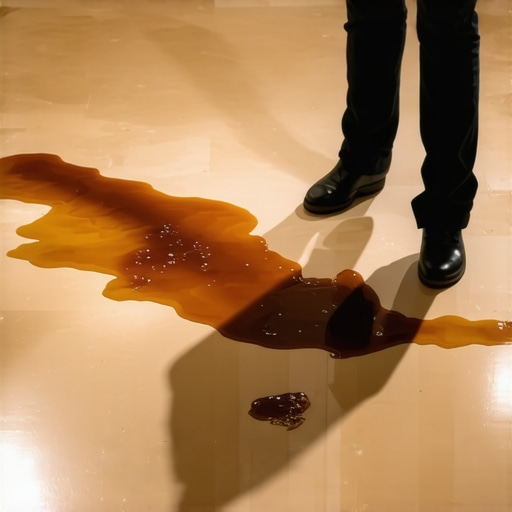
I still smell like sawdust and WD-40 from the job I finished this morning. It was a recovery mission. I walked into a house where a homeowner had spent three thousand dollars on a mid-grade laminate floor only to ruin it in six months with a bottle of grocery store floor wax. The surface looked like a clouded mirror. Every footprint stayed visible. The joints were starting to swell because the wax had seeped into the click-lock mechanisms and trapped moisture from the weekly mopping. It was a sticky, hazy mess that required four days of painstaking chemical stripping just to get back to the original wear layer. People treat laminate like it is solid oak. It is not. It is a high-tech sandwich of resins and wood fibers that follows a completely different set of physics. If you put wax on laminate, you are essentially trying to paint a window with butter. It will not stick, it will not look good, and it will eventually destroy the very thing you are trying to protect.
The chemical war between wax and melamine
Laminate flooring is a non-porous surface comprised of a melamine resin wear layer that rejects topical waxes and oils. Applying wax creates a sticky, hazy film because the molecules cannot penetrate the dense aluminum oxide coating. This results in a magnetic-like attraction for dirt, hair, and household grime. The physics of this failure are simple. Traditional hardwoods have pores. They have a cellular structure that can absorb oils or allow a wax to bond to the fiber. Laminate is a photographic image protected by a transparent layer of melamine resin often infused with aluminum oxide crystals. This wear layer is designed to be inert. When you pour a liquid wax onto this surface, the surface tension prevents the wax from leveling out. Instead, it beads and streaks. As the solvent in the wax evaporates, it leaves behind a soft, acrylic or paraffin residue. This residue has a high coefficient of friction when it is warm and becomes a glue for every piece of dust in your home. Within weeks, the floor loses its clarity. The depth of the wood grain print disappears under a milky shroud. You are left with a floor that feels tacky underfoot and looks permanently dirty regardless of how many times you sweep it.
Why your laminate floor is not a piece of wood
Laminate flooring is a multi-layered synthetic product designed to mimic the appearance of wood while providing superior scratch resistance and stability. It consists of a transparent wear layer, a decorative photographic layer, a high-density fiberboard core, and a stabilizing backer. It lacks the organic porosity of timber. While the core of the plank is made of wood fibers compressed with resins, the exterior is effectively plastic. This is why the Janka Hardness Scale, which measures the force required to embed a steel ball into solid wood, is rarely the primary metric for laminate. Instead, we use the AC Rating (Abrasion Class). The AC rating measures the resistance of the melamine surface to sandpaper. Because this surface is engineered to be extremely hard and slick, it provides no mechanical tooth for wax to grab onto. In the flooring world, we talk about mechanical versus chemical bonds. A wax requires a mechanical bond where it can sink into the grain. Since laminate is smooth at a microscopic level, the wax simply sits on top as a floating film. This film is prone to scuffing and peeling. If you have ever seen a floor that looks like it is shedding skin, that is the wax delaminating from the melamine.
“A floor is only as good as the subfloor beneath it; deflection is the enemy of every joint.” – Master Flooring Axiom
The sticky trap of dirt and debris
Topical waxes act as a sacrificial layer that attracts and holds particulate matter against the floor surface. On laminate, this creates an abrasive paste that actually accelerates the wear of the protective melamine layer. Instead of protecting the floor, the wax becomes a carrier for damaging grit. Think about the grout in your showers or the gaps in your tile. Grout is porous and absorbs sealers. Laminate is the opposite. When you walk across a waxed laminate floor, your weight presses microscopic dirt particles into the soft wax. These particles are then held in place. As you continue to walk, those particles act like sandpaper, grinding into the actual wear layer of the laminate. I have seen floors where the owner thought they were being diligent with wax, but they were actually sanding away the photographic layer. Once you wear through that melamine and hit the paper, the floor is dead. There is no sanding and refinishing a laminate floor. You cannot save it once the image is gone. By avoiding wax, you allow the aluminum oxide to do its job, which is to deflect those particles rather than trapping them.
How wax kills the mechanical locking system
Excessive liquid application during waxing causes moisture to migrate into the tongue-and-groove joints of laminate planks. This leads to edge swelling and peak-and-gap failures because the high-density fiberboard core is highly susceptible to moisture absorption through the unsealed edges. Most people think laminate is waterproof because the top is plastic. The top is waterproof, but the edges are not. When you spread wax, the liquid finds the path of least resistance, which is the seam between boards. Once the wax gets into the click-lock mechanism, it can do two things. First, it can cause the wood fibers in the HDF core to swell, which makes the edges of the boards pop up. This is called peaking. Second, as the wax dries and hardens inside the joint, it creates a brittle bond. Laminate is a floating floor. It needs to move, expand, and contract with changes in humidity. If you glue those joints together with hardened wax, the floor cannot move. Eventually, the locking tabs will snap under the pressure of expansion, leading to permanent gaps that no amount of repair can fix.
| AC Rating | Usage Level | Durability Description |
|---|---|---|
| AC1 | Light Residential | Suitable for bedrooms and closets with minimal traffic. |
| AC2 | General Residential | Good for dining rooms or living rooms without heavy use. |
| AC3 | Heavy Residential | Standard for all home areas including kitchens and hallways. |
| AC4 | Light Commercial | Designed for offices, cafes, and high-traffic homes. |
| AC5 | Heavy Commercial | Built for department stores and public buildings. |
The 1/8 inch that ruins everything
Subfloor levelness is the most ignored factor in laminate longevity. If a subfloor has a deviation of more than 1/8 inch over a six-foot span, the planks will flex. Waxing a floor with this much deflection leads to rapid cracking of the wax film at the seams. I have spent three days grinding concrete on a job just so the floor wouldn’t click like a castanet. When the floor flexes, any wax you have applied will crack. These cracks then allow more moisture to enter the core. It is a vicious cycle. People often try to use thick underlayments to hide these dips. While most people want the thickest underlayment, too much cushion actually causes the locking mechanisms on laminate to snap under pressure. You want a high-density, thin underlayment that provides support. If the subfloor is not flat, the wax will only highlight the imperfections. The light will hit the uneven, waxed surface and show every dip and hump in your house. It makes a bad installation look even worse.
“True floor longevity is achieved through proper acclimation and moisture management, not topical coatings.” – Master Flooring Axiom
Removing the gunk without destroying the wear layer
Stripping wax from laminate requires a pH-neutral approach that breaks the bond of the wax without delaminating the plank edges. Strong solvents or steam cleaners should be avoided as they can melt the resins or cause irreversible core swelling. If you have already made the mistake of waxing, do not panic and reach for the bleach. You need a dedicated wax stripper or a mixture of white vinegar, rubbing alcohol, and water. The alcohol acts as a solvent for the wax but evaporates quickly enough that it does not soak into the HDF core. Use a microfiber cloth and work in small sections. Do not flood the floor. You want to soften the wax and wipe it away. It is a slow, grueling process. I have spent many nights on my knees with a plastic scraper gently lifting layers of old wax. It is the only way to restore the original luster without needing to replace the entire floor. Avoid using steam mops. Steam mops are the number one killer of laminate floors because they force high-pressure moisture into the joints, bypassing any surface protection.
The maintenance routine that actually works
Effective laminate maintenance relies on dry methods and specialized cleaners that leave no residue. A high-quality microfiber mop and a spray-on cleaner designed specifically for hard-surface laminates are the only tools required for a long-lasting finish. You do not need the heavy chemicals used for hardwood floors or the abrasive cleaners used for grout. Follow this checklist to keep your floors in professional condition.
- Sweep or vacuum with a soft brush attachment daily to remove abrasive grit.
- Use felt protectors on all furniture legs to prevent deep scratches in the melamine.
- Avoid wet mopping; use a damp microfiber pad instead.
- Clean spills immediately to prevent moisture from reaching the plank seams.
- Maintain indoor humidity between 30 and 50 percent to minimize floor movement.
- Never use steel wool or scouring pads on the surface.
The final word on floor performance
The obsession with shine is a carryover from the days of solid wood and linoleum. Modern flooring technology has moved past the need for topical coatings. When you buy a laminate floor, you are buying a finished product. It is engineered to look a certain way for twenty years. Trying to change that look with wax is an expensive mistake. I have seen many people lose their warranties because they used unapproved cleaning products. Most manufacturers explicitly forbid the use of wax. If you want a shiny floor, buy a high-gloss laminate. Do not try to turn a matte floor into a glossy one with a bottle of chemicals. It will fail. It will look terrible. And eventually, you will be calling someone like me to come tear it out and start over. Respect the engineering of the material. Keep it dry, keep it clean, and leave the wax in the cleaning aisle.