
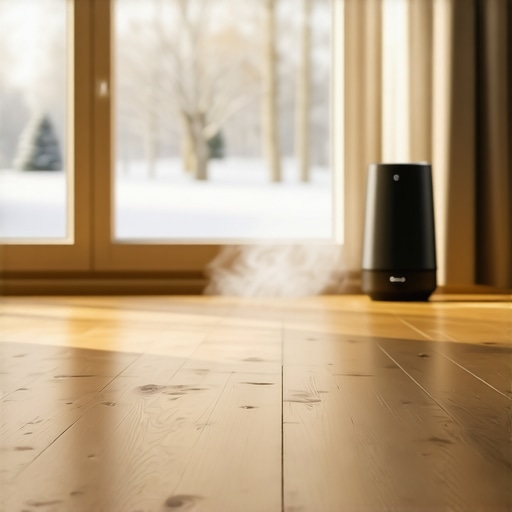
I once walked into a house where a $15,000 wide-plank walnut floor was cupping so bad it looked like a potato chip because the installer didn’t check the crawlspace humidity. The homeowner was in tears. The contractor had already blocked her number. That is the reality of ignoring the physics of moisture. Most people think a floor is just something pretty to walk on. To me, it is a living, breathing mechanical assembly. It smells like oak dust and the sharp tang of floor wax in my world. I have spent twenty five years on my knees with a moisture meter. I have seen every failure imaginable. When your floors start screaming in December, they are not just annoying you. They are telling you that the structural integrity of the installation is being compromised by atmospheric shifts. You cannot fix a scream with a rug. You fix it by understanding the molecular reality of wood fiber and the mechanical friction of the subfloor assembly.
The microscopic war inside your wood
Hardwood floors creak in the winter because of moisture loss in the wood cells. When indoor relative humidity drops below thirty percent, wood fibers contract and shrink. This physical shrinkage creates small gaps between the planks and the fasteners. Friction between these loosened components produces the audible squeak you hear with every step.
Wood is a hygroscopic material. It lives in a state of constant flux with its environment. At a cellular level, wood is composed of tracheids and vessel elements. These cells hold water in two ways. Free water sits in the cell cavities. Bound water is held within the cell walls. When the furnace kicks on in a cold climate, the air becomes thirsty. It pulls the bound water out of those cell walls. This is where the physics of shrinkage begins. As the cell walls lose moisture, they become thinner. The entire board loses width. If you have a five inch wide plank, a one percent drop in moisture content can move that board significantly. Multiply that across a twenty foot room and you have massive tension. The nails or cleats that were once tight now have room to wiggle. Every time you step, that metal fastener rubs against the dry wood fiber. It sounds like a scream because it is high frequency friction.
“Wood is a hygroscopic material, meaning it gains or loses moisture to remain in equilibrium with its environment.” – Master Flooring Axiom
The ghost in the expansion gap
Proper expansion gaps prevent floorboards from binding against walls or transitions during seasonal shifts. Without these gaps, planks have nowhere to move when they expand in summer. In winter, these gaps open up further. If the floor was pinned too tightly elsewhere, the tension causes individual boards to snap or crack loudly.
You have to look at the perimeter. Most installers are lazy. They jam the boards right up against the drywall or the baseboard. That is a recipe for disaster. A floor needs to breathe. It needs at least a half inch of space around the entire perimeter. In the winter, the boards pull away from the walls. If the floor was installed in a high humidity summer without acclimation, the winter shrinkage is violent. The wood fibers are under immense stress. You might notice your grout in adjacent tile showers is starting to crack too. That is because the house itself is shifting as the framing lumber dries out. The moisture content of your subfloor matters just as much as the finish floor. If the subfloor is plywood, it reacts differently than an OSB board. OSB has more glue. It does not breathe as well. Plywood is layered. It can delaminate if the dry cycles are too extreme. When the subfloor shrinks, it can pull away from the joists. Now you have two layers of wood rubbing together. That is a deep, bassy groan rather than a high pitched squeak.
| Wood Species | Janka Hardness Rating | Shrinkage Coefficient | Acclimation Time |
|---|---|---|---|
| White Oak | 1360 | 0.00365 | 10-14 Days |
| Brazilian Cherry | 2350 | 0.00300 | 21 Days |
| American Walnut | 1010 | 0.00274 | 7-10 Days |
| Hard Maple | 1450 | 0.00353 | 14 Days |
Why your subfloor is lying to you
A subfloor that looks flat may still have hidden deflection that causes winter noise. Deflection refers to the vertical movement of the subfloor between the joists. When wood dries out, it becomes more brittle. This increases the likelihood of the subfloor rubbing against the shank of the nails used to secure it.
I have spent days grinding concrete and screwing down plywood just to get a surface flat to within an eighth of an inch over ten feet. If there is a dip, the hardwood will bridge that gap. In the summer, the wood is swollen enough to stay relatively still. In the winter, the wood shrinks and loses its structural stiffness. Now, every time you step on that bridge, it flexes. It hits the subfloor with a click. People think they can just spray some lubricant in the cracks. That is like putting a band-aid on a broken leg. You need to address the mechanical connection. If I can get to the joists from a basement or crawlspace, I use subfloor adhesive and shims. You want to fill the void. I use a high grade construction adhesive that remains slightly flexible. If you use a glue that dries rock hard, it will just crack again next year. You need a chemical bond that understands the movement of the home. This is why I hate builder grade carpet. It hides all the sins of a bad subfloor. When you switch to hardwood or even a high quality laminate, those sins are shouted from the rooftops.
“A floor is only as good as the subfloor beneath it; deflection is the enemy of every joint.” – Master Flooring Axiom
The 1/8 inch that ruins everything
Precision leveling is the only way to ensure a quiet hardwood floor during the dry season. If a subfloor varies by more than one eighth of an inch over a six foot radius, the planks will eventually move. This movement creates friction against the fasteners which results in the characteristic winter squeak.
Most guys skip the leveling compound. They think the underlayment will hide the dip. It won’t. I spent three days grinding concrete on a job last month just so the floor wouldn’t click like a castanet. People want the thickest underlayment they can find. They think it will be soft. That is a mistake. While most people want the thickest underlayment, too much cushion actually causes the locking mechanisms on LVP or engineered wood to snap under pressure. You want density. You want a material that has a high sound transmission class rating but minimal compression. If the underlayment is too soft, the tongue and groove joints act like a hinge. They rub. They wear down. Eventually, the tongue snaps off. Now you have a floating board. In the winter, that board will move more because there is no moisture to swell the joint shut. You have to be precise. You have to be clinical. If you are not using a straight edge and a feeler gauge, you are just guessing. And guessing is why I get phone calls in January from angry homeowners.
Humidity control as a structural requirement
Maintaining a constant relative humidity between thirty five and fifty five percent is the best way to stop floor squeaks. This stability prevents the wood from entering a cycle of extreme expansion and contraction. A whole house humidifier is a structural tool, not just a comfort feature for your skin.
- Install a digital hygrometer to monitor indoor humidity levels daily.
- Run a whole house humidifier to maintain at least thirty five percent humidity during winter.
- Check crawlspace moisture levels to ensure they are not fluctuating wildly.
- Ensure your HVAC system has a high quality filter to prevent dust from settling in expansion gaps.
- Avoid using steam mops which inject moisture into the wood cells and cause swelling.
- Tighten loose subfloor boards from below using specialized screws if access is available.
If you live in a place like Chicago or Boston, the winter is brutal. The air gets bone dry. Your skin cracks, and so does your floor. You need to treat your home like a humidor. If you have solid 3/4 inch oak, it is going to move. That is the nature of the beast. Engineered wood is more stable because of the cross ply construction, but it is not invincible. The top wear layer is still real wood. It can still delaminate if the air gets too dry. The glue holding the layers together can only handle so much stress. When the wear layer wants to shrink but the core stays stable, the shear force is incredible. This can lead to checking, which are small cracks on the surface of the wood. This is common in high desert areas like Phoenix or Denver. In those regions, I tell people they must have a humidification system before I even bring the wood into the house. No system, no warranty. It is that simple. I will not put my name on a floor that is destined to fail because the owner wants to live in a desert indoors.
The chemical bond of silence
Using the right adhesives and fasteners ensures that the mechanical connection between wood and subfloor remains silent. Modern flooring adhesives are designed to allow for micro movements while maintaining a permanent bond. Using cheap staples or the wrong gauge of cleat will lead to seasonal noise issues.
I prefer cleats over staples. A cleat has a ribbed shank. It allows the wood to move slightly up and down the shank without losing grip. A staple has two legs. When the wood shrinks, it can pull one leg loose. Now you have a loose staple vibrating like a tuning fork. If I am doing a glue assist installation, I use a silane terminated polymer adhesive. This stuff is incredible. It bonds to almost anything and stays flexible for decades. It acts as a gasket between the hardwood and the subfloor. Even if the wood shrinks, the adhesive stretches. It dampens the sound. It kills the squeak before it can start. This is the difference between a floor that lasts ten years and a floor that lasts a hundred. You have to think about the chemistry. You have to think about the bond. If you just nail it and bail, you are not a floor layer. You are a handyman. And handymen are the reason I have so much work fixing floors in the winter.