
How to Stop Your Hardwood Floors From Turning Yellow Under Area Rugs
I once walked into a house where a $15,000 wide-plank walnut floor was cupping so bad it looked like a potato chip because the installer didn’t check the crawlspace humidity. It was a disaster that cost more to fix than the original install. That experience taught me one thing. If you ignore the physics of the environment, the material will eventually betray you. I have spent twenty-five years on my knees with a moisture meter and a drum sander. I smell like WD-40 and oak dust most days. When people ask me how to stop their floors from yellowing under rugs, they usually expect a simple product recommendation. The reality is much more complex. It involves the molecular structure of lignin and the volatile organic compounds in your rug pads. You are not just decorating a room. You are managing a structural engineering challenge involving light, heat, and chemistry. Hardwood is alive in a way that laminate or grout in showers never will be. It breathes. It reacts. It remembers where you put your furniture.
The shadow of the sun and the physics of the tan line
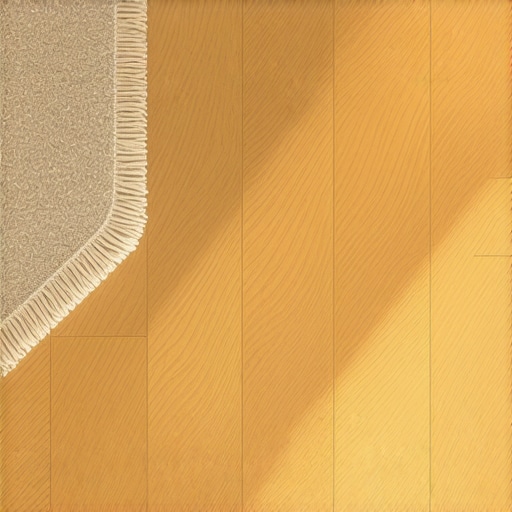
Hardwood floors change color under rugs due to photochemical reactions where UV light oxidizes the lignin and the finish. This process creates a distinct tan line because the rug acts as a mask, preventing the wood beneath from aging at the same rate as the exposed planks. This is the primary reason for discoloration. Wood is a complex organic polymer. Lignin is the glue that holds wood fibers together. When UV rays hit that lignin, a chemical breakdown occurs. This is why a brand-new cherry floor looks pale when it comes out of the box but turns a deep, rich red after six months of sun exposure. If you drop a rug on that floor immediately, you are essentially creating a photograph of the floor’s original state. When you move the rug a year later, the floor underneath will look like a ghost. It is not necessarily that the area under the rug turned yellow. It is often that the rest of the floor turned darker or more amber while the protected area stayed the same. This contrast is what people perceive as a stain. To mitigate this, you must rotate your rugs every few months during the first year of a floor’s life. This allows the UV exposure to equalize across the entire surface. You cannot stop the sun. You can only manage how it hits the wood. Think of it like a tan at the beach. If you wear a watch all summer, you will have a white strip on your wrist. Your floor is no different.
The chemical migration of rug pads and plasticizer damage
Yellowing under rugs is frequently caused by chemical migration where plasticizers in cheap rubber or PVC rug pads leach into the polyurethane finish. This reaction creates a permanent yellow or orange stain that cannot be cleaned off because it is a molecular bond change in the topcoat. I have seen countless homeowners ruin a high-end site-finished floor by using a five-dollar waffle-weave rug pad from a big-box store. Those cheap pads are loaded with plasticizers to keep them flexible. Over time, heat and pressure cause those chemicals to migrate from the pad into your floor finish. This is especially true with oil-modified polyurethanes. The chemistry is simple and brutal. The finish absorbs the chemicals, and the heat trapped under the rug accelerates the reaction. If you want to avoid this, you must use high-quality felt or natural rubber pads. Synthetic rubber is the enemy. It will off-gas. It will stick to the floor. It will leave a yellow grid pattern that will haunt you until the next time you sand the floor down to raw wood. Even then, if the chemicals have penetrated deep enough into the grain, you might still see the ghost of the rug pad. It is a structural failure of the finish layer caused by poor accessory choices. Never trust a pad that does not explicitly state it is safe for hardwood floors. If it smells like a new car, keep it out of your house.
“A floor is only as good as the subfloor beneath it; deflection is the enemy of every joint.” – Master Flooring Axiom
The subfloor humidity trap and moisture siphon
Discoloration can also occur when a rug traps moisture vapor rising through the subfloor and causes the finish to blush or amber prematurely. This happens when the rug is made of non-breathable materials like thick synthetic fibers or has a solid backing that prevents the wood from transpiring naturally. Wood is hygroscopic. It is constantly exchanging moisture with the air. If you have a crawlspace with high humidity or a concrete slab that was not properly sealed, moisture is moving up through your floor. When it hits a rug, it stops. It pools at the interface between the wood and the rug backing. This trapped moisture can cause the polyurethane to turn a milky white or a sickly yellow. It can even lead to mold or mildew growth in the rug fibers. I always tell my clients to check their subfloor moisture before they even think about rugs. If your subfloor is at twelve percent moisture and your air is at thirty percent, that water is moving. A rug acts like a dam. This is why I prefer natural fiber rugs like wool or cotton. They breathe. They allow the moisture to pass through. If you use a heavy, plastic-backed rug on a floor with high moisture movement, you are asking for a disaster. You might even see the wood start to cup or crown under the rug. The physics of evaporation cannot be ignored. You must allow your floor to breathe or the finish will fail. It is that simple.
| Material Type | Janka Hardness Rating | UV Sensitivity Level | Recommended Acclimation Time |
|---|---|---|---|
| Brazilian Cherry | 2350 | High | 14 Days |
| White Oak | 1360 | Medium | 7 Days |
| American Walnut | 1010 | High | 10 Days |
| Engineered Maple | 1450 | Low | 5 Days |
Technical specifications for underlayments and rug pads
Selecting the correct rug pad requires understanding the Shore A hardness and the permeability ratings of the material to ensure air circulation. The goal is to provide a cushion that does not compress to the point of sealing the wood grain while avoiding chemical reactivity with the urethane. I recommend a combination of needle-punched felt and 100 percent natural rubber. The felt provides the grip and the breathability while the natural rubber ensures the rug stays in place without off-gassing. Avoid any pad that uses adhesives or sticky coatings. Those coatings are often made of low-grade resins that will soften and bond to your floor finish during the summer months when humidity and temperatures rise. I have spent days scraping gummy residue off of beautiful oak floors because someone wanted a non-slip pad for five dollars. It is not worth it. You also need to consider the thickness. While people want a plush feel, a pad that is too thick can create a tripping hazard and put unnecessary stress on the tongue and groove joints of the flooring if there is any subfloor deflection. A quarter-inch felt pad is the sweet spot. It offers enough protection for the floor without turning your rug into a trampoline. The science of underlayment is about balance. You need enough density to protect the wood from foot traffic but enough porosity to allow for atmospheric equilibrium. If you ignore this, the wood will eventually discolor or the finish will peel.
The master installer protocol for rug placement
Preventing yellowing requires a strict timeline for rug introduction and a maintenance schedule that accounts for seasonal shifts in light and humidity. You cannot simply set it and forget it if you want your floors to remain uniform in color and texture. Follow this checklist to ensure your investment stays protected. It is the same advice I give to my high-end residential clients who are spending fifty thousand dollars on custom site-finished floors. Don’t be the person who ruins a masterpiece because you were lazy with a rug.
- Wait at least thirty days after a new finish is applied before placing any rugs on the floor.
- Rotate rugs and furniture every three to four months to equalize UV exposure across the room.
- Use window films or UV-blocking blinds to reduce the intensity of direct sunlight on the floor.
- Ensure rug pads are made of 100 percent natural rubber or needle-punched felt with no synthetic glues.
- Monitor indoor humidity and keep it between 35 and 55 percent to prevent moisture traps under the rug.
- Vacuum under the rugs weekly to remove grit and dust that can act like sandpaper between the pad and the wood.
“Wood is hygroscopic, meaning it constantly gains or loses moisture to stay in equilibrium with its environment.” – NWFA Technical Manual
The molecular reality of finish types and ambering
The type of finish on your floor determines how quickly and severely it will yellow under a rug based on its chemical cross-linking. Oil-based polyurethanes contain resins that naturally amber over time even without UV exposure, while water-based finishes are generally more stable but still susceptible to the tan line effect. If you have an oil-based finish, the area under the rug will actually stay lighter while the rest of the floor turns a deep amber. If you have a water-based finish, the wood itself will change color while the finish stays clear. This creates two different types of visual problems. I prefer high-quality water-based finishes like those from Bona or Loba because they don’t add their own yellow tint to the equation. However, they are more expensive and require a higher level of skill to apply without leaving lap marks. If you are dealing with a yellowing issue, you need to identify if it is the finish changing or the wood changing. You can test this by looking at the grain. If the grain looks clear but the overall color is yellow, it is the wood. If the finish looks cloudy or orange, it is the chemical topcoat. Understanding this distinction is the key to fixing the problem. You might think you need to sand the whole floor, but sometimes a simple screen and recoat with a UV-stable finish can buy you another five years of beauty. But if the plasticizers from a cheap rug pad have migrated into the wood cells, you are looking at a full sand-down. There are no shortcuts in flooring. You either do it right the first time or you do it twice. The chemistry of the bond is absolute. It does not care about your budget or your timeline.