
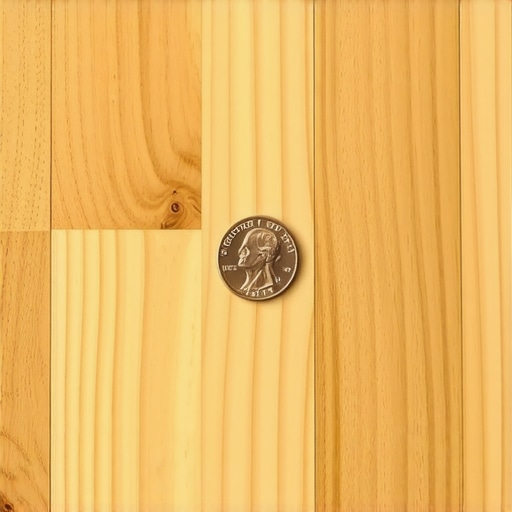
The simple coin that reveals a dying floor
The penny test for hardwood floors identifies the integrity of the polyurethane topcoat by testing its adhesion to the wood fibers underneath. If you drag the edge of a copper penny across an inconspicuous area and it produces white flakes or digs directly into the grain, your floor finish has reached its chemical expiration. This test serves as a primary diagnostic tool before moisture penetrates the wood cells and causes permanent structural warping or black mold staining.
I once walked into a house where a $15,000 wide-plank walnut floor was cupping so bad it looked like a potato chip because the installer didn’t check the crawlspace humidity. The homeowner thought the finish was fine because it still looked shiny under the floor lamps. They tried to use a damp mop to clean up a spill, but the finish was so brittle that the water went straight through the micro-cracks into the lignin. By the time I arrived, the wood had expanded by nearly five percent in width, crushing the expansion gaps and buckling the baseboards right off the wall. That is the price of ignoring a failing finish. Wood is a living, breathing biological material that wants to return to its original state. The finish is the only thing standing between your expensive investment and a pile of rotted cellulose.
The physics of surface abrasion and finish decay
Finish failure is not just an aesthetic problem. It is a chemical breakdown of the long-chain polymers that create a moisture barrier. When a floor is first finished, the polyurethane or oil-based sealer creates a cross-linked bond. Over time, UV light and foot traffic break these bonds. The penny test works because a healthy finish should be harder than the copper alloy of the coin. If the coin wins the fight, your floor is vulnerable. Modern finishes are measured in mils, which are thousandths of an inch. A standard residential finish should be between three and five mils thick. When that wears down to one mil, the protection is gone. This is where you start seeing the graying of the wood grain in high-traffic hallways.
“A floor is only as good as the subfloor beneath it; deflection is the enemy of every joint.” – Master Flooring Axiom
Why your subfloor is lying to you
Subfloor moisture levels dictate the lifespan of your hardwood finish from the bottom up. Even if your topcoat looks perfect, moisture vapor transmission from a concrete slab can push against the underside of the wood planks, creating hydrostatic pressure that pops the finish off the top. I see this constantly in basements or homes built on grade. If your concrete is pushing out more than three pounds of moisture per one thousand square feet every twenty-four hours, your finish is already on a countdown to failure. You can do the penny test all day, but if the wood is damp from below, the finish will peel like a sunburned shoulder. This is why a moisture meter is more important than a mop. You must ensure the subfloor is within two to four percent of the wood moisture content before you even think about applying a new coat of sealer.
Technical comparison of common flooring protection
| Material Type | Janka Hardness | Finish Lifespan | Moisture Resistance |
|---|---|---|---|
| Solid White Oak | 1360 | 10 to 15 Years | Moderate |
| Engineered Hickory | 1820 | 7 to 12 Years | High |
| Black Walnut | 1010 | 5 to 10 Years | Low |
| Laminate Flooring | N/A | 15 to 20 Years | Extreme |
The ghost in the expansion gap
Hardwood floors need room to move. Most homeowners think the gap under the baseboard is just a mistake by the carpenter. It is actually a breathing room for the wood. When the humidity hits eighty percent in a swampy climate like Houston, those oak boards are going to grow. If you have pinned the floor down with heavy kitchen islands or failed to leave a proper half-inch gap at the perimeter, the boards will crown. When they crown, the edges are exposed to more friction. This friction wears the finish down faster than the center of the board. The penny test often fails first at the seams of the wood because that is where the most mechanical stress occurs. If you see your finish flaking at the edges of the planks, your floor is likely too tight against the walls.
“Wood flooring is a hygroscopic material that gains or loses moisture to reach equilibrium with its environment.” – NWFA Technical Standards
The 1/8 inch that ruins everything
Precision is the difference between a floor that lasts forty years and one that needs replacement in five. A dip of only one-eighth of an inch over a ten-foot span can cause the wood to flex every time you walk on it. This microscopic movement is called deflection. Every time the wood flexes, the finish is stretched. Eventually, the finish loses its elasticity and cracks. These cracks are invisible to the naked eye until they start collecting dirt and oil. This is why grout in adjacent tile showers can sometimes reveal the health of your hardwood. If the grout in your bathroom is cracking, it means the subfloor is moving. If the subfloor is moving in the bathroom, it is likely moving under your hardwood floors too. High-end installers will use a self-leveling compound to ensure the surface is flat within industry tolerances before the first plank is ever laid.
Maintenance protocols for long-term finish integrity
- Vacuum with a soft brush attachment twice weekly to remove abrasive grit.
- Maintain indoor relative humidity between thirty and fifty percent year-round.
- Never use steam mops on real wood as the heat forces moisture into the grain.
- Apply felt pads to the bottom of all furniture and replace them every six months.
- Perform the penny test in high-traffic areas every spring and fall.
The relationship between laminate and hardwood floors
Many people confuse laminate with hardwood when it comes to durability. Laminate uses an aluminum oxide wear layer that is significantly harder than the polyurethane used on real wood. You cannot fix a laminate floor with a sand and finish. If a laminate floor fails the penny test, it means the plastic film has delaminated from the HDF core. On the other hand, solid hardwood floors are a structural engineering feat. You can sand them down five or six times over a century. However, the chemistry of the finish has changed. Old oil-modified varnishes took weeks to cure. Modern water-based finishes cure in days but require a much higher level of skill to apply without leaving lap marks. If you see streaks in your floor, the installer likely worked too slow or the room was too hot, causing the finish to dry before it could level out.
Final technical takeaway
The penny test is your first line of defense against a full floor replacement. If the coin reveals a soft or brittle surface, you must act before water penetrates the wood cells. Once the wood is stained by moisture, no amount of sanding will remove the black tannins. You are then looking at board replacement, which is a surgical and expensive process. Treat your floors like the structural components they are. Monitor the humidity, respect the expansion gaps, and keep your finishes thick. If the wood cannot breathe, it will eventually fight back. [ARTICLE_SCHEMA_JSON_LD: {“@context”: “https://schema.org”, “@type”: “Article”, “headline”: “The Penny Test for Checking if Your Hardwood Finish Is Failing”, “author”: {“@type”: “Person”, “name”: “Master Floor Architect”}, “description”: “A technical guide to testing hardwood floor finish integrity using the penny test and understanding subfloor physics.”, “articleSection”: “Flooring Maintenance and Engineering”}]