
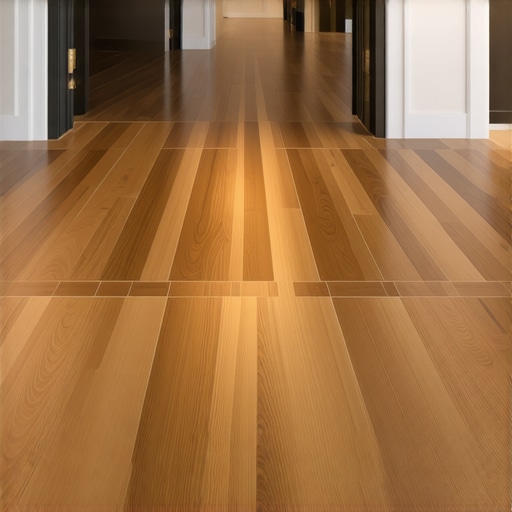
I spent three days grinding concrete on a job last month just so the floor would not click like a castanet. The homeowner wanted an unbroken plane from the kitchen tile to the living room laminate. Most installers would have just slapped a bulky T-molding over the gap and called it a day. That is the easy way. It is also the ugly way. To get a transition that disappears, you have to play a game of millimeters. You have to understand the chemistry of the subfloor and the physics of the floating floor. I remember the scent of unscented soap in that house, everything was white and grey, and the thought of a bronze metal strip cutting through the visual flow was offensive. We achieved a zero-threshold finish that looked like it was designed by a precision engineer because it was. Success in this area is not about the visible surface. It is about the invisible structural prep.
Why your subfloor is lying to you
Subfloors often hide undulations and dips that exceed the one-eighth inch tolerance required for flush flooring transitions without metal strips. You must use a straightedge to identify high spots and low spots across the entire transition zone. If the concrete slab is not dead flat, your laminate will flex every time someone walks over the seam, eventually breaking the tongue and groove locking mechanism. I use a diamond cup wheel to grind down the high points. It is a dusty, miserable job that requires a vacuum shroud and a HEPA filter, but it is the only way to ensure the materials meet at an identical elevation. When you are dealing with the physics of subfloors, hope is not a strategy. You must measure the moisture vapor transmission rate as well. A slab that looks dry can still push enough vapor through to swell the high-density fiberboard core of your laminate, causing the edges to peak at the very spot you want them to remain flat.
The one-eighth inch that ruins everything
Calculating the finished floor height of both materials including thin-set and underlayment is the only way to avoid a vertical lip at the transition. You have to do the math before you buy the material. A standard porcelain tile is often three-eighths of an inch thick. Add a quarter-inch of thin-set, and your tile sits five-eighths of an inch high. Now look at your laminate. A high-end twelve-millimeter plank is roughly half an inch. Even with a three-millimeter pad, you are still shy of the tile height. To bridge this gap, you must install an extra layer of underlayment or a thin plywood skin to raise the laminate side. If you miss this calculation by even one-sixteenth of an inch, you create a trip hazard and a visual break that ruins the minimalist line. Precision is the difference between a master installation and a DIY disaster.
| Material Type | Nominal Thickness | Installation Layer | Final Elevation |
|---|---|---|---|
| Porcelain Tile | 3/8 inch | 1/4 inch Thin-set | 5/8 inch |
| Laminate Plank | 12mm | 3mm Underlayment | 0.59 inch |
| Engineered Wood | 1/2 inch | Glue Assist | 0.56 inch |
| Luxury Vinyl | 8mm | Integrated Pad | 0.31 inch |
“A floor is only as good as the subfloor beneath it; deflection is the enemy of every joint.” – Master Flooring Axiom
The ghost in the expansion gap
Laminate floors are floating systems that require a mandatory expansion gap of at least one-quarter inch at all vertical edges to prevent buckling. This is the paradox of the strip-free transition. You cannot butt the laminate tight against the tile because the floor needs to move. If you pin it against the tile, the floor will cup or peak during the first humid summer. The solution is a flexible expansion joint. Instead of a metal T-molding, we use a high-performance, color-matched silicone sealant. This material has a high movement capability, meaning it can compress and stretch as the laminate floor breathes. You must ensure the gap is clean and free of debris before injecting the silicone. Use painter’s tape on both edges to get a crisp, architectural line. This creates a soft joint that looks like a grout line but acts like a shock absorber.
Adhesive chemistry for modern transitions
The chemical bond between the substrate and the tile must be absolute to prevent the tile from shifting at the transition point. I always use a polymer-modified thin-set that meets or exceeds ANSI A118.4 standards. The polymers allow for a slight amount of flexibility and a much stronger bond to the concrete. On the laminate side, the underlayment plays a vital role in sound dampening and moisture protection. While most people want the thickest underlayment, too much cushion actually causes the locking mechanisms on laminate to snap under pressure. You want a high-density foam or rubber that offers minimal compression. This structural rigidity is what allows the two materials to stay level with one another over years of foot traffic. If the laminate side is too soft, the joint will fail.
The checklist for a flush transition
- Measure the moisture content of the concrete slab using a calcium chloride test.
- Grind high spots and fill low spots with a high-strength self-leveling compound.
- Calculate the total stack height of tile plus thin-set versus laminate plus pad.
- Leave a consistent one-quarter inch gap between the tile edge and the laminate.
- Use 100 percent silicone sealant rather than hard grout in the transition gap.
- Ensure the tile is fully back-buttered at the edge to prevent cracking.
“Standard expansion gaps for laminate flooring are not suggestions; they are structural requirements for the longevity of the locking mechanism.” – Flooring Industry Standard
Moisture migration in zero threshold designs
Managing moisture is essential when transitioning from a wet area like a kitchen or bathroom to a wood-based product like laminate. Even if your laminate is marketed as waterproof, the core is still susceptible to moisture from underneath. When you remove the transition strip, you are removing a layer of protection. You must use a vapor barrier that is taped and sealed. In humid climates, the expansion of the HDF core can be significant. I have seen floors grow by half an inch across a twenty-foot span. If you do not account for this in your transition joint, the floor will destroy the silicone bead and push against the tile. It is a slow-motion collision that always ends with the laminate winning and the tile cracking. You must respect the moisture equilibrium of the home before you finalize the seam.
The final inspection of the architectural plane
The goal is a surface that does not call attention to itself. When you walk from a tiled entryway into a laminate living room, your feet should not feel a change in elevation. Your eyes should not see a bulky plastic or metal bridge. You are looking for a clean, intentional line. This requires more than just luck. It requires a commitment to the grinding, the leveling, and the math of the installation. A minimalist floor is the hardest kind to install because there is nowhere to hide a mistake. Every fraction of an inch is exposed. If you take the time to prep the subfloor correctly, you will have a floor that lasts for decades and looks like a custom architectural feature rather than a budget renovation project. This is the difference between a floor that is merely installed and a floor that is engineered.