
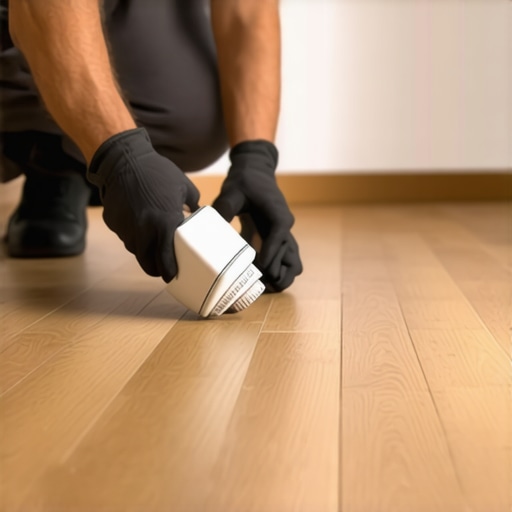
The ghost in the expansion gap
To stop a hardwood squeak with a dry lubricant trick, you must identify the friction point between planks and apply a high-grade graphite or talcum powder directly into the groove. This method reduces the coefficient of friction between the tongue and groove, effectively silencing the mechanical rub caused by structural movement or environmental shifts.
Most guys skip the leveling compound. They think the underlayment will hide the dip. It won’t. I spent three days grinding concrete on a job last month just so the floor wouldn’t click like a castanet. I have seen fifteen thousand dollar wide-plank installations ruined because the subfloor was out of spec by a quarter inch. When you walk across a floor and hear that high-pitched chirp, you are not just hearing noise. You are hearing the sound of wood fibers grinding against each other under the pressure of your body weight. It is a mechanical failure on a microscopic scale. I have spent twenty-five years on my knees with a moisture meter and a level. I know the difference between a floor that is solid and one that is just waiting to fail. Most homeowners think a squeak is just part of the charm of an old house. It is not. It is friction. It is movement where there should be stillness.
The physics of the mechanical rub
Hardwood floor squeaks are primarily caused by the mechanical interaction of two wood members rubbing together, often due to loose fasteners or subfloor deflection. When the wood cells, specifically the lignin and cellulose structures, compress and slide against an adjacent board, the resulting vibration produces the audible squeak found in many older homes.
The anatomy of a hardwood plank is more complex than it looks. You have the tongue, the groove, and the shoulder. When a floor is installed, these parts are supposed to fit together with enough clearance for seasonal expansion but enough tightness to maintain structural integrity. If the humidity in your home drops, the wood cells lose moisture. This causes the tracheids in the wood to shrink. This shrinkage creates a tiny gap between the tongue of one board and the groove of the next. When you step on that board, it deflects. That deflection causes the tongue to rub against the groove. This is where the dry lubricant comes in. Graphite is a crystalline form of carbon with its atoms arranged in a hexagonal structure. These layers of atoms slide over each other with incredibly low friction. When you puff that graphite into the joint, you are essentially inserting millions of microscopic ball bearings between the wood fibers.
“A floor is only as good as the subfloor beneath it; deflection is the enemy of every joint.” – Master Flooring Axiom
Why your subfloor is lying to you
A subfloor may appear flat to the naked eye while hiding significant structural dips that lead to chronic squeaking and board movement. Using a ten-foot straightedge is the only way to verify that the substrate meets the industry standard of three-sixteenths of an inch deviation over a ten-foot radius.
I have walked onto jobs where the contractor swore the floor was level. I pulled out my straightedge and found a half-inch valley in the middle of the room. If you lay hardwood over a dip like that, you are asking for trouble. The planks will bridge the gap. Every time you walk over that bridge, the wood flexes. That flex pulls at the flooring cleats. Eventually, the cleat loses its grip on the plywood subfloor. Now you have metal rubbing against wood and wood rubbing against wood. It is a symphony of noise that no amount of wax can fix. This is why structural zooming is essential. You have to look at the ply-rating of your CDX plywood. You have to understand the shear strength of a two-inch power cleat. If you are working over a concrete slab, you have to worry about the calcium chloride test results. If the moisture vapor emission rate is too high, your wood will cup. When it cups, the edges lift. When the edges lift, they rub. They squeak. It is a cycle of failure that starts from the bottom up.
The 1/8 inch that ruins everything
The expansion gap at the perimeter of a room must be at least one-half inch to allow for the natural hygroscopic movement of the wood planks throughout the seasons. Failing to provide this space causes the floor to bind against the walls, leading to pressure squeaks, buckling, and the eventual failure of the locking mechanism.
I despise the term waterproof when it comes to flooring. Nothing is waterproof if you have a plumbing failure. Even laminate floors, which some people try to put near showers, have a limit. Laminate is essentially sawdust and resin. If you don’t leave an expansion gap, that laminate will hit the drywall and have nowhere to go but up. Hardwood is even more temperamental. It is a living, breathing material. It reacts to the air around it. If you lock it tight against the baseboards, it will scream every time the furnace kicks on. I once saw a white oak floor that had pushed a baseboard off the wall because the installer didn’t leave a gap. That floor squeaked like a pack of rats. We had to go in with a toe-kick saw and cut a relief gap around the entire perimeter. The moment the tension was released, the squeaking stopped. It was like the floor finally took a breath.
| Material Type | Janka Hardness | Expansion Coefficient | Subfloor Requirement |
|---|---|---|---|
| Solid White Oak | 1360 | High | Plywood/OSB |
| Engineered Maple | 1450 | Medium | Concrete/Plywood |
| Laminate Core | N/A | Low | Level Flat Surface |
| LVP Rigid Core | N/A | Minimal | Zero Deflection |
The chemistry of dry lubrication
Dry lubricants like graphite or PTFE powder are superior for flooring repairs because they do not contain oils or moisture that could swell the wood fibers or attract dust. These lubricants penetrate the microscopic pores of the wood and provide a long-lasting barrier that eliminates the friction responsible for surface-level squeaks.
Do not use WD-40 on your floors. I have seen people do it, and it makes me want to retire. WD-40 is a solvent and a light oil. It will soak into the wood and stain the finish. It can even break down the adhesives used in engineered flooring. If you have a squeak, you need something that stays dry. Graphite is the gold standard, but it is messy. If you have a light-colored floor like maple or ash, you might want to use unscented talcum powder or a specialized PTFE spray that dries to a film. The goal is to get the lubricant down into the groove. You apply it, then you walk on the boards to work it in. The movement of the board helps the powder migrate deep into the joint where the friction is happening. It is a simple fix for a complex problem of physics. However, if the squeak is caused by a loose subfloor, no amount of powder will help. You have to address the fasteners.
The structural checklist for silent floors
Before you start pouring powder into your cracks, you need to verify the source of the noise. Follow this checklist to ensure you are fixing the right problem.
- Check the moisture content of the planks using a pin-style meter to ensure they are within 2 percent of the subfloor.
- Inspect the crawlspace or basement for signs of high humidity that could be swelling the joists.
- Walk the floor slowly to identify if the sound is a sharp click or a deep groan.
- Verify that the subfloor fasteners are not missing the joists entirely.
- Check the perimeter expansion gaps under the baseboards.
- Ensure no heavy furniture or kitchen islands are pinning the floor and preventing movement.
“Fastener schedule is the law; sixteen inches on center is the bare minimum for a stable walk.” – NWFA Installation Guidelines
Why grout and showers are a different beast
While wood squeaks are mechanical, noise or movement in tile and grout indicates a failure of the thin-set bond or excessive deflection in the joist system. In wet areas like showers, any movement is catastrophic as it breaks the waterproofing membrane and leads to structural rot within the wall cavity.
I get asked all the time if you can put wood in a bathroom. I tell them sure, if you want to replace it in three years. Showers and hardwood don’t mix. Even if you use a high-end grout, the moisture will eventually win. If your tile floor is squeaking, it isn’t really squeaking, it is crunching. That is the sound of the thin-set shearing away from the back of the tile. It usually happens because the installer didn’t use a decoupling membrane like Ditra. They just slapped tile onto plywood. Plywood expands and tile doesn’t. When the plywood moves, the bond breaks. Now you have a floating tile that grinds against the grout every time you step on it. It is the same principle of friction as the hardwood squeak, but the stakes are higher because once that bond is gone, moisture can get underneath and start growing things you don’t want in your house.
The final word on floor performance
Building a floor is like building an engine. Every part has to be machined to the right tolerance and lubricated correctly. If you have a squeak, your engine is knocking. Use the dry lubricant trick for those minor seasonal groans, but don’t ignore the signs of a deeper structural failure. A floor should be felt and not heard. It should be a solid platform for your life, not a source of daily irritation. Take care of your subfloor, monitor your humidity, and don’t be afraid to get down on your knees and look at the grain. The wood will tell you what it needs if you know how to listen.