
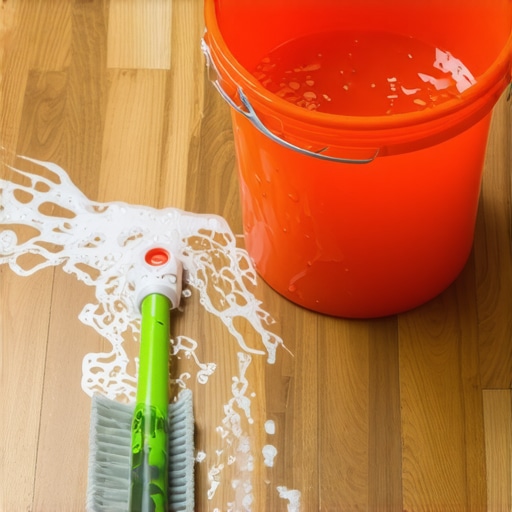
I once walked into a house where a $15,000 wide-plank walnut floor was cupping so bad it looked like a potato chip because the installer didn’t check the crawlspace humidity, but the homeowner made it worse. She had been mopping that expensive wood with a bucket of hot water and a heavy squeeze of Dawn dish soap. To the naked eye, the floor looked clean for a few weeks. Then the haze started. Then the edges of the planks began to lift. By the time I arrived with my moisture meter, the finish was chemically compromised and the wood cells were gorged with water. It was a total loss. People think because dish soap is gentle on hands, it must be gentle on timber. That is a lie that costs thousands of dollars in restoration fees. Wood is a dynamic, organic material. It is not a dinner plate. It is a structural element that reacts to every chemical and moisture change in its environment. If you want to keep your hardwood floors for a lifetime, you need to understand the physics of what happens at the molecular level when you introduce surfactants to a site-finished or pre-finished surface.
The chemical warfare of the kitchen sink
Dish soap is a surfactant engineered to emulsify fats and oils, which makes it a lethal enemy to the protective finish on hardwood floors. While these soaps are excellent for breaking down grease on ceramic or stainless steel, they interact poorly with polyurethane and aluminum oxide coatings. Over time, the chemical residue from the soap creates a dull film that cannot be buffed out. This film actually attracts more dirt, leading to a cycle of over-cleaning that eventually strips the finish of its protective properties. Wood floors require a pH-neutral cleaner that evaporates quickly without leaving a surfactant trail behind. When you use soap, you are essentially applying a sticky magnet for dust and pet dander. It will buckle. It will haze. It will fail. Every time you mop with dish soap, you are performing a slow-motion chemical strip of your most expensive architectural asset. The surfactants sit in the micro-scratches of the finish, preventing the wood from reflecting light properly. This is why floors treated with dish soap eventually look grey and lifeless regardless of how much you scrub them.
“A floor is only as good as the subfloor beneath it; deflection is the enemy of every joint.” – Master Flooring Axiom
Why your polyurethane finish is not a plastic shield
Most homeowners believe their hardwood floors are sealed under a layer of plastic that is impervious to liquid penetration. This is a dangerous misconception because polyurethane is porous at a microscopic level and contains thousands of tiny pinholes and expansion joints. Water mixed with dish soap has a lower surface tension than pure water, meaning it can seep into the grain more easily. Once moisture reaches the raw wood beneath the finish, the lignin begins to swell. This triggers a process called cupping, where the edges of the boards rise higher than the center. You cannot fix this with a fan or a dehumidifier once the fiber saturation point has been reached. In my twenty-five years of experience, I have seen more floors ruined by “gentle” cleaning than by actual foot traffic. The finish is a wear layer, not a waterproof membrane. It is designed to take the abrasion of shoes, not the chemical onslaught of grease-cutting agents. If you want to see a floor survive fifty years, you stop treating it like a countertop. You treat it like a structural system that breathes.
The hidden danger for laminate and engineered cores
Laminate floors are even more susceptible to dish soap damage because they rely on high-density fiberboard cores that act like a sponge when exposed to standing moisture. Unlike solid hardwood floors, which can sometimes be sanded and saved, laminate is a one-shot product. If the soap and water mixture penetrates the click-lock joints, the HDF core will swell and the edges will chip. This is often called peaking. Once the edges peak, they are vulnerable to being caught by socks or vacuum cleaners, leading to delamination. Engineered hardwood floors are similarly at risk. While they are more stable in humid environments like Florida or Houston, the thin veneer of real wood on top can easily separate from the plywood layers if the cleaning solution is too aggressive. You are managing a multi-layer composite material that requires precision care. Using a bucket and mop on laminate is the fastest way to void your manufacturer warranty. Most warranties specifically state that any use of unapproved cleaning agents or excessive moisture will result in a claim denial.
| Feature | Solid Hardwood | Engineered Wood | Laminate |
|---|---|---|---|
| Moisture Sensitivity | High (Cupping) | Medium (Veneer failure) | Extreme (Core swelling) |
| Cleaning Method | Damp spray / pH neutral | Damp spray / pH neutral | Dry mop / Mist only |
| Repairability | High (Multiple sands) | Low (1-2 sands) | Zero (Replacement only) |
| Ideal Humidity | 35% to 55% | 30% to 60% | 30% to 50% |
Why grout in showers is a different beast entirely
The logic people use for cleaning showers often migrates to their living rooms with disastrous results for their hardwood floors. In a shower, you are dealing with cementitious grout and ceramic or porcelain tile. These materials are designed to handle high-alkaline cleaners and heavy scrubbing. Grout is porous and absorbs body oils, which is why it needs a surfactant. However, if you use those same techniques on your wood floors, you are essentially sandblasting the finish. People see the grout lines in their tile and think the gaps between their floorboards are the same. They aren’t. Those gaps are expansion joints meant to accommodate the seasonal movement of the wood. When you flood those joints with soapy water, you are trapping moisture in a dark, unventilated space. This leads to mold growth and subfloor rot. I have replaced entire subfloors because a homeowner thought they were being thorough by “deep cleaning” the cracks with soap and a scrub brush. That moisture stays there for weeks, slowly eating away at the plywood underneath.
The 1/8 inch that ruins everything
Professional installation requires a 1/8 inch tolerance over a 10-foot radius because any dip in the subfloor will cause the finish to crack under the weight of foot traffic. When these micro-cracks occur, they become the primary entry point for your cleaning solutions. If you are using dish soap, the surfactants will lodge themselves in these fissures. Over time, the soap prevents the finish from bonding to the wood during any future screen and coat procedures. This means you can’t just put a new layer of finish down later. The soap residue causes “fish-eyes,” which are small craters where the new finish refuses to stick. You end up having to sand the entire floor down to bare wood just to remove the soap contamination. It is a massive expense that could have been avoided with a simple ten-dollar bottle of hardwood-specific cleaner. Wood floors are an investment in the equity of your home. You should treat them with the same respect you would a high-end piece of furniture.
- Use only pH-neutral cleaners specifically labeled for hardwood.
- Never use a saturated mop; use a microfiber pad that is barely damp.
- Clean up spills immediately to prevent moisture from reaching the expansion gaps.
- Avoid any products that claim to “restore shine,” as these are usually just wax or silicone.
- Maintain a consistent indoor humidity level to minimize wood movement.
- Dust mop daily to remove abrasive grit that scratches the finish.
The ghost in the expansion gap
Wood is hygroscopic, meaning it is constantly absorbing and releasing moisture from the air to stay in equilibrium with its environment. In the winter, when the heater is running, your floorboards will shrink and gaps will appear. In the summer, they will expand and the gaps will close. This is normal. This is the floor breathing. If you pour soapy water into those gaps during the winter, you are inviting disaster. The water gets trapped when the boards expand in the summer, leading to pressure that can actually pop the nails out of the subfloor. I have seen 2-inch cleats sheared off because the wood had nowhere to go. This is why professional installers are so obsessed with acclimation. We leave the wood in the house for weeks before installing it so it can reach its “local” moisture content. When you disrupt that balance with improper cleaning, you are fighting against the physics of the material. Stop using the bucket. Stop using the dish soap. Use a spray-and-wipe method that controls the volume of liquid introduced to the surface.
“Wood moves. It is the installer’s job to predict where it goes and the owner’s job to keep it dry.” – NWFA Technical Manual
Strategic maintenance for the long haul
True flooring professionals do not look at a floor and see a color; they see a system of fasteners, underlayment, subfloor, and finish. If any part of that system fails, the whole thing goes. Dish soap is the quickest way to degrade the top layer of that system. Once the finish is gone, the wood is vulnerable to staining and rot. If you have pet accidents or water leaks, a compromised finish will allow those liquids to soak deep into the grain, causing permanent black stains. These stains are caused by the reaction between the tannins in the wood and the moisture. They cannot be sanded out. You have to replace the boards. By using the correct cleaning agents, you maintain the integrity of the finish, which acts as the first line of defense for the entire structural assembly. Spend the extra money on the right products now, or spend thousands on me later to rip it all out. The choice is yours, but the physics of the wood won’t change just because you want a shortcut.