
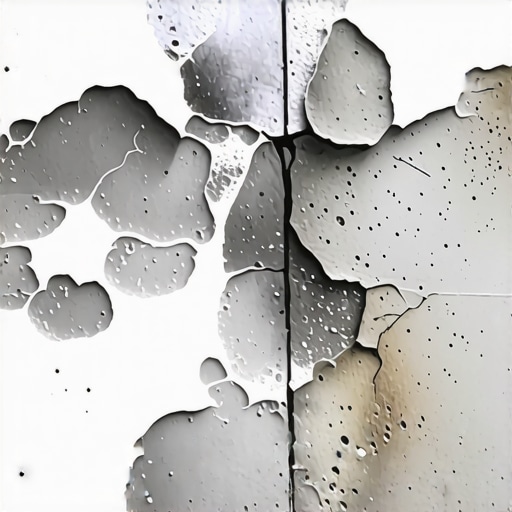
The Acid Wash Mistake That Ruins Concrete Patio Coatings
You’ve seen the kits at the local big-box home improvement store. They promise a “showroom quality” finish for your outdoor living space with just a few hours of work and a jug of muriatic acid. As a homeowner in McCordsville or Geist, the appeal of a weekend DIY project to revitalize your backyard is strong. However, as a project manager with over 15 years in the flooring industry at QuestMark, I have seen the “Acid Wash Mistake” ruin more concrete patio coatings than any other single factor.
My name is Carlos Perez, and I’ve spent my career managing complex concrete polishing and coating projects. I’ve stepped onto hundreds of patios where a homeowner applied a high-end polyaspartic garage floor coating or a concrete sealer only to have it peel up in giant sheets just six to twelve months later. The culprit isn’t usually the product itself – it’s the preparation. The belief that a $20 jug of acid can replace professional mechanical surface profiling is a myth that costs homeowners thousands in repairs and stripping fees. In this guide, I will break down the science of why acid etching fails and why diamond grinding is the only path to a lifetime bond.
The Science of Adhesion: Why Acid Etching Often Fails
To understand why acid washing is insufficient for concrete patio coatings, we have to look at the International Concrete Repair Institute (ICRI) standards for Concrete Surface Profile (CSP). Adhesion is entirely dependent on the “tooth” of the concrete. Think of it like painting a piece of glass versus painting a piece of sanded wood; the coating needs microscopic valleys to anchor itself into.
Acid etching – the process of applying muriatic or phosphoric acid to the slab – typically only achieves a CSP 1. This is a surface that feels roughly like construction paper. Most high-performance coatings, including a professional-grade polyaspartic garage floor coating, require a CSP 2 or CSP 3, which feels more like 60-grit to 80-grit sandpaper. When the profile is too smooth, the coating simply sits on top of the concrete rather than becoming part of it.
Furthermore, the chemistry of acid washing is inherently flawed for modern concrete coatings. Muriatic acid reacts with the calcium carbonate in the concrete to open the pores. However, this reaction creates a byproduct: a “slurry” of calcium salts and spent acid. If every single molecule of this residue isn’t neutralized with ammonia or baking soda and then pressure washed away with surgical precision, those salts remain in the pores. When you apply your epoxy resin flooring or polyaspartic, you aren’t bonding to the concrete; you are bonding to a layer of microscopic dust. This is a primary reason Why Your McCordsville Garage Floor Coating Peels and the Prep Step Most DIYers Skip.
The Moisture Trap: Why Acid Washing is Dangerous in Indiana
In regions like McCordsville and Geist, our climate presents unique challenges for concrete patio coatings. We deal with high humidity in the summer and a brutal freeze-thaw cycle in the winter. Acid washing requires saturating the concrete slab with a massive amount of water to dilute the acid and rinse the surface.
Concrete is essentially a hard sponge. When you flood a patio with water during the acid-washing process, that moisture travels deep into the capillaries of the slab. Industry research often cites the “Houston Factor” – a phenomenon where high ambient humidity prevents deep-pore drying. Even if the surface looks dry to the eye, the internal moisture levels remain dangerously high. If a concrete sealer or polyurea coating is applied over this trapped moisture, it leads to osmotic blistering. As the sun beats down on the patio, the trapped water turns into vapor, creating upward pressure that forces the coating to delaminate from the substrate. Professional installers use moisture meters to ensure the moisture vapor transmission rate (MVTR) is below 3 lbs per 1,000 sq. ft., a metric that is almost impossible to hit shortly after an acid wash.
Polyaspartic vs. Epoxy: Choosing the Right Chemistry for Patios
When selecting a concrete patio coatings system, understanding the difference between epoxy and polyaspartic is vital. Many DIY kits sold in McCordsville are standard epoxy resin flooring. While epoxy is incredibly strong, it has two major weaknesses for outdoor use: it is rigid and it is not UV-stable. Under the Indiana sun, epoxy will “chalk” and turn a sickly yellow color within a single season.
The professional standard is a polyurea floor coating or a polyaspartic. These materials are UV-stable, meaning they will stay crystal clear or maintain their color indefinitely. They are also flexible enough to expand and contract with the concrete during our temperature swings. However, there is a catch: polyaspartic resins cure extremely fast. Unlike epoxy, which might take 8 to 24 hours to set, polyaspartics “wet out” the concrete and begin to harden quickly. If the concrete has not been mechanically profiled through diamond grinding, the polyaspartic cannot “bite” into the surface before it cures. Without that mechanical bond, even the most expensive polyaspartic garage floor coating will fail if the prep was just a simple acid wash.
The Professional Alternative: Diamond Grinding Explained
If acid washing is the “mistake,” diamond grinding is the solution. As a project manager, I never authorize a project to proceed without mechanical preparation. This involves using heavy-duty planetary grinders equipped with industrial diamond segments. These machines don’t just “clean” the surface; they physically remove the top layer of “laitance” – the weak, cream-like layer of concrete that rises to the top during the original pour.
Diamond grinding achieves several things that acid cannot:
- Consistent Profiling: It creates a uniform CSP 2 or 3 across the entire slab, ensuring every square inch of the garage flooring or patio is ready for bonding.
- Contaminant Removal: It grinds away old sealers, oils, and tire marks that acid often leaves behind.
- Dry Process: Unlike the water-heavy acid wash, diamond grinding is a dry process. We use industrial HEPA vacuum systems connected directly to the grinders to capture 99.9% of the dust. This keeps your home clean and, more importantly, keeps the slab dry and ready for immediate coating.
Whether you are installing a high-end metallic epoxy floor in a “man cave” or protecting a backyard transition, diamond grinding is the only way to guarantee the coating becomes a permanent part of the stone.
Common Signs Your Patio Coating Was Improperly Prepared
How do you know if your concrete patio coatings were victims of the acid wash mistake? There are a few tell-tale signs. The most common is “sheeting.” If you can take a putty knife and peel up large sections of the coating like a piece of tape, the bond failed at the substrate level. Often, if you look at the underside of the peeled coating, you will see a white, powdery residue. This is efflorescence or leftover calcium salts from an incomplete acid wash neutralization.
Another sign is “hot tire pick-up.” While we usually discuss this regarding garage flooring, it applies to any area where vehicles or heavy equipment might move. If the coating sticks to the heat of a tire and pulls away from the concrete, the mechanical bond was non-existent. If you are unsure about the state of your current floor, you can perform The Tape Test. While originally designed for hardwoods, applying a high-tack professional tape to a suspect area of concrete coating and ripping it up quickly can tell you a lot about the interlaminar adhesion of your floor.
Beyond the Patio: Pool Decks and Driveways
The stakes are even higher when we move from the patio to a coating for concrete pool deck. In these environments, the concrete is constantly exposed to chemically treated water and bare feet. Slip resistance is paramount. When we install a concrete sealer or coating around a pool in Geist, we incorporate anti-skid additives like aluminum oxide or glass beads.
These additives increase the weight and surface tension of the coating. If the base layer isn’t anchored via diamond grinding, the added weight of the non-slip texture can actually accelerate delamination. Furthermore, pool decks are often “salt-pressed” or stamped concrete. These textures are notoriously difficult to acid wash correctly because the acid pools in the low spots, over-etching some areas while leaving the high spots untouched. Professional mechanical prep ensures that even the most complex textures are ready for a McCordsville summer.
Your Patio Deserves a Lifetime Bond
A patio is more than just a slab of concrete; it is an extension of your home and a significant investment in your property value. Choosing a “cheap” preparation method like acid washing is a gamble where the odds are stacked against the homeowner. The science is clear: concrete coatings require a mechanical bond that only diamond grinding can provide. By avoiding the acid wash mistake, you ensure that your polyurea floor coating or decorative finish remains beautiful, functional, and peel-free for decades.
If you are planning a project in the Indianapolis area, don’t settle for “good enough” prep. Contact a professional who uses industrial grinding equipment and performs moisture testing. Your floor – and your wallet – will thank you. For more information on professional-grade installations, visit guycoatings.com to see what a truly prepared surface looks like.