
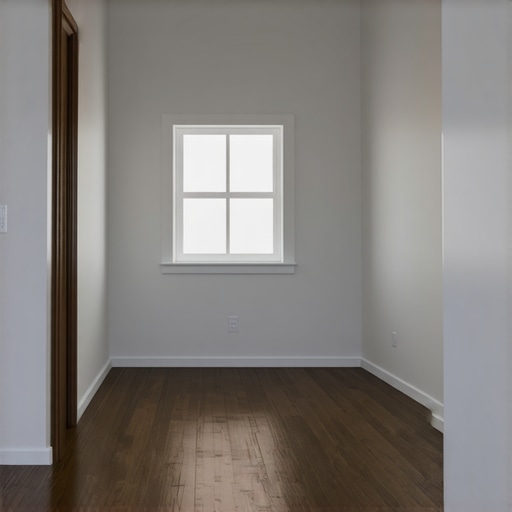
Why Your Studio Apartment Flooring Choice Makes Small Spaces Feel Cramped
When you walk into a 25-square-meter studio Ibirapuera, your brain makes a split-second decision: is this a cozy, efficient sanctuary or a claustrophobic box? As an architect and real estate broker specializing in high-yield compact apartments, I have seen hundreds of properties in São Paulo’s most coveted neighborhoods – from studio Moema developments to high-end studio Vila Nova Conceição units. The single most common mistake I see owners and investors make isn’t the furniture or the wall color; it’s the flooring.
Flooring is the largest uninterrupted surface in any home. In a compact environment, it acts as the visual foundation that either anchors the space or fragments it. My name is Jéssica Russo, and I’ve spent years helping clients maximize the rental yield and livability of their investments in the studios no entorno do Ibirapuera. In this guide, I will explain why your current flooring might be “shrinking” your apartment and how to choose materials that create the illusion of expansive luxury.
The Psychology of Visual Noise: Why More Seams Mean Less Space
The human eye is naturally drawn to lines. In interior design, we call this the “Grid Effect.” When you install small tiles or narrow floorboards, you are essentially creating a complex grid that the brain has to process. Every seam, every grout line, and every color variation between planks acts as a visual “stop sign.” In a studio Vila Mariana, where floor space is at a premium, these stop signs make the room feel busy and cluttered before you’ve even moved in a single piece of furniture.
Research in spatial perception suggests that reducing “visual noise” is the fastest way to make a small room feel larger. This is why I almost always recommend Wide Plank Wood Flooring – specifically planks that are 5 to 7 inches wide or even wider. By using wider planks, you significantly reduce the number of seams across the floor. This creates a smoother, more continuous visual plane that allows the eye to glide from one side of the room to the other without interruption.
If you are using tile instead of wood or vinyl, the same rule applies. Large-format tiles are essential. However, even with large tiles, the grout can be your enemy. To minimize the grid effect, you must use a grout color that perfectly matches the tile. I often suggest The $2 Spacer Hack for Perfect Tile Alignment to ensure that grout lines are as thin as possible (1mm to 1.5mm). When the grout disappears, the floor becomes a monolithic surface, making your apartamento compacto Ibirapuera feel significantly more open.
Color Theory: Beyond Just “White is Better”
There is a persistent myth in the São Paulo real estate market that every studio perto do Parque Ibirapuera must have white floors to feel large. While light colors do reflect more light, “stark white” can often feel clinical and actually highlight the boundaries of a room, making the corners more obvious.
The goal is not just brightness, but “recessive” coloring. Soft beiges, light oaks, whitewashed woods, and pale grays are far more effective. These tones have a natural warmth that makes a space feel inviting while still providing high Light Reflectance Values (LRV). In a studio Itaim Bibi, where natural light might be filtered through neighboring high-rises, choosing a light oak with cool undertones can make the walls feel as though they are receding.
Consider how natural light interacts with your floor. If you have a lançamento studio Ibirapuera with floor-to-ceiling windows, a matte or satin finish in a pale wood tone will catch the light and distribute it softly across the room. Avoid high-gloss finishes; while they seem “reflective,” they often create harsh glare and “hot spots” that break up the visual continuity of the floor, not to mention they show every footprint and speck of dust, which adds to the feeling of clutter.
The “Broken Floor” Sin: Why Transitions Kill Your Square Footage
This is perhaps the most frequent architectural “sin” I encounter in compact real estate. In an effort to define “zones,” many owners will use one material for the kitchen area (usually tile) and another for the living/sleeping area (usually laminate or wood).
In a 25m² or 30m² studio, this is a disaster. By changing materials, you are visually “slicing” your apartment into two smaller boxes. You have effectively told the eye, “This is where the room ends,” twice. To make a small space feel expansive, you must maintain material continuity from the front door to the balcony glass.
I always advocate for The Seamless Flooring Trick for Making Compact Ibirapuera Apartments Feel Twice as Large. This involves using a single material – ideally a high-quality Luxury Vinyl Tile (LVT) or a waterproof engineered wood – across the entire floor plan, including the kitchen. When the flooring flows under the kitchen cabinets and into the living area without a transition strip, the brain perceives the entire area as one large, unified space. This is a hallmark of high-end design in studios no entorno do Ibirapuera.
Material Selection for the São Paulo Market: Hardwood vs. Luxury Vinyl
When selecting materials for a studio pronto para morar Ibirapuera, you must balance aesthetics with the local climate and your investment goals. São Paulo’s humidity and temperature fluctuations require materials that are stable.
Solid Hardwood: The Prestige Choice
For a luxury studio Vila Nova Conceição or a high-end studio Itaim Bibi, solid hardwood is often the preferred choice for owners looking for long-term value. There is an undeniable tactile quality and “scent of luxury” associated with real wood. From a real estate perspective, Why High-End Itaim Bibi Apartments Still Rely on Solid Hardwood for Lasting Value is a reality; it can significantly increase the resale price. However, in a studio, you must be careful with plank length. Longer planks (6 feet or more) can actually make a small room look longer if laid correctly.
Luxury Vinyl (LVT/SPC): The Investor’s Best Friend
If your goal is high rental yield in a studio Moema, Luxury Vinyl is often the superior choice. Modern LVT can mimic the look of wide-plank oak with incredible accuracy. It is waterproof, scratch-resistant (perfect for pet-friendly rentals), and provides excellent acoustic insulation – a vital feature in São Paulo’s dense high-rises. Unlike laminate, which can sound “hollow,” high-quality vinyl with a cork underlayment feels solid underfoot. It’s important to note that while Why Wide Laminate Planks Fail in Humid Basements is a common concern, in the dry, elevated environment of a São Paulo high-rise, the stability of LVT is a massive advantage.
Layout Hacks: Direction Matters
The direction in which you lay your flooring planks acts as a set of “runway lights” for the eye. If you have a narrow studio Vila Mariana, laying the planks parallel to the longest wall will elongate the space, drawing the eye toward the window and the view beyond.
If the studio is a perfect square – which is rare – laying planks diagonally can actually be a clever trick. Diagonal lines are the longest lines in any rectangle. By following the diagonal, you lead the eye to the furthest corners of the room, creating a sense of width that didn’t exist before. However, this requires more waste during installation and a very skilled carpenter to ensure the angles are perfect. For most studio pronto para morar Ibirapuera units, the “parallel to the longest wall” rule is the safest and most effective way to “stretch” the floor plan.
Common Pitfalls to Avoid in Compact Apartments
Even with the right material and color, small details can ruin the effect. Here are the most common pitfalls I see in São Paulo studios:
- High-Contrast Grout: As mentioned, dark grout with light tiles creates a heavy grid that “shrinks” the floor. Keep it monochromatic.
- Bulky Transition Strips: If you absolutely must change materials (for example, at the bathroom threshold), avoid the thick, “T-molding” strips sold at big-box hardware stores. They are visual speedbumps. Instead, look into How to Hide Ugly Floor Transitions with Low-Profile Reducers or use a simple schluter strip for a flush finish.
- Small Rugs: Ironically, many people buy a small rug for a small room. This creates a “postage stamp” effect that makes the floor look fragmented. A large rug that goes under the furniture actually makes the room feel bigger by unifying the seating area.
- Ornate Patterns: Herringbone and Chevron are beautiful, but in a 20m² apartamento compacto Ibirapuera, they can be overwhelming. If you love these patterns, ensure the “V” of the pattern is large and the wood has very little grain variation.
Conclusion: Making Your Studio an Investment, Not Just a Room
Choosing the right flooring for a studio is an exercise in architectural restraint. It requires moving away from what looks good in a showroom and focusing on what works in a compact, multi-functional space. By prioritizing wide planks, light-recessive colors, and seamless transitions, you transform a cramped studio Moema into a sophisticated urban retreat.
Whether you are looking at a lançamento studio Ibirapuera or renovating an older unit in Vila Mariana, remember that the floor is your most powerful tool for spatial manipulation. It is the difference between a property that feels like a “starter home” and one that feels like a high-end investment. If you are navigating the complex world of São Paulo real estate and want to ensure your finishes are maximizing your ROI, I invite you to look at your apartment from the ground up. The right floor doesn’t just cover the concrete; it unlocks the true potential of your square footage.