
The sound of a hollow promise
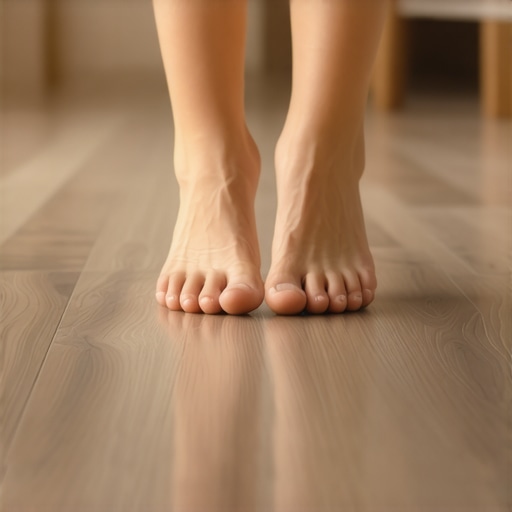
Most guys skip the leveling compound. They think the underlayment will hide the dip. It won’t. I spent three days grinding concrete on a job last month just so the floor wouldn’t click like a castanet. That experience stays with you. You learn that a floor is not just something you look at; it is a structural component of the home that you interact with every single second your feet are on the ground. When you walk across a cheap laminate floor, you hear that specific high-pitched clack. It sounds like plastic because, at its core, it is a photo of wood glued to sawdust and resin. Finding a laminate that doesn’t feel like a toy requires looking past the glossy marketing photos and examining the molecular density of the core board. The barefoot test is the only metric that matters because your skin can detect imperfections that your eyes will ignore. It is about thermal conductivity and the way the surface resists the heat of your body. Cheap floors feel cold and lifeless because they lack the organic cellular structure of real wood. We need to talk about why that happens and how to avoid it.
Why your subfloor is lying to you
The subfloor is the foundation of the entire sensory experience. If there is a 1/8 inch dip over a 10 foot span, that laminate will flex. Every time you step on it, air is forced out of the gap between the plank and the slab. This creates a bellows effect that amplifies the plastic sound. Most homeowners think they can fix this with a thicker pad. They are wrong. A pad that is too soft will allow the locking mechanism to move too much, which eventually leads to the tongue and groove snapping under the weight of a refrigerator or a heavy bookshelf. You want a high-density underlayment, something with a high compressive strength that mimics the feel of solid hardwood floors. When I am on my knees checking for levelness, I am not just looking for flat surfaces; I am looking for the integrity of the bond. If the concrete is dusty, the adhesive or the underlayment tape won’t stick, and you will have a floating floor that actually floats away from the reality of a solid feel. [image_placeholder_1]
“A floor is only as good as the subfloor beneath it; deflection is the enemy of every joint.” – Master Flooring Axiom
The hidden chemistry of melamine resin
Laminate is a layered product consisting of a wear layer, a decorative layer, a core, and a backing. The wear layer is usually made of aluminum oxide particles suspended in melamine resin. This is the stuff that makes it hard, but it is also the stuff that makes it feel like plastic. If the manufacturer uses too much resin and not enough texture, you get a surface that is slick and cold. The better manufacturers use a process called Embossed In Register, or EIR. This means the physical texture of the plank matches the grain of the wood in the photograph. When your toe hits a knot in the visual print, your brain expects to feel a dip. If the floor is smooth, your brain registers a disconnect. That disconnect is what we call the plastic feel. To avoid this, you need to look for planks with a deep, matte finish. High gloss is the enemy of authenticity. It reflects light in a way that highlights the artificial nature of the wear layer. You want a floor that absorbs light just like natural oak or walnut would do in a forest.
Thermal conductivity and the barefoot sensation
The reason hardwood floors feel warmer than laminate is not just about the material; it is about the air trapped inside the wood cells. Wood is a natural insulator. Laminate is dense and compressed, which makes it a better conductor of heat. When you step on it, it draws the heat out of your foot faster than wood does. To combat this, look for laminate with a higher wood fiber content in the core. The density should be at least 900 kilograms per cubic meter. Anything less and you are basically walking on cardboard. This density also helps with sound dampening. A heavy floor has a lower resonant frequency, meaning the sound of a dog’s nails or a dropped set of keys will be a dull thud instead of a sharp ring. This is the difference between a house that feels solid and one that feels like a temporary stage set. If you are installing in a basement, the temperature of the concrete will migrate through the floor unless you have a thermal break in your underlayment. This is vital for comfort in colder climates like Chicago or Minneapolis where the ground stays frozen for months.
The technical breakdown of flooring materials
| Material Type | Density (kg/m3) | Thermal Effusivity | Typical Lifespan |
|---|---|---|---|
| Budget Laminate | 650 to 750 | High | 10 years |
| Premium EIR Laminate | 900 to 1050 | Moderate | 25 years |
| Engineered Hardwood | 700 to 850 | Low | 50 years |
| Solid White Oak | 750 to 800 | Very Low | 100 years |
The myth of the waterproof label
Marketing teams love the word waterproof. In the world of laminate, waterproof usually only refers to the surface. If water gets into the joints and sits there, the HDF core will eventually swell. Once that happens, the floor is ruined. There is no fixing a blown edge. This is why you will never see me recommend laminate for showers or wet areas. For those spaces, you need tile and grout. The chemistry of grout allows for a microscopic level of moisture movement that laminate simply cannot handle. If you want that wood look in a bathroom, you are better off with a porcelain tile that mimics wood grain. Real laminate belongs in living rooms and bedrooms where the humidity is controlled. Even then, you must leave an expansion gap at the perimeter. I have seen floors buckle and lift four inches off the subfloor because some DIY guy tight-fisted the planks against the drywall. The floor needs to breathe. It expands and contracts with the seasons, even if it is a synthetic product. The wood fibers inside the core are still reactive to the moisture in the air.
“The presence of moisture in the subfloor is the primary cause of flooring failure in North America.” – NWFA Technical Guidelines
The checklist for a high performance installation
- Verify subfloor flatness within 3/16 inch over 10 feet.
- Check concrete moisture levels using a calcium chloride test.
- Acclimate the planks in the room for at least 48 hours.
- Use a 6 mil poly vapor barrier over all concrete slabs.
- Maintain a consistent 3/8 inch expansion gap around all vertical obstructions.
- Avoid heavy fixed cabinetry on top of a floating floor system.
The ghost in the expansion gap
One of the biggest mistakes I see is the installation of T-moldings in every doorway. While they are necessary for very long spans, they break the visual continuity of the home. A master installer knows how to calculate the expansion coefficient of the material to minimize these breaks. If you have a large open floor plan, you need to look at the manufacturer specifications for the maximum run. Some premium laminates can go 60 feet without a break, while the cheap stuff needs a transition every 25 feet. This is where the engineering of the locking system comes into play. A Uniclic or Valinge system provides a much tighter bond than the generic knock-offs. These systems use a specific geometry to create a tensioned joint that resists gapping. When you walk barefoot, you shouldn’t feel the edges of the planks. It should feel like one continuous surface. If you can feel the seams with your toes, the floor was either milled poorly or the subfloor has too much deflection. This is why I always carry a 10 foot straightedge on every job. I don’t trust my eyes; I trust the steel.
The impact of local climate on flooring choice
In the swampy humidity of the South, laminate can be a risky choice if the HVAC system isn’t running 24/7. The moisture will seep into the core and cause the edges to peak. Conversely, in the dry desert air of places like Arizona, the wood fibers can shrink, leading to gaps in the joints. This is why acclimation is the most ignored step in the process. You can’t just take the floor from the warehouse to the job site and start clicking it together. It needs to reach an equilibrium with the environment. I tell my clients that the floor needs to live in the house before it is installed. This prevents the heart-breaking sight of a floor that was perfect on Monday but has gaps big enough to swallow a dime by Friday. It is about respecting the material and the physics of the space. Every floor is a living system that reacts to the world around it. If you treat it like a static piece of plastic, it will fail you every time.