
I spent three days grinding concrete on a job last month just so the floor wouldn’t click like a castanet. Most guys skip the leveling compound because they think the underlayment will hide the dip. It will not. My knees are a testament to that failure, and my nose still carries the scent of WD-40 and fresh oak dust from the rework. I have seen thousand-dollar installations fail because someone ignored a 1/8 inch deviation in the subfloor. When you are a floor installer with 25 years in the dirt, you learn that beauty is a lie if the structure is a mess. The most common disaster I see involves the shower drain flange. It is a slow, silent killer that destroys hardwood floors and swells laminate in the rooms next door before the homeowner even sees a drip.
The clogged weep hole disaster
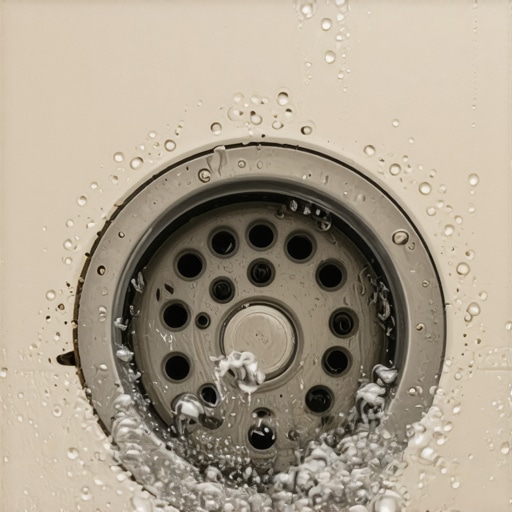
The clamping ring drain flange mistake involves blocking the weep holes with mortar or thin-set, which prevents secondary drainage from the moisture barrier to the plumbing. When these holes are obstructed, water saturates the mortar bed, causing wicking moisture to migrate into surrounding subfloors and wall plates. This leads to rot, mold growth, and structural deflection in the floor assembly.
“A floor is only as good as the subfloor beneath it; deflection is the enemy of every joint.” – Master Flooring Axiom
Most installers think the grout is waterproof. It is not. Grout is a porous mineral structure. When you take a shower, water migrates through the grout and into the mud bed or thin-set layer. This is why we install a waterproofing membrane like a PVC liner or a topical liquid membrane. That membrane directs the water toward the drain flange. The drain flange has small holes called weep holes. Their entire job is to let that trapped water escape into the waste pipe. If you shove a handful of thick mortar against those holes, you have turned your shower floor into a permanent sponge. The water has nowhere to go. It sits there. It becomes stagnant. Eventually, the hydrostatic pressure or simple capillary action pulls that water outward toward the bathroom door.
The physics of the clamping ring
A three-piece clamping drain is a marvel of engineering that is frequently ruined by a lack of attention. The bottom piece attaches to the plumbing. The middle piece, the clamping ring, bolts down to squeeze the liner in place. If you do not protect the area around those bolts and the weep holes with pea gravel or a dedicated plastic spacer, you are asking for trouble. I have walked into bathrooms where the homeowner complained about a musty smell. I pull up one tile near the drain and find a black, slimy soup. That is not a leak in the pipe. That is a failure of the installer to understand the physics of drainage. The mortar bed should be a drainage plane, not a reservoir. When the mud bed stays wet, it loses its structural integrity. It starts to crumble. Then the grout cracks. Then the homeowner thinks they just need more sealer. Sealer is a bandage for a broken leg.
Why your subfloor is lying to you
Subfloors often appear flat to the naked eye, but the moisture meter and the straightedge tell a different story. In the context of a shower leak, a subfloor that is not perfectly sloped or one that has a slight dip near the threshold will act as a highway for leaked water. I have seen water travel fifteen feet from a shower drain to cup a wide-plank walnut floor in a master bedroom. The wood starts to swell at the edges because the bottom of the plank is wetter than the top. This is the definition of cupping. If you are installing hardwood floors near a wet area, you must ensure your subfloor is dead flat and that your moisture barriers are redundant. We are talking about 3/4 inch solid oak. It has a massive amount of cellular force. When it wants to move, it will rip the fasteners right out of the plywood.
| Material Type | Janka Hardness | Moisture Tolerance | Installation Method |
|---|---|---|---|
| White Oak | 1360 | Low | Nail or Glue |
| Brazilian Cherry | 2350 | Low | Nail down only |
| Engineered Oak | 1200+ | Moderate | Float or Glue |
| Laminate | N/A | Very Low | Click-lock float |
| Porcelain Tile | N/A | High | Thin-set mortar |
The ghost in the expansion gap
Every floor needs room to breathe, yet I see people jam hardwood right up against the shower curb. That is a death sentence. You need a 1/4 inch or 1/2 inch gap depending on the span of the room. When the shower leak starts because of that blocked weep hole, the subfloor expands. If there is no gap, the floor hits the wall and starts to peak. The boards push against each other until they lift off the subfloor. It creates a hollow sound. I call it the ghost in the floor. You step on it and it clicks or groans. That sound is the wood screaming because it has nowhere to go. In laminate flooring, this is even more aggressive. Laminate is basically sawdust and resin. Once the moisture from a faulty drain hits that HDF core, it swells like a marshmallow in a microwave. You cannot fix that. You can only replace it.
The chemical bond of modified thin-set
When we talk about fixing these issues, we have to look at the chemistry of the bond. A standard unmodified thin-set is just Portland cement and sand. It is brittle. A modified thin-set contains liquid latex or powdered polymers. These polymers create a flexible bridge between the tile and the substrate. This is vital in a shower because the floor expands and contracts every time the hot water hits it. If you use a cheap, builder-grade thin-set, the thermal shock will eventually break the bond. If the bond breaks and the weep holes are clogged, the water will find that crack and sit there. I always tell my guys to mix the thin-set until it looks like peanut butter. If it is too runny, you are just adding excess water to an environment that already has a moisture problem. The water-to-cement ratio is not a suggestion. It is a chemical requirement for crystal growth.
Professional Shower Installation Checklist
- Verify the subfloor deflection meets TCNA L/360 standards before tiling.
- Clean the drain flange weep holes and protect them with pea gravel.
- Perform a 24-hour flood test before any tile touches the floor.
- Ensure the pre-slope under the liner is 1/4 inch per foot.
- Check the moisture content of the wood subfloor with a pin-meter.
- Use a high-quality 100 percent silicone caulk at all change-of-plane joints.
The failure of the 1/8 inch gap
In the flooring world, 1/8 of an inch is a mile. If your shower curb is 1/8 inch too low on one side, water will pool. If your tile spacer is 1/8 inch too small, you cannot get enough grout in the joint to resist the pressure of foot traffic. But the biggest 1/8 inch failure is the clearance between the drain grate and the tile. If the grate is too high, water stays on the tile. If it is too low, it is a trip hazard. But beneath that, if the clamping ring is not seated with a perfect 1/8 inch of clearance for the liner, the seal will fail. I have spent years fixing the mistakes of people who think “close enough” is fine. It is not fine. Flooring is a trade of precision. You are building a machine that people walk on. If the parts do not fit, the machine breaks.
“Deflection is not just a bounce; it is the slow mechanical destruction of mortar and grout.” – TCNA Technical Manual
We need to talk about the Janka scale and how it relates to moisture. If you choose a wood like Brazilian Cherry, which is incredibly hard, it is also incredibly sensitive to changes in environment. It is a dense, oily wood. If a shower leak from a bad flange starts to saturate the joists beneath it, the Brazilian Cherry will not just cup. It will exert enough force to bend the floor joists. I have seen it happen. People think hardness equals durability. It does not. Hardness equals stability in a controlled environment. Once you introduce a slow leak from a shower, the harder the wood, the more damage it does to the house. You are better off with a stable engineered product or a high-quality porcelain if you cannot guarantee a dry environment.
The myth of waterproof laminate
Retailers love to use the word waterproof. It is a marketing term, not a technical specification. The surface of a laminate plank might be waterproof, but the joints are the Achilles heel. If your shower drain flange is leaking into the subfloor, that moisture will rise up under the laminate. The bottom of the plank is not waterproof. It will soak up that water and the floor will be ruined in a week. I have seen people try to caulk the edges of laminate to save it. It does not work. The water is already in the air. High humidity from a leaking shower pan will raise the ambient moisture levels in the bathroom to 80 or 90 percent. That is enough to cause the laminate to fail even if it never touches a liquid drop of water. This is why professional installers focus on the source. Fix the drain, fix the slope, and protect the weep holes. Only then can you worry about what the floor looks like on top. Stop buying into the “waterproof” lies and start building for moisture management.