
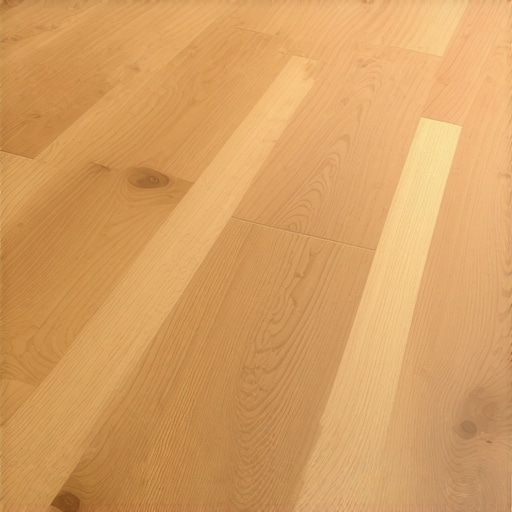
The expensive mistake of the walnut potato chip
I once walked into a house where a $15,000 wide-plank walnut floor was cupping so bad it looked like a potato chip because the installer didn’t check the crawlspace humidity. It was painful to see. Seven-inch boards, beautiful select grade, ruined because of a $20 moisture meter failure. The homeowner was crying, the installer was ghosting her, and the wood was literally trying to pull the fasteners out of the plywood. It smelled like damp earth and regret. I have spent 25 years on my knees with a level and a moisture meter, and I can tell you that a floor is not a decoration. It is a structural component that lives and breathes. When you choose wide planks, you are choosing a material with a high surface-to-volume ratio that reacts violently to its environment. If you do not respect the physics of moisture, the wood will win every time. It will buckle. It will gap. It will ruin your investment.
The physics of wider planks and the failure of moisture control
Wide plank floors buckle because they possess a larger surface area to absorb atmospheric moisture while having fewer joints across the floor to distribute expansion. Unlike narrow strips, wide planks concentrate their cellular expansion, exerting immense pressure on fasteners and the subfloor until the wood fibers physically distort into a cup shape. This is simple physics. Wood is hygroscopic. It wants to reach an equilibrium moisture content with the air around it. When the bottom of the board gets wetter than the top, it expands at the base, forcing the edges upward. This is known as cupping. If the top is wetter, it crowns. Both are signs of a failed installation environment.
“A floor is only as good as the subfloor beneath it; deflection is the enemy of every joint.” – Master Flooring Axiom
The hygroscopic nature of wood fibers
To understand buckling, you must look at the wood at a molecular level. Hardwood floors are made of tracheids and vessel elements, which are essentially long straws that moved water when the tree was alive. Even after the tree is milled into a 7-inch wide plank, those straws remain. They are thirsty. When humidity in your home rises above 55 percent, those cells swell. In a standard 2.25-inch strip floor, that expansion is distributed across many small gaps. In a wide plank floor, you have fewer gaps to take up the slack. The pressure builds. It becomes a tectonic event in your living room. You cannot stop it with more nails. You can only stop it with climate control.
Why your subfloor is lying to you
Subfloor moisture issues often originate from a lack of a proper vapor barrier or a slab that has not reached its equilibrium moisture content. Even if the surface feels dry, deep-seated capillary moisture can migrate upward, saturating the underside of the floor and causing irreversible cupping in wide planks. Many guys think that because a concrete slab is six months old, it is dry. They are wrong. I have seen slabs in high-humidity areas like Florida or Houston that still have a high relative humidity (RH) because the vapor barrier was punctured during the pour. If you do not perform an ASTM F2170 in-situ probe test, you are just guessing. And guessing is how you lose your shirt on a job. While most people want the thickest underlayment, too much cushion actually causes the locking mechanisms on LVP or laminate to snap under pressure. This same logic applies to subfloors. You need a flat, dry, and rigid surface. No exceptions.
Comparing Janka Hardness and Stability
| Wood Species | Janka Hardness (lbf) | Stability Coefficient | Acclimation Time |
|---|---|---|---|
| White Oak | 1360 | .00365 | 10-14 Days |
| Black Walnut | 1010 | .00274 | 14 Days |
| Brazilian Cherry | 2350 | .00300 | 21 Days |
| Hickory | 1820 | .00411 | 14-21 Days |
The role of humidity in the American South and Southwest
The climate where you live dictates the flooring you can have. In the swampy humidity of New Orleans or Mobile, a solid 8-inch wide plank is a death wish. The air is too heavy. You need engineered cores. Engineered hardwood is built in layers with the grain running in opposite directions, which cancels out the movement. Conversely, in the dry heat of Phoenix, those same boards will shrink until the tongue and groove separate, leaving gaps you could lose a credit card in. You must maintain your home between 35 and 55 percent humidity year-round. If you cannot do that, you should not buy wide plank hardwood floors. You should look at high-quality laminate or tile.
The ghost in the expansion gap
Expansion gaps are the mandatory spaces left around the perimeter of a room to allow the floor to move without hitting a wall. If a wide plank floor is pinned against a door frame or a heavy kitchen island, the expansion force has nowhere to go but up, resulting in a buckle. I see this all the time. An installer puts in a beautiful floor but then installs a heavy granite-topped island right on top of it. That island acts like an anchor. The floor is now locked. When the seasons change and the humidity rises, the wood expands and hits that anchor. The floor will then lift off the subfloor. It creates a hollow sound. It feels like walking on a trampoline. Always install your cabinets first and the floor around them, or use a floating floor system with proper clearance.
Adhesive chemistry and the bond of thin-set
When we talk about moisture and floors, we often overlook the wet areas. Showers and bathrooms are the ultimate test of moisture management. If you are transitions from wide plank wood to a tiled bathroom, the grout is your canary in the coal mine. Cracked grout lines usually mean the subfloor is flexing or the joists are undersized. If the subfloor deflects more than L/360, your grout will fail. This is the same deflection that causes hardwood floors to squeak and click. You need to understand the chemical bond of modified thin-set. It is not just mud. It is a polymer-enhanced adhesive designed to hold tile in place while allowing for microscopic movements. If you use cheap, unmodified thin-set over a flexible subfloor, your tile will pop. Your floor is a system, not a collection of parts.
The 1/8 inch that ruins everything
Precision is not optional. The NWFA states that a subfloor must be flat to within 1/8 of an inch over a 6-foot radius. Most houses are not even close to that. I have spent three days grinding concrete on a job just so the floor wouldn’t click like a castanet. If you have a dip in the floor and you span it with a wide plank, you have created a bridge. Every time you walk on that bridge, it flexes. That flex rubs the tongue against the groove. That is where the squeaks come from. Over time, that friction wears down the wood, and the joint fails. You cannot fix this with a finish nail. You have to fix it from the bottom up.
A checklist for a successful wide plank installation
- Verify subfloor moisture is within 2-4 percent of the flooring material.
- Perform an RH test on concrete slabs using in-situ probes.
- Acclimate the wood in the room where it will be installed for at least two weeks.
- Ensure the HVAC system has been running for 10 days prior to installation.
- Leave a minimum 1/2 inch expansion gap at all vertical obstructions.
- Check that the subfloor is flat to 1/8 inch over 6 feet.
The myth of the waterproof floor
Waterproof flooring ratings usually only apply to the surface of the material, not the subfloor or the installation as a whole. Standing water can still seep through the joints of LVP or laminate, trapped between the floor and the subfloor, leading to mold and structural rot. Homeowners always ask why their waterproof vinyl is buckling. Usually, it is because they locked it under a heavy kitchen island, killing the floor’s ability to breathe. Or, they had a minor leak in the kitchen and thought the floor would be fine. The water got under the planks, the subfloor swelled, and the waterproof floor buckled because the surface it was sitting on grew. Waterproof does not mean indestructible. It just means the plastic won’t grow. The house still will. Hardwood floors are more honest. They tell you when they are unhappy. They cup, they groan, and they demand respect for the environment they inhabit.
“Deflection is the silent killer of every flooring installation; if the base moves, the surface fails.” – TCNA Handbook Wisdom
The future of your floor depends on the air
If you want a wide plank floor, buy a high-quality humidifier and a dehumidifier. Link them to your thermostat. If you keep your air stable, your floor will stay stable. If you treat your house like an accordion, your floor will act like one. I have seen 200-year-old floors in New England that are still flat because they were installed with massive gaps and the wood was old-growth, which is more stable. Today’s fast-growth timber is more volatile. You are dealing with a different beast. You must be smarter than the wood. You must measure, you must wait, and you must level. If you do that, your wide plank floor will be the centerpiece of your home for a century. If you skip the subfloor prep, you will be calling me in six months to tear it all out. Don’t be the walnut potato chip story. Be the person who did it right the first time. The wood is watching.