
The heartbreak of a buckled walnut plank
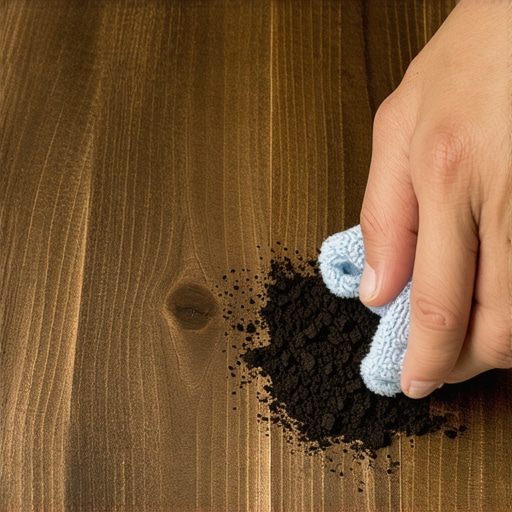
Hardwood floor restoration requires a deep understanding of wood anatomy, moisture content, and chemical compatibility. Dark oak floors are particularly sensitive to topical treatments because their deep grain highlights every imperfection and residue left behind by DIY solutions like coffee grounds or wax sticks. I once walked into a house where a $15,000 wide-plank walnut floor was cupping so bad it looked like a potato chip because the installer didn’t check the crawlspace humidity. The homeowner had tried to fix minor scratches with a mixture of damp coffee grounds and olive oil, only to find that the moisture from the grounds had caused the edges of the grain to swell, creating permanent ridges. This is the reality of the flooring business. It is a trade defined by physics and chemistry, not Pinterest hacks. When you see a scratch in your dark oak, you are seeing a breach in the protective polyurethane or aluminum oxide barrier. Attempting to fix this with organic material is a recipe for biological growth and structural failure. My boots have stood on every type of subfloor from rotting plywood to green concrete, and I can tell you that shortcuts always come back to haunt you. You smell the oak dust and the WD-40 on my clothes because I spend my days grinding out these mistakes. A floor is a performance surface. It has to handle the weight of your life, the humidity of your climate, and the friction of your footsteps. [IMAGE_PLACEHOLDER]
Why your dark oak is a biological machine
Dark oak species like Quercus rubra and Quercus alba are porous hardwoods that function as hygroscopic materials, meaning they constantly exchange moisture with the surrounding environment. The cellular structure of oak contains large earlywood vessels that act as straws, drawing in liquids and gases through capillary action. When you apply coffee grounds to a scratch, the acidic liquid penetrates these vessels. While the pigments in the coffee might temporarily darken the exposed wood fibers to match the stain, you are also introducing moisture into the dry cellular core. This causes localized swelling. Oak has a specific gravity ranging from 0.60 to 0.75, which means it is dense, but its open grain makes it a target for staining and rot if the protective seal is broken. In the trade, we look at the Janka Hardness Scale to understand how a floor will react to impact. White Oak sits around 1,360 lbf, while Red Oak is at 1,290 lbf. These are tough woods, but they are not invincible. If you live in a high-humidity area like Houston, your oak is already fighting to stay flat. Adding wet grounds to a scratch is just giving the wood more ammunition to warp.
“A floor is only as good as the subfloor beneath it; deflection is the enemy of every joint.” – Master Flooring Axiom
The chemical failure of the coffee bean solution
Coffee grounds contain oils and acidic compounds that interfere with the molecular bonding of professional floor finishes. Most modern dark oak floors are sealed with water-based or oil-modified polyurethanes that require a pristine surface for adhesion, and the residue from coffee prevents future touch-ups. If you ever decide to properly screen and recoat your floor, the oils from that coffee hack will cause the new finish to ‘fish-eye’ or peel. This is a chemical rejection. You are trading a five-minute fix for a multi-thousand-dollar refinishing nightmare. I have seen guys try to save a buck by using household items, and it always ends with me bringing in the drum sander. The tannins in the oak also react with the acidity of the coffee. Over time, this can cause a graying effect or even localized ‘ebonizing’ that looks like a dark bruise on your floor. Instead of a hidden scratch, you end up with a permanent stain that goes deep into the wood fibers.
Comparing wood hardness and repair needs
Understanding the Janka rating of your floor helps determine if a scratch is a surface scuff or a structural crush. Heavy woods require different fillers than softwoods. Refer to the table below for common flooring specs.
| Wood Species | Janka Hardness (lbf) | Expansion Potential | Recommended Repair |
|---|---|---|---|
| White Oak | 1,360 | Medium | Hard Wax Kit |
| Red Oak | 1,290 | Medium-High | Stain Marker |
| Black Walnut | 1,010 | High | Wood Shellac |
| Hickory | 1,820 | Low | Burn-in Stick |
Humidity traps in modern homes
Showers and high-moisture areas create microclimates that directly affect the longevity of hardwood floors and the integrity of grout lines in adjacent tile. Proper ventilation is the only way to prevent the expansion and contraction cycles that pull planks apart and crack laminate locking systems. If your master bathroom is right next to your dark oak bedroom floor, that steam is a constant threat. I have seen floors buckle two rooms away from a leaky shower pan. The moisture travels through the subfloor, saturating the underside of the wood. This is why we use moisture barriers like 15lb felt or specialized synthetic membranes. Laminate flooring is even worse. While the top is waterproof, the HDF core is basically a sponge. One splash from a shower and that ‘wood’ floor is toast. You need to maintain a consistent 35 to 50 percent humidity level in your home to keep those dark oak joints tight. If you don’t, you’ll see gaps that no amount of coffee grounds can fill.
The math behind a perfect subfloor
Subfloor levelness is measured by a 1/8 inch deviation over a 10-foot radius, and anything beyond this threshold will cause clicking, popping, or structural failure in the floor joints. Most installers skip the grinding process, but a flat subfloor is the foundation of a quiet home. If your floor clicks when you walk on it, it’s not the wood’s fault. It’s the dip in the concrete or the crown in the joist. I spent three days grinding concrete on a job last month just so the floor wouldn’t click like a castanet. People think underlayment is a magic carpet that hides bumps. It isn’t. In fact, using an underlayment that is too thick or soft is a common mistake. It allows for too much vertical movement, which snaps the thin tongues and grooves on engineered oak or laminate. You want a high-density underlayment with a good Sound Transmission Class (STC) rating, but it must be firm.
“Wood flooring is a living product that reacts to its environment; respect the moisture and it will respect your feet.” – NWFA Installation Guidelines
The checklist for proper dark oak maintenance
Stop using vinegar, steam mops, or kitchen hacks. Follow this professional protocol to keep your dark floors looking like they were just installed by a master.
- Use a microfiber dust mop daily to remove abrasive grit and oak dust.
- Maintain indoor humidity between 35% and 55% year-round.
- Place breathable rugs at all exterior entrances to catch moisture.
- Only use pH-neutral cleaners specifically formulated for polyurethane.
- Trim pet nails regularly to prevent deep gouges in the wood grain.
- Apply felt pads to all furniture legs and replace them every six months.
The structural reality of surface damage
Repairing a scratch in dark oak requires matching the light refraction of the surrounding finish and using stable pigments that will not fade or rot over time. Professional repair kits use hard waxes or resin-based fillers that bond with the wood and the existing topcoat. When I look at a floor, I’m not looking at the color. I’m looking at the mil-thickness of the wear layer. If you have an engineered floor with a 2mm wear layer, you can’t sand it. You have one shot to get the repair right. For deep gouges, we use a burn-in stick. This is a hard resin that we melt into the hole with a hot iron. It becomes part of the floor. It doesn’t wash away like coffee. It doesn’t attract mold. It stays there until the house falls down. That is the difference between a hack and a craft. Your dark oak deserves a repair that respects the engineering of the wood. Forget the kitchen cupboard solutions. Get a real repair kit, check your moisture levels, and stop treating your floor like a science experiment. Article Schema: