
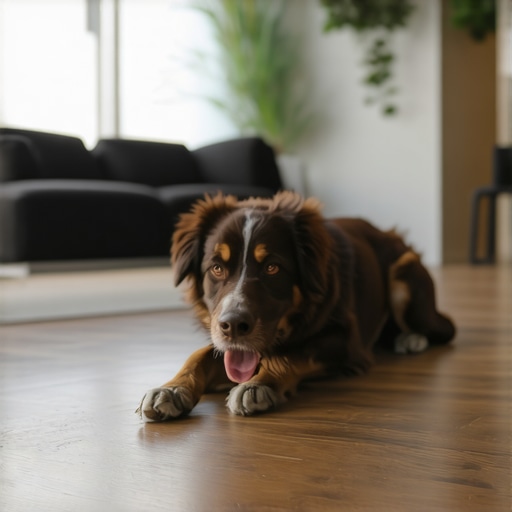
Homeowners always ask why their waterproof laminate is buckling or showing deep scratches within months of moving in. Usually, it is because they locked the floor under a heavy kitchen island or chose a product based on the photo rather than the technical specifications. I once walked into a project where a client had installed a cheap, five millimeter thick laminate throughout a house with three Labradors. Within ninety days, the joints were peaking and the wear layer looked like it had been attacked by a belt sander. They thought they saved money, but the lack of density in the core and a low AC rating meant they were paying for the installation twice. Flooring is not a cosmetic choice. It is a structural engineering challenge where you must balance the chemistry of the wear layer with the physics of the subfloor. When you have dogs over fifty pounds, you are no longer looking for a floor, you are looking for an industrial surface that can handle thousands of pounds of pressure per square inch from those claws.
The science of the AC rating system
The AC rating or Abrasion Class determines the durability of laminate by measuring its resistance to impact and wear. For homes with big dogs, an AC4 or AC5 rating is necessary because these levels are designed for heavy residential and commercial traffic. Anything lower will fail under the constant friction of canine claws and weight. To understand this, we have to zoom into the microscopic layers of the plank. Most people see a piece of wood, but I see a multilayered composite held together by melamine resin. The top layer is a transparent wear layer usually infused with aluminum oxide. This is the same mineral used in sandpaper. The higher the concentration of aluminum oxide particles, the higher the AC rating. When a big dog rounds a corner at high speed, they are applying dynamic lateral force. If the wear layer is thin, those claws pierce the resin and hit the decorative paper. Once that paper is damaged, the floor is dead. You cannot sand and refinish laminate like you can with solid hardwood floors. You are stuck with the scar until you rip the whole thing out.
“A floor is only as good as the subfloor beneath it; deflection is the enemy of every joint.” – Master Flooring Axiom
Why big dogs demand high density fiberboard
High density fiberboard or HDF serves as the core of high quality laminate and provides the structural stability needed to resist indentations from heavy animals. A high density core prevents the locking mechanisms from snapping when a heavy dog jumps or runs across the room. The core is where the click-lock tongue and groove are milled. In cheap laminate, the core is basically compressed sawdust with a low resin count. It is soft. When a dog like a Great Dane or a Mastiff puts all their weight on one paw, the pressure can exceed several hundred pounds per square inch. On a soft core, that pressure causes the tongue to flex inside the groove. Over time, that flex creates fatigue in the fiber. Eventually, the joint snaps. This is why you hear that annoying clicking or popping sound when you walk. I spent three days grinding concrete on a job last month just so the floor wouldn’t click like a castanet because even a small dip in the subfloor, combined with a weak core, will ruin the installation.
The scrub test and chemical resistance
The scrub test measures how well a laminate surface resists staining and physical abrasion from repeated cleaning and traffic. For dog owners, this test is a predictor of how the floor will handle muddy paws and the enzyme cleaners used for accidents. I smell floor wax and sawdust every day, but homeowners with dogs often smell pet dander and moisture. Unlike the grout in showers which can be porous and trap bacteria, a high quality laminate surface is nonporous. However, the chemistry of the surface must be robust enough to withstand the pH of various cleaning agents. If the resin is poor quality, frequent scrubbing will dull the finish, making it look hazy. A floor that passes a rigorous scrub test maintains its luster even after years of cleaning up after a large breed. You want a floor where the melamine has been thermally fused under high pressure. This creates a bond that is nearly impenetrable to the liquids that would otherwise soak into the core and cause it to swell like a sponge.
| Rating | Usage Level | Dog Suitability | Wear Layer Density |
|---|---|---|---|
| AC1 | Light Residential | Not Recommended | Low |
| AC2 | General Residential | Small Dogs Only | Medium |
| AC3 | Heavy Residential | Moderate | High |
| AC4 | Light Commercial | Ideal for Big Dogs | Very High |
| AC5 | Heavy Commercial | Maximum Durability | Extreme |
Moisture barriers and the concrete slab
A moisture barrier is a polyethylene film installed between the subfloor and the laminate to prevent water vapor from reaching the core of the planks. Concrete slabs naturally release moisture which can cause laminate to swell and the edges to peak if not properly protected. I always use a moisture meter before I even take the planks out of the box. If the slab is reading over three percent moisture, I am not laying a single board until we address the vapor emission. Many installers think the underlayment is just for sound. It is not. While sound dampening is nice, the primary job of a professional grade underlayment is to provide a consistent surface and a thermal break. In regions with high humidity, solid hardwood floors are a nightmare because they expand and contract too much. Laminate is more stable, but it still has a wood fiber core. If you skip the six mil poly film, the moisture from the ground will migrate into the HDF. The edges of the planks will start to lift, and once they lift, your dog claws will catch the edge and rip the wear layer right off. It is a chain reaction of failure that starts at the subfloor.
Perimeter expansion and heavy furniture
Perimeter expansion gaps are essential spaces left around the edges of a room to allow the laminate floor to move as a single floating unit. Without these gaps, the floor will bind against the walls and buckle when the temperature or humidity changes. Most guys think a quarter inch is enough, but for a large room, you need at least a half inch. If you have big dogs, you likely have heavy furniture to match. If you pin the floor down with a massive heavy kitchen island or a three hundred pound hutch, the floor cannot move. It is like putting a bridge on a foundation that does not allow for thermal expansion. It will buckle. I have seen floors tent up three inches off the subfloor because the installer ran the boards tight against the baseboards. Use spacers. Every single time. Do not trust your eye. Use the plastic spacers and leave the gap. The baseboard and shoe molding will cover it anyway. If you ignore this, the first time your AC kicks off and the humidity rises, your floor will turn into a mountain range.
“Deflection is the silent killer of laminate joints; if the subfloor moves, the floor fails.” – TCNA Installation Standards
Technical requirements for heavy traffic zones
Heavy traffic zones require laminate with a high density core and a minimum thickness of twelve millimeters to provide the necessary heft and stability. Thinner products lack the vertical mass to stay flat under the weight and movement of large animals. When you are at the store, do not just look at the color. Feel the weight of the plank. A twelve millimeter plank feels like a piece of structural lumber. An eight millimeter plank feels like a piece of cardboard. While most people want the thickest underlayment, too much cushion actually causes the locking mechanisms on LVP or laminate to snap under pressure. You want a high density, thin underlayment. If it is too squishy, the floor will bounce. Every time your dog runs across that bounce, the joints are being stressed. Think of it like a paperclip. If you bend it back and forth enough times, it breaks. The same thing happens to the click-lock system on your floor.
- Verify the AC rating is at least AC4 for large dog breeds.
- Ensure the subfloor is level within one eighth of an inch over ten feet.
- Use a moisture meter to check the concrete or wood subfloor before installation.
- Leave a minimum half inch expansion gap at all vertical obstructions.
- Select a high density fiberboard core with a minimum thickness of twelve millimeters.
- Acclimate the flooring in the room for forty eight hours prior to installation.
The ghost in the expansion gap
The ghost in the expansion gap refers to the hidden movement of a floating floor that can cause mysterious gaps or peaks if the installation is not perfectly calibrated. Proper acclimation and substrate preparation are the only ways to prevent these structural haunting. Acclimation is not a suggestion. It is a requirement. If you bring cold, dry laminate into a warm, humid house and start clicking it together, it will expand after it is installed. It will find the weakest point and it will fail there. I tell my clients that if they want their floor to last twenty years, they have to let it sit in the house for at least two days. We are dealing with wood fibers and resins that react to the atmosphere. It is chemistry. If you ignore the chemistry, the physics will punish you. Hardwood floors require even more care, but laminate is not exempt. Treat it with the same respect you would give a site finished oak floor and it will survive anything your dogs can throw at it. No more clicking, no more scratching, just a solid performance surface that looks as good as it did on day one.