
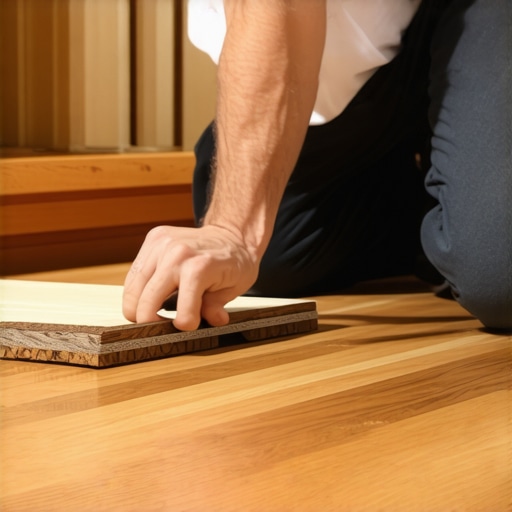
I once walked into a house where a $15,000 wide-plank walnut floor was cupping so bad it looked like a potato chip because the installer didn’t check the crawlspace humidity. The homeowner was in tears, and the contractor had vanished because he knew he didn’t have the insurance to cover a total tear-out. I spent three days on my knees with a moisture meter and a plan to save it, but the damage was a lesson in the physics of wood. Wood is not a dead product. It is a bundle of thirsty cellulose tubes that reacts to every change in the atmosphere. When you see a gap at the edge of a board, you are looking at a failure of equilibrium. Most guys reach for a tub of cheap putty and call it a day. They are wrong. That putty will pop out within six months because they ignored the chemistry of the bond.
The ghost in the expansion gap
Expansion gaps are the lungs of a hardwood floor installation. Without a perimeter gap of at least one half inch, the wood has nowhere to go when the humidity rises. This leads to buckling, cupping, and the destruction of the tongue and groove joints. If you fill an edge gap with a rigid material, you are effectively locking the floor in place, which invites structural disaster during the next seasonal shift. Wood expands mostly across its width, not its length. This means your long runs are the most vulnerable. I have seen floors rip the baseboards right off the wall because the installer didn’t respect the expansion space. A proper edge repair requires a material that can handle the sheer force of a hundred boards pushing against it at once.
“A floor is only as good as the subfloor beneath it; deflection is the enemy of every joint.” – Master Flooring Axiom
Why your subfloor is lying to you
Subfloor levelness is the most ignored factor in edge repair longevity. Most people assume their plywood or concrete is flat, but it almost never is. A dip of just one eighth of an inch over a six foot span creates a trampoline effect every time someone walks over it. This movement causes wood filler to crack and crumble. I spent three days grinding concrete on a job last month just so the floor wouldn’t click like a castanet. If the subfloor is not within the tolerance of three sixteenths of an inch over ten feet, your edge repairs will fail. The movement creates vertical shear that no filler can withstand. You have to stabilize the base before you can fix the surface.
The chemistry of the perfect wood flour bond
Professional edge repairs rely on a mixture of site-collected wood flour and a high-quality resin binder. Premixed fillers from a big box store often contain water and cheap solvents that shrink as they dry. By using the actual sawdust from the floor you are repairing, you ensure a perfect color match and a similar density. The resin binder creates a chemical bond with the wood fibers. This is the difference between sitting on top of the wood and becoming part of the wood. You want a binder with a high solids content. This minimizes the shrinkage that occurs as the carrier agent evaporates. When you mix your own, you control the viscosity, which is essential for getting the filler deep into the gap where it can actually grip the sides of the board.
| Material Type | Elasticity Rating | Shrinkage Rate | Best Application |
|---|---|---|---|
| Latex Based Filler | Very Low | High | Nail holes only |
| Solvent Based Filler | Low | Medium | Small surface cracks |
| Epoxy Resin Mix | High | Zero | Structural edge gaps |
| Wood Flour + Resin | Medium | Low | Professional edge repair |
The 1/8 inch that ruins everything
Precision in gap measurement determines whether a repair is permanent or temporary. A gap that is too wide for simple filler requires a Dutchmen repair, which involves gluing in a sliver of actual wood. If you try to bridge a quarter inch gap with paste, it will fail. The physics of the material simply won’t allow it to span that distance without cracking. You have to understand the cellular structure of the oak or maple you are working with. For example, red oak is porous and will soak up the binder, while maple is dense and requires a more aggressive sanding to open the pores for the filler to take hold. If you don’t account for the wood species, your repair will look like a scar across the room.
How shower steam destroys hardwood in adjacent rooms
Vapor pressure from poorly ventilated showers can migrate through wall cavities and cause hardwood edges to rot. This is a common issue in master suites where the bathroom tile meets the bedroom wood. The grout in your shower is not waterproof. It is a porous material that allows moisture to seep into the subfloor. Once that moisture gets under the wood, it travels along the boards. I have seen floors five feet away from a shower stall start to cup because of a leak or high humidity in the bathroom. When repairing these edges, you must first address the moisture source. If the bathroom isn’t properly vented, any wood repair is just a band-aid on a gunshot wound.
“Wood is hygroscopic, meaning it gains or loses moisture to remain in equilibrium with its environment.” – NWFA Technical Manual
The ten step protocol for a permanent edge fix
Success in flooring repair is ninety percent preparation and ten percent application. If you skip the cleaning phase, the filler is just sticking to dust and hair. It will pop out. You need to treat the gap like a surgical site. This means vacuuming with a HEPA filter and wiping the edges with a tack cloth or a bit of denatured alcohol to remove any old wax or oils. Only then can you begin the actual filling process. The following checklist is what I use on every high-end job to ensure I never have to come back for a warranty repair.
- Assess the moisture content of the wood and subfloor with a pin-type meter.
- Clean the gap of all debris using a thin blade or vacuum.
- Determine the species of wood to select the correct wood flour.
- Mix the flour and resin to a peanut butter consistency.
- Apply the mixture using a stainless steel putty knife to avoid staining.
- Overfill the gap slightly to account for the minor shrinkage during curing.
- Allow at least four hours for a full cure, though overnight is better.
- Sand the area by hand with the grain, starting at 80 grit and moving to 120.
- Vacuum the area again to ensure no microscopic dust remains in the grain.
- Apply a matching finish, feathering the edges to blend with the existing floor.
The myth of the thick underlayment
While most people want the thickest underlayment, too much cushion actually causes the locking mechanisms on LVP and laminate to snap under pressure. This principle applies to hardwood repairs too. If you have a soft spot under your repair, the wood will flex. That flex is the death of your wood filler. People think they are doing themselves a favor by adding a thick, squishy layer, but in reality, they are creating a trampoline. For a solid wood floor, you want a high-density underlayment that provides a firm base. This ensures that the only movement in the floor is the natural lateral expansion and contraction of the wood itself, rather than vertical deflection from foot traffic. If your floor moves when you walk on it, no filler in the world will stay put.
The grit and the grain
Sanding the repair is where most amateurs ruin the look of the floor. If you sand across the grain, you create scratches that will show up as dark streaks when you apply the finish. You must follow the direction of the wood fibers. This is why edge repairs are so difficult near baseboards. You don’t have the room to move the sander properly. I often use a small detail scraper to get the filler flush before I ever touch it with sandpaper. This minimizes the amount of sanding required and keeps the surrounding finish intact. It is a slow, tedious process, but it is the only way to get a result that doesn’t look like a patch job. Real floor work is about patience and the willingness to do the boring parts correctly.