
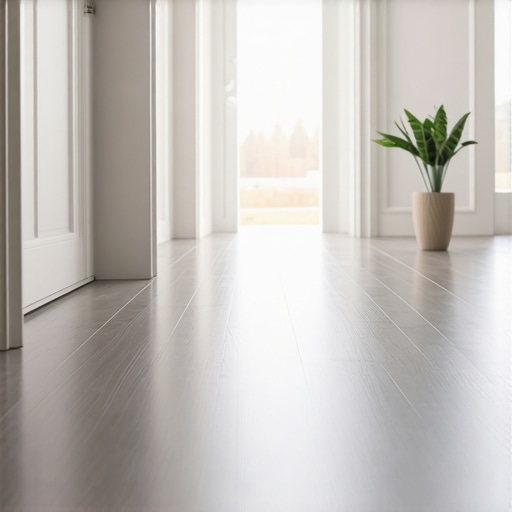
Why Gray LVP is Hurting Your Resale Value
Homeowners always ask why their waterproof vinyl is buckling. Usually, it’s because they locked it under a heavy kitchen island, killing the floor’s ability to breathe. Last month, I walked into a luxury kitchen where the owner had spent forty thousand dollars on custom cabinetry only to have the six millimeter Luxury Vinyl Plank (LVP) floor heave up three inches in the center of the room. They had pinned the floor down with a two thousand pound marble island. Because LVP is a floating system, it must be allowed to move as a single monolithic unit. When you pin it at one end with a heavy weight, the thermal expansion has nowhere to go but up. It is a structural engineering failure that happens every single day because people treat flooring like a rug instead of a moving building component.
The gray tide is finally receding
Gray LVP flooring is losing its market appeal because it lacks the organic warmth of natural hardwood and often signals a cheap renovation to prospective buyers. Modern real estate trends are shifting toward timeless materials like white oak and engineered wood that offer long term durability and aesthetic flexibility. The saturated market of cool-toned synthetic floors has reached a tipping point where it now feels dated and industrial. This trend was born in the era of flipper culture where speed and low cost were the primary drivers of material selection. Today, the discerning buyer looks for depth and character, things that a photolithographic layer of gray plastic simply cannot provide. The monochromatic gray floor creates a sterile environment that is difficult to pair with varying furniture styles. It flattens the visual field of a room, absorbing light in a way that makes spaces feel smaller and more compressed. From a resale perspective, sticking to a neutral but warm palette is the safer bet for maintaining value over the next decade.
How heavy furniture kills floating floors
Floating floor systems require a specific expansion gap around the entire perimeter to accommodate thermal expansion and contraction. When heavy furniture or fixed cabinetry is placed directly on top of LVP or laminate, it creates a pinch point that prevents the planks from shifting. This leads to joint separation, buckling, and warping. Most installers fail to mention that the click-lock mechanism is only a few millimeters of plastic. If the floor is pinned, the tension placed on those tiny tongues and grooves exceeds their shear strength. I have seen countless floors where the locking mechanism has literally snapped because the house shifted by a fraction of an inch and the floor had nowhere to go. This is the physics of the building envelope in action. A floor is not a static object. It reacts to the temperature of the air, the sunlight hitting the surface, and the humidity coming up through the slab. When you deny that movement, the floor fights back by breaking itself.
“A floor is only as good as the subfloor beneath it; deflection is the enemy of every joint.” – Master Flooring Axiom
The molecular breakdown of cheap vinyl
Luxury Vinyl Plank is composed of a PVC core, a print layer, and a polyurethane wear layer that determines its scratch resistance. Cheap LVP often uses recycled plastics with high concentrations of ortho-phthalates which can off-gas and lead to poor indoor air quality. The chemistry of the wear layer is where the real battle is won or lost. A high-quality floor will use a UV-cured urethane with ceramic bead technology. These microscopic ceramic particles are suspended in the liquid coating before it is cured under ultraviolet light. They act as a sacrificial barrier against abrasive forces like sand or pet claws. If you buy a floor with a wear layer under twelve mils, you are essentially buying a temporary surface. In high traffic areas, the microscopic grit on the bottom of shoes acts like sandpaper. It slowly grinds down the urethane until it hits the print layer. Once the print layer is damaged, the floor cannot be repaired. It must be replaced. This is the fundamental difference between a synthetic product and a natural one. You can sand a hardwood floor, but you can only throw away a vinyl one.
Why hardwood floors still dominate the market
Natural hardwood floors remain the gold standard for real estate value due to their longevity and the ability to be refinished multiple times. Materials like solid oak, maple, and walnut have a high Janka hardness rating, making them resistant to impacts and wear. When you look at a piece of wood under a microscope, you see a complex matrix of tracheids and vessel elements that were designed by nature to transport water and provide structural support. This cellular structure gives wood its unique ability to absorb impact and insulate a room. It is a carbon-sequestering material that lasts for generations. A site-finished floor provides a flat, monolithic surface that is easy to clean because there are no bevels to catch dirt. While the initial cost is higher, the cost per year of life is significantly lower than any synthetic alternative. Buyers know this. They see a wood floor as a permanent asset, whereas they see LVP as a ten year countdown to another renovation project.
The moisture trap beneath the planks
Subfloor moisture is the primary cause of flooring failure, especially when installing waterproof LVP over concrete slabs. Even if the surface is dry, hydrostatic pressure can drive moisture vapor through the pores of the concrete, leading to mold growth and adhesive failure. Many installers think that because the plank is plastic, they do not need a vapor barrier. This is a catastrophic mistake. When moisture vapor is trapped under a non-breathable plastic floor, it condenses into liquid water. This creates an alkaline environment that can eat through the underlayment and create a breeding ground for mildew. I always insist on an in-situ RH (Relative Humidity) probe test. We drill into the concrete and place a sensor inside the slab to measure the moisture content at the core. A simple calcium chloride test only tells you what is happening on the surface. To ensure a floor stays flat and healthy, you must manage the vapor transmission rate using a six mil polyethylene film or a specialized liquid moisture vapor retarder.
“Wood flooring is a hygroscopic material, meaning it gains or loses moisture based on the environment.” – NWFA Technical Guidelines
Laminate returns as the smarter alternative
Modern laminate flooring has seen a resurgence because it offers superior scratch resistance compared to vinyl and uses a high-density fiberboard (HDF) core for better structural stability. Unlike vinyl, which is pliable and telegraphs every imperfection in the subfloor, laminate is rigid. It bridges minor dips and humps, creating a flatter feel underfoot. The print layers on high-end laminates are now so advanced that they include embossed-in-register textures that perfectly match the wood grain image. This creates a tactile experience that is nearly indistinguishable from real wood. Furthermore, laminate is much more resistant to fading from UV exposure. If you have a room with large south-facing windows, a vinyl floor will often soften and expand under the direct heat of the sun, whereas a quality laminate with a thermally fused melamine wear layer will remain stable and colorfast. It is the pragmatic choice for families with large dogs and heavy foot traffic.
The 1/8 inch that ruins everything
Subfloor preparation is the most ignored aspect of flooring installation, yet it is the most critical for long term performance. Most manufacturers require the subfloor to be flat within one-eighth of an inch over a ten foot radius. If the subfloor has a dip, the locking mechanism of a floating floor will flex every time someone walks over it. This constant vertical movement, known as deflection, eventually fatigues the plastic joints until they snap. This is the clicking sound you hear in cheap installations. To fix this, I spend hours with a straightedge and a grinder. We use Portland cement-based leveling compounds to fill the lows and diamond-cup grinders to shave down the highs. It is dirty, loud, and expensive work, but it is the only way to guarantee a floor will not fail. If your installer shows up without a long level and a bag of patch, send them home. They are not installing a floor, they are laying a trap for your future self.
| Material Type | Janka Rating | Average Lifespan | Refinish Potential |
|---|---|---|---|
| Solid White Oak | 1360 | 80 to 100 Years | 5 to 7 Times |
| Engineered Wood | 1200+ | 30 to 50 Years | 1 to 2 Times |
| High End Laminate | N/A | 15 to 25 Years | None |
| Luxury Vinyl (LVP) | N/A | 10 to 20 Years | None |
- Measure the subfloor moisture content using a pin-less or in-situ meter before opening the boxes.
- Acclimate the flooring material inside the room for at least 72 hours to reach equilibrium moisture content.
- Verify that the subfloor is flat within the 1/8 inch tolerance over a 10 foot span.
- Check that the expansion gap at the walls is equal to the thickness of the material being installed.
- Ensure the undercut door jambs allow the floor to slide freely beneath them without binding.
The obsession with gray LVP is a byproduct of the gray-scale aesthetic that dominated the 2010s. It was a safe, neutral choice for a specific moment in time, but it lacks the soul and organic variation that homeowners are now craving. When you choose a floor, you are choosing the foundation of your interior architecture. It is the only surface in your home that you touch with every step you take. Investing in natural materials or high-quality composites that mimic the warmth of the earth will always provide a better return on investment than following a fleeting color trend. Focus on the chemistry of the wear layer, the flatness of the subfloor, and the physics of the expansion gap. If you get the structural engineering right, the aesthetics will follow. Your resale value is tied to the perceived quality and longevity of the materials used. Gray plastic is a temporary fix, but a well-installed, natural-toned floor is a legacy asset. Choose wisely, or you will be back on your knees in ten years tearing it all out.