
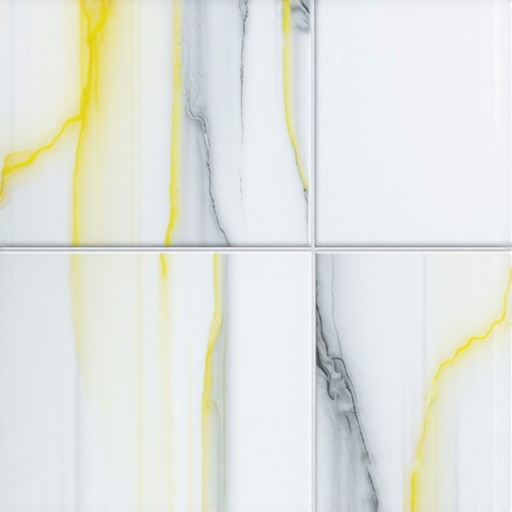
Why White Marble Tiles Turn Yellow in Wet Showers
Most guys skip the leveling compound. They think the underlayment will hide the dip. It won’t. I spent three days grinding concrete on a job last month just so the floor wouldn’t click like a castanet. That same lazy approach to sub-surfaces is why white marble showers eventually look like they have been soaked in tea. I have been in the flooring game for over 25 years. I have seen million dollar bathrooms ruined because someone thought marble was just a pretty slab. It is not. It is a porous, metamorphic rock that is chemically active. When you put it in a wet environment like a shower, you are starting a chemical clock that most installers do not know how to stop. This is not about surface dirt. This is about the physics of the subfloor and the chemistry of the stone itself.
The chemistry of iron oxidation in natural stone
White marble contains trace amounts of iron minerals like pyrite that oxidize when exposed to water and oxygen, turning the stone yellow or orange. This chemical reaction occurs deep within the stone’s crystalline structure, making it nearly impossible to remove with topical cleaners once the rust forms. Every piece of Carrara or Thassos marble is a unique geological record. Some blocks have higher iron concentrations than others. When you saturate that stone with water, the iron sulfide (pyrite) reacts with the oxygen in the water. It turns into iron oxide. That is rust. You are literally watching your shower floor rust from the inside out. This is why the yellowing often looks like it is bleeding from the center of the tile rather than sitting on top of it. Unlike hardwood floors where moisture causes cupping, marble shows its distress through these deep, indelible stains.
“A floor is only as good as the subfloor beneath it; deflection is the enemy of every joint.” – Master Flooring Axiom
Why traditional mud beds trap water
Traditional mortar beds can act like a giant sponge that holds moisture against the bottom of the marble tiles for weeks. If the weep holes in the drain are clogged or the pre-slope is incorrect, the stone remains in a constant state of saturation which accelerates mineral oxidation. I have pulled up floors where the mud bed was still soaking wet five years after the last shower was taken. That is a failure of the system. In a wet area, you need a way for water to escape. If the water sits, it wicks up into the stone via capillary action. Most installers treat grout as if it is a waterproof barrier. It is not. Grout is a filter. It slows water down but it does not stop it. Even the best grout will eventually allow moisture to reach the setting bed. If that bed does not drain, your marble is essentially sitting in a puddle. This is even more problematic than laminate in a bathroom because you can see the damage happening in real time through the stone’s translucent surface.
The hidden impact of alkaline cleaning agents
Using high pH cleaning chemicals on white marble can trigger a reaction with the stone’s minerals or break down the sealers designed to protect it. Most homeowners use harsh bathroom cleaners that strip away the protective layer and leave the stone vulnerable to moisture penetration and iron oxidation. You cannot treat marble like a ceramic tile. Ceramic is vitrified and inert. Marble is calcium carbonate. It is sensitive to acids and high alkalinity. I always tell my clients that if they would not put it on their skin, they should not put it on their marble. When you use a cleaner with a high pH, it can actually accelerate the movement of iron ions to the surface. It is a slow burn that ruins the aesthetic of the room over a period of months. It is the same reason you don’t use wet mops on unsealed hardwood floors. You are inviting a liquid into a place where it will do the most structural and aesthetic damage.
| Marble Type | Iron Sensitivity | Porosity Level | Recommended Use |
|---|---|---|---|
| Carrara | High | Medium | Walls Only |
| Thassos | Very High | High | Dry Areas |
| Calacatta | Medium | Low | Floor/Wall |
| Statuary | High | Medium | Decorative |
Why your sealer is trapping moisture
Applying a topical sealer to a marble floor that has moisture trapped beneath it prevents the stone from breathing and forces the water to react with internal iron minerals. This trapped vapor pressure creates a greenhouse effect inside the stone that turns white marble yellow almost overnight. People think sealers are like a plastic wrap for stone. They are not. Most high quality sealers are penetrants. They sit below the surface to repel liquids. However, if the subfloor is wet, the sealer works both ways. It keeps water out, but it also keeps water in. If the stone cannot dry out, the oxidation process speeds up. I have seen guys seal a floor that was still damp from the thin-set. Three days later, the client calls because the $40 per foot marble looks like a mustard stain. You have to wait for the moisture vapor transmission to settle before you lock that stone down. It is a waiting game that most contractors do not have the patience for.
“Natural stone must be allowed to breathe; trapping moisture within the substrate is a recipe for mineral migration and surface failure.” – Master Flooring Axiom
The physics of capillary action in white marble
Capillary action pulls water through the microscopic pores of the marble tile, carrying dissolved minerals and salts from the setting bed to the surface of the stone. As the water evaporates, it leaves behind these minerals, which can cause yellowing, efflorescence, or permanent staining. Think of the stone like a series of tiny straws. When the bottom of the straw is in water, the water climbs. If your thin-set is full of iron or if there is dirt in the sand of the mud bed, that junk gets pulled right into the marble. This is why I am a stickler for using white, high-quality thin-set specifically designed for large format stone. You cannot use the cheap grey stuff. The grey pigments and minerals in standard thin-set will bleed through a white marble tile faster than you can say ‘lawsuit’. You are not just building a floor. You are managing a chemical interface between a mineral and a liquid.
- Always use a 100% waterproof membrane behind the stone.
- Ensure the pre-slope toward the drain is at least 1/4 inch per foot.
- Use only white thin-set with a high polymer content.
- Check the moisture content of the subfloor before installation.
- Seal the back and sides of the tile before laying it in the mortar.
- Clean only with pH-neutral stone soaps.
The final word on marble maintenance
Getting a white marble shower to stay white is a feat of engineering. It requires a perfect subfloor, a perfectly managed moisture environment, and a homeowner who understands that they are living with a piece of geology. If you treat it like a commodity, it will fail. If you ignore the physics of the drain and the chemistry of the iron, it will turn yellow. Most people would be better off with a high-quality porcelain that looks like marble, but for those who want the real thing, there is no shortcut. You have to do the work. You have to grind the floor. You have to check the moisture. You have to wait for the stone to dry. Anything less is just a temporary fix for a permanent problem. “, “image”: {“imagePrompt”: “A high-resolution, close-up photograph of white Carrara marble tiles in a shower showing distinct yellow and orange staining near the grout lines and center of the tiles, emphasizing the porous texture of the stone.”, “imageTitle”: “Yellow Staining on White Marble Tiles”, “imageAlt”: “Close-up of yellowed white marble in a shower due to iron oxidation”}, “categoryId”: 0, “postTime”: “”}