
Why Wood-Look Tile Stays Cold and How to Fix It
I spent three days grinding concrete on a job last month just so the floor wouldn’t click like a castanet. The homeowner wanted wood look tile, but the slab was a mess of high spots and valleys. If I had just laid the tile, those ceramic planks would have snapped under the first heavy footfall. But even after I got it flat, the next complaint was the temperature. Wood look tile is a liar. It looks like warm oak but feels like an ice skating rink. That is because people ignore the subfloor physics. Most guys skip the leveling compound. They think the underlayment will hide the dip. It won’t. I spent three days on my knees with a diamond cup wheel and a vacuum system to ensure the substrate was flat to within 1/8 inch over 10 feet. When you ignore the structural reality of the slab, you end up with a floor that is both structurally unsound and thermally miserable. As a master installer with 25 years in the dirt, I can tell you that a floor is more than a surface. It is a thermal exchange system.
The physics of thermal conductivity in ceramics
Wood look tile stays cold because ceramic and porcelain have high thermal conductivity and high thermal mass. These materials act as heat sinks, drawing warmth away from the human body through conduction. Unlike hardwood floors, which contain air-filled cells that act as natural insulators, tile quickly transfers heat to the colder concrete slab below. This process is governed by the specific heat capacity of the material, where porcelain requires more energy to increase its temperature than wood or laminate.
When you look at a porcelain tile under a microscope, you see a vitrified mass. The silica and clay have been fired at temperatures exceeding 2,200 degrees Fahrenheit. This process creates a material with almost zero porosity. It is a dense, crystalline structure. In the world of physics, density equals thermal conductivity. The tile acts as a heat sink. It draws the kinetic energy from your skin cells at a rapid rate. This is why it feels cold even when the room air is 70 degrees. Your body heat is literally being stolen by the ceramic molecules. Hardwood floors are different. A piece of white oak is essentially a collection of dried out straws. Those cells are filled with air. Air is a terrible conductor of heat. That is why wood feels warm. It is not generating heat. It is just refusing to take yours.
“A floor is only as good as the subfloor beneath it; deflection is the enemy of every joint.” – Master Flooring Axiom
The thermal bridge between your feet and the slab
The primary reason tile floors feel icy is the thermal bridge created between the porcelain surface and the concrete subfloor. Concrete is a massive, cold battery that stays at the temperature of the earth, usually around 55 degrees. When tile is bonded directly to the slab with thinset, it creates a continuous path for heat to escape, effectively cooling the tile surface. This is why showers often feel even colder, as moisture and evaporation accelerate the heat loss process from the tile surface.
To fix this, you have to break the bridge. Most people think a thick rug is the only answer, but that is just a bandage. The real solution happens at the substrate level. You need a thermal break. This is a material that interrupts the flow of heat. If you are installing in a basement or on a ground-level slab, the concrete is a giant heat sponge. You are fighting the law of cooling every single minute. Laminate floors often feel warmer because they are installed as a floating system over a foam underlayment. That tiny layer of air and foam acts as a barrier. Tile, being bonded with cementitious thinset, has no such luxury unless you engineer it into the system.
The thermal break solution for icy floors
Installing a dedicated thermal break or uncoupling membrane like Ditra is the most effective way to insulate wood look tile from a cold slab. These membranes create a small air pocket between the tile and the concrete, reducing the rate of thermal transfer. When combined with a high quality modified thinset, these systems provide both structural stability and a noticeable improvement in surface temperature by slowing down the heat sink effect of the subfloor.
| Material Type | Thermal Conductivity (W/m·K) | R-Value (per inch) | Janka Hardness |
|---|---|---|---|
| Hardwood (Oak) | 0.12 – 0.15 | 0.75 – 1.00 | 1,290 |
| Ceramic Tile | 1.0 – 1.8 | 0.05 – 0.20 | N/A |
| Laminate | 0.1 – 0.2 | 0.40 – 0.60 | N/A |
| Concrete Slab | 1.1 – 1.7 | 0.10 – 0.15 | N/A |
Radiant heat is the only real cure
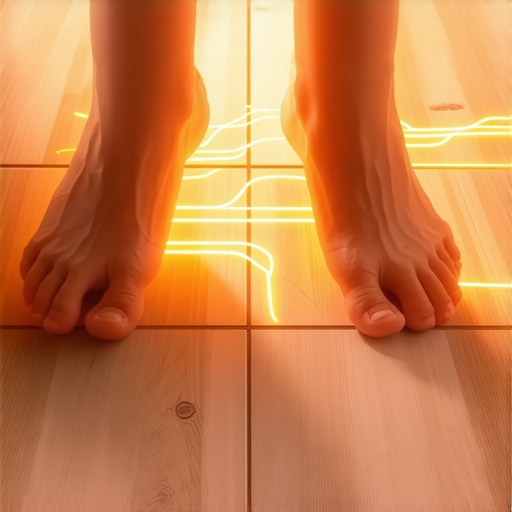
Electric radiant heating systems provide the only active solution to keep wood look tile floors warm during winter months. These systems use resistance wires embedded in a membrane or thinset layer to generate heat directly beneath the tile planks. Because porcelain has high thermal mass, it holds onto this heat effectively, creating a consistent and comfortable walking surface that mimics the natural warmth of real wood without the maintenance requirements.
You need to target 12 watts per square foot for effective heating. If you go lower, the thermal mass of the tile will overwhelm the heating element. You are fighting the law of cooling. The slab underneath is a giant heat sponge. You must use a thermal break under your heating cables or you are just paying to heat the earth under your house. I always tell my clients that if they are spending $10 a foot on high end Italian porcelain, they should spend the extra $5 on a heating mat. Otherwise, they will hate their floor for six months out of the year. The grout choice also matters here. Cementitious grout is porous and can hold moisture, which increases the cooling effect. Using an epoxy or high performance grout can help manage the moisture vapor transmission rate from the slab.
The impact of grout and moisture on temperature
Moisture trapped within the grout and subfloor can significantly lower the perceived temperature of wood look tile through evaporative cooling. When moisture moves through a concrete slab and evaporates at the grout lines, it pulls heat away from the surrounding tile. This is particularly prevalent in poorly sealed showers or basements where the moisture vapor transmission rate is high, making the floor feel significantly colder than dry areas of the home.
- Perform a calcium chloride test on the concrete slab to check for moisture levels.
- Grind all high spots to ensure the floor is flat to 1/8 inch over 10 feet.
- Install a vapor barrier or moisture mitigation system if the slab is damp.
- Use an uncoupling membrane to create a thermal break and prevent grout cracking.
- Select a high-performance modified thinset for a stronger chemical bond.
- Install electric radiant heating coils for active temperature control.
“The maximum allowable moisture content for a concrete slab receiving tile is 3 pounds per 1,000 square feet over 24 hours.” – TCNA Handbook
Hardwood floors versus tile thermal performance
Hardwood floors naturally maintain a higher surface temperature than tile because of their cellular structure and lower density. Wood is composed of organic fibers and air pockets that resist heat transfer, making it a natural insulator. In contrast, wood look tile is a manufactured stone product designed to conduct heat. While laminate floors offer a middle ground, they cannot match the thermal retention of solid site finished hardwood or the durability of porcelain.
The regional climate plays a massive role in this decision. If you live in a place like Phoenix, the coldness of the tile might be a benefit in July. But in a place like Chicago or New York, a tile floor without a heat source is a mistake you will feel in your bones. The dry heat of the desert will shrink your baseboards if you use hardwood, but tile will remain stable. In humid regions, hardwood might cup and warp, whereas tile will remain perfectly flat. It is a trade off between thermal comfort and structural stability. You have to decide which battle you want to fight.
The 1/8 inch that ruins everything
Levelness is the most ignored factor in both the structural integrity and thermal comfort of a tile installation. If there are air gaps under the tile caused by a wavy subfloor, the radiant heat will not transfer evenly, and the tile will be prone to cracking. A flat subfloor ensures that the thinset bond is uniform, which allows for consistent heat distribution across the entire surface of the floor. Any dip in the slab creates a pocket of air that acts as an unintended insulator, leading to cold spots in the middle of your heated floor.