
The phantom moisture in the planks
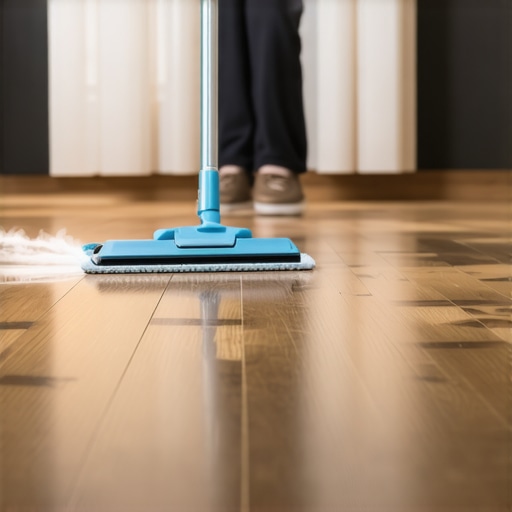
Steam mops destroy laminate floors by forcing pressurized water vapor into the porous high-density fiberboard core through the click-lock joints. This process causes immediate swelling, edge peaking, and irreversible delamination of the decorative wear layer. Unlike ceramic tile, laminate is a wood-based product that reacts violently to extreme heat and moisture. I have seen countless homeowners ruin five-figure installations because a late-night infomercial told them steam was the only way to sanitize a surface. It is a lie. I once walked into a house where the floor was buckling so bad it looked like a topographical map of the Rockies. The homeowner was proud of her cleaning routine. She used a steam mop every morning. She thought the ‘waterproof’ label on the box meant the floor was an aquarium. It was not. She locked the moisture into the subfloor, and the resulting hydrostatic pressure literally popped the planks out of their tracks. Laminate is basically sawdust and resin under pressure. When you introduce 212-degree steam, you are not cleaning. You are performing a science experiment on the structural integrity of your home. The smell of hot, wet wood dust is the scent of a failing investment. If you want a floor you can steam, go buy some porcelain tile and use a high-quality grout. If you want laminate, put the steamer in the garage and never touch it again. It is that simple.
Why your warranty is a fairy tale
Most laminate floor warranties specifically exclude damage caused by steam mops or electric floor scrubbers that use heat. Using these tools voids your protection because the heat degrades the phenolic resins used to bind the HDF core. If you file a claim, the manufacturer will send an inspector with a moisture meter and a magnifying glass to find the tell-tale signs of thermal shock. They look for white-line fractures at the joints. They look for swelling that starts at the tongue and groove. You will lose that fight every time. I have sat in on these inspections. The inspector sees the steam mop in the utility closet and the case is closed.
“A floor is only as good as the subfloor beneath it; deflection is the enemy of every joint.” – Master Flooring Axiom
This axiom applies to the surface too. If you compromise the joint with heat, the floor loses its ability to handle the natural deflection of the house. The chemistry of the bond is delicate. Manufacturers spend millions of dollars engineering resins that can handle the humidity of a place like Houston or the dry heat of Phoenix, but they cannot engineer a core that resists a direct blast of pressurized vapor. When you use steam, you are essentially trying to boil the glue that holds your floor together. It will fail. It is not a matter of if, but when.
The 212 degree mistake
The physics of steam cleaning involves forcing water molecules into a gaseous state where they can penetrate microscopic gaps that liquid water cannot reach. While this is excellent for cleaning porous grout in showers, it is catastrophic for the wood fibers in laminate. Wood is a cellular material. Even in its processed form as fiberboard, it retains its hygroscopic nature. It wants to drink. Liquid water might sit on the surface for a few minutes before it seeps in. Steam is different. It is aggressive. It bypasses the wear layer and hits the raw core instantly.
“Wood is hygroscopic, meaning it gains or loses moisture to remain in equilibrium with its environment.” – NWFA Technical Manual
When those fibers drink that 212-degree vapor, they expand rapidly. The expansion is so fast that it creates internal stress within the plank. The decorative paper layer, which is just a high-resolution photo of wood, cannot expand at the same rate. This leads to bubbling. You might not see it after the first use. Maybe not even after the tenth. But by the twentieth cleaning, you will notice the edges of the planks feeling sharp. That is the core swelling and pushing the wear layer upward. Once that happens, the floor is finished. There is no way to sand it down like hardwood floors. You have to rip it out and start over.
The hidden chemistry of delamination
Laminate flooring is a composite of four distinct layers fused together under heat and pressure, and the introduction of external steam reverses this manufacturing process. The top is the wear layer, followed by the design layer, the HDF core, and the backing layer. These are held together by melamine resins. These resins are stable at room temperature but they start to soften when exposed to the sustained high temperatures of a steam mop. Think of it like a grilled cheese sandwich. The heat makes the structural components slide against each other. In a damp climate like Florida, this is even more dangerous because the ambient humidity is already high. The floor is already at its limit. Adding steam is the tipping point. The moisture gets trapped between the backing layer and the subfloor. It has nowhere to go. It sits there and rots the underside of your floor. I have seen subfloors covered in black mold because a homeowner thought they were ‘deep cleaning’ with steam. It is a health hazard and a financial disaster. The chemistry does not lie. Heat plus moisture plus wood fibers equals expansion and decay.
| Cleaning Method | Temp Range | Core Impact | Risk Level |
|---|---|---|---|
| Dry Dust Mop | Ambient | None | Zero |
| Damp Microfiber | Cool | Minimal | Low |
| Traditional Mop | Warm | Moderate | Medium |
| Steam Mop | 212F+ | Severe | Critical |
The 1/8 inch that ruins everything
Precision is the difference between a floor that lasts thirty years and one that fails in three. When I install a floor, I leave a 3/8 inch expansion gap around the perimeter. This is for natural seasonal movement. When you use a steam mop, you force the floor to expand beyond its designed limits. It hits the drywall. It has no more room to grow, so it buckles upward in the center of the room. This is called crowning. Once the tongue and groove joints are stressed to this point, the locking mechanism snaps. You will hear a clicking sound when you walk. That is the sound of a broken floor. Unlike tile floors where the grout holds everything rigid, laminate needs to float. Steam prevents it from floating properly because the moisture causes uneven expansion. One plank gets hit with more steam than the next, and the whole system loses its balance. It is like a symphony where the violin is playing a different song. The harmony is gone, and the floor is junk. Stick to a pH neutral cleaner and a barely damp microfiber pad. Your subfloor will thank you. Your wallet will too.
The maintenance checklist for a long life
- Always use a dry microfiber mop for daily dust and grit removal.
- Select a cleaner specifically formulated for laminate or hardwood floors.
- Never pour liquid directly onto the floor surface.
- Mist the cleaning pad rather than the floor to control moisture levels.
- Wipe up spills immediately to prevent seepage into the joints.
- Keep indoor humidity between 30 and 50 percent to stabilize the wood fibers.
The reality of flooring is that it is a structural engineering challenge. People treat it like a rug. It is not a rug. It is a system of interlocking components that rely on friction and stability. When you introduce steam, you are introducing a chaotic variable into a controlled environment. I spent three days grinding concrete on a job last month just so the floor wouldn’t click like a castanet, and then the owner asked if they could use their Shark steamer on it. I almost quit on the spot. If you want to keep your floor beautiful, treat it with the respect that a wood-based product deserves. Use your broom. Use your vacuum on the hard floor setting. Leave the steam for the shower tile. Your laminate was never meant to be boiled. It was meant to be walked on and enjoyed in a dry, stable state. Follow the rules, and your floor will look great for decades. Ignore them, and you will be calling me for a tear-out quote within the year.