
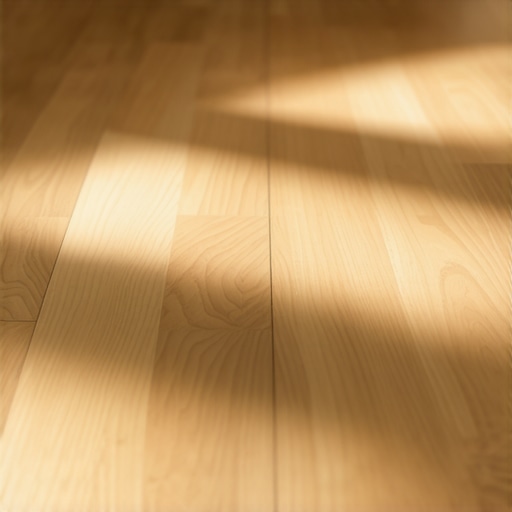
I once walked into a house where a $15,000 wide-plank walnut floor was cupping so bad it looked like a potato chip because the installer didn’t check the crawlspace humidity. The homeowner was frantic. They had spent a fortune on the material and now every single board was distorted. The air was bone dry because the furnace was running 24 hours a day. Wood is a living, breathing material. It does not care about your aesthetic goals or your interior design budget. It responds to the laws of physics. When the relative humidity drops in the winter, the wood releases its internal moisture and the cells begin to shrink. This is not a defect in the product. It is a natural reaction of the cellulose fibers to a dry environment. If you do not manage the climate of your home, your floor will reveal the gaps. I have spent my life looking at these failures through a moisture meter. I have seen guys try to fill these gaps with wood putty only to have the floor expand in the summer and squeeze the hardened filler out like toothpaste. It looks terrible. It ruins the finish. Understanding the molecular reality of your floor is the only way to survive the winter without losing your mind.
The invisible tax of dry winter air
Gaps in hardwood floors occur because wood is a hygroscopic material that shrinks as the indoor relative humidity drops below thirty percent. These gaps usually appear between the long edges of the planks as the wood fibers lose bound water within their cell walls. Maintaining a consistent humidity level between thirty five and fifty percent is the primary solution to prevent excessive contraction of the material during the heating season. This is the structural reality of owning a natural surface. You cannot fight the weather with a mop. You must fight it with a humidifier.
Wood is composed primarily of cellulose, hemicellulose, and lignin. These organic polymers are designed by nature to transport water. Even after a tree is felled and milled into flooring, those fibers retain their ability to absorb and desorb moisture from the surrounding atmosphere. This is called the Equilibrium Moisture Content or EMC. When you turn on your heater in December, the air inside your home loses its ability to hold water. This creates a vapor pressure gradient. The wood has more moisture than the air, so the water moves from the boards into the room. As the water leaves the microfibrils in the wood cells, the entire board physically narrows. If you have five inch wide planks, a tiny bit of shrinkage on each board adds up to a massive gap across the room. It will happen every year. It is as certain as the sunrise. I have seen people panic and think their house is falling apart. It is not. It is just the wood breathing.
“A floor is only as good as the subfloor beneath it; deflection is the enemy of every joint.” – Master Flooring Axiom
Wood fibers and the physics of the cell wall
Understanding wood cell anatomy explains why boards shrink in width but rarely in length during the winter months. Wood cells are long and narrow, oriented with the grain of the tree. The shrinkage occurs mainly in the tangential and radial directions rather than along the longitudinal axis. This means the boards get skinnier but they do not get significantly shorter. This molecular behavior is why you see gaps between rows but rarely at the ends of the planks unless the installation was botched from the start. I tell my clients that wood is like a sponge. When a sponge is dry, it gets smaller and harder. When it is wet, it swells up and softens. Your floor is doing the same thing on a slower, more expensive scale.
The chemistry of the cell wall is where the real action happens. Within the secondary cell wall of the wood, there are layers of microfibrils. These are held together by hydrogen bonds. When water molecules enter, they wedge themselves between these fibrils and push them apart. This is swelling. In the winter, the reverse happens. The water molecules leave and the hydrogen bonds pull the fibrils closer together. This is contraction. The force of this movement is incredible. It can snap nails and bend steel if not properly managed. This is why we leave expansion gaps at the perimeter of the room. It gives the floor somewhere to go when it grows in the summer. But in the winter, that movement is reflected as spaces between the boards. If you have a solid three quarter inch oak floor, you are going to see movement. It is the nature of the beast.
The structural lies of a poorly prepped subfloor
Subfloor preparation determines if winter gaps remain small and uniform or become structural failures that require total replacement. A subfloor that is not level or one that has high moisture content will exacerbate the movement of the finish floor. If the installer did not use a proper moisture barrier or if they skipped the leveling compound, the boards will move unevenly. This leads to clicking sounds and uneven gaps that look like broken teeth. I have spent three days grinding concrete on a job just so the floor wouldn’t click like a castanet. Most guys skip this. They think the underlayment will hide the dip. It won’t. The dip is a ghost that will haunt your floor every winter.
If your subfloor is made of plywood or OSB, it also reacts to the moisture in the air. If the crawlspace beneath the house is damp, the bottom of the floorboards will swell while the tops shrink in the dry indoor air. This causes cupping. The edges of the boards lift up. If the crawlspace is dry and the house is humid, you get crowning where the middle of the board humps up. Neither of these is a gap problem. They are structural moisture problems. You need to verify that your subfloor is within two to four percent of the moisture content of your flooring before the first nail is driven. If you do not do this, you are just guessing. And guessing is how you end up with a fifteen thousand dollar potato chip. I hate seeing good wood ruined by lazy prep work. It is the most common failure in the industry.
Why traditional fillers make the problem worse
Filling winter gaps with wood putty or caulk is a temporary cosmetic fix that often causes permanent damage to the floor finish. When the humidity returns in the spring and summer, the wood boards will expand and move back into their original positions. If those gaps are filled with a non-compressible material like hardened putty, the expanding wood will have nowhere to go. This creates massive pressure that can lead to wood crushing or the filler being squeezed out onto the surface. This creates a mess that is difficult to clean and can ruin the seal of your polyurethane. It is a cycle of destruction that is hard to stop once it begins.
If you absolutely must hide the gaps, you should use the Dutchmen method or traditional rope. A Dutchman is a thin sliver of the same wood species that is glued to one side of the gap. This allows the floor to still move while covering the dark void of the subfloor. Another old school trick is using stained jute rope. You press the rope into the gap. It hides the hole but it is compressible. When the wood expands, the rope just squishes. It does not fight the wood. But honestly, the best advice is to just wait. The gaps are seasonal. They are a sign that your floor is doing what it was designed to do. If you cannot handle the gaps, you should have bought laminate or luxury vinyl plank. Those materials are more stable because they are engineered with plastics and resins. Real wood has a soul. And that soul needs room to move.
“Wood moves. It is the first lesson every apprentice must learn and the last one every master respects.” – NWFA Professional Standards
Strategic moisture management in the home
The most effective way to minimize winter gaps is to install a whole house humidification system that maintains a constant environment. Portable humidifiers are usually insufficient for large open floor plans with hardwood floors. A bypass or steam humidifier integrated into your HVAC system allows you to set the relative humidity to forty percent. This keeps the wood in equilibrium. It stops the contraction before it starts. It is an investment in the longevity of your home. It also keeps your skin from itching and your nose from bleeding. It is a win for everyone. Except for the guys who sell floor filler.
You should also be aware of how you clean your floors in the winter. Do not use a steam mop. I see this all the time. People think the steam is good for the wood. It is not. It forces moisture into the wood cells at high pressure. This can cause the finish to peel and the wood to swell locally. Then, when the steam evaporates, the wood shrinks back even harder. It is like a shock to the system. Use a damp microfiber mop with a pH neutral cleaner. Avoid anything that leaves a waxy residue. Wax makes it impossible to screen and recoat the floor later. It is a nightmare for a professional refinisher. Keep it simple. Keep it dry. Monitor your hygrometer like your life depends on it. Because the life of your floor actually does.
Comparing materials for seasonal stability
Different wood species and flooring types have varying degrees of dimensional stability when exposed to low humidity levels. Not all floors are created equal. Solid wood is the most volatile. Engineered wood is more stable because of its cross-ply construction. Laminate and vinyl are the most stable because they are not organic. If you live in a climate with extreme seasonal swings like the Midwest or the Northeast, you need to choose your species wisely. White Oak is generally more stable than Red Oak. Walnut is very stable but soft. Exotic woods like Ipe or Brazilian Cherry are beautiful but they move like crazy. They are the prima donnas of the flooring world.
| Material Type | Janka Hardness | Dimensional Stability | Winter Gap Risk |
|---|---|---|---|
| White Oak Solid | 1360 | Medium | Moderate |
| Black Walnut Solid | 1010 | High | Low |
| Brazilian Cherry | 2350 | Low | High |
| Engineered Oak | 1360 | Very High | Minimal |
| Laminate Flooring | N/A | Maximum | None |
This table shows why we recommend engineered products for wide plank installations. The cross-grain layers of the plywood core counteract the natural movement of the top wear layer. This results in a floor that stays flat and tight even when the air gets dry. If you are building a new house and you want ten inch wide boards, do not buy solid wood. It will look like a series of trenches by January. Buy a high quality engineered board with a thick wear layer. You get the look of real wood with the stability of modern engineering. It is the smart choice for a modern home. Save the solid wood for the narrow three inch strips. They have less mass and therefore less total movement per board.
The seasonal maintenance protocol
Following a strict maintenance checklist during the transition into winter can prevent the most severe instances of floor separation. You should begin preparing your home before the first frost hits. This involves checking your HVAC filters and ensuring your humidification system is operational. It also means checking for drafts. A cold draft hitting a specific area of the floor will cause localized shrinking that is much worse than the rest of the room. Seal your windows. Check your door sweeps. Treat your floor like the precision instrument it is. If you take care of the air, the air will take care of the wood. It is a simple relationship that most people ignore until they see a gap they can fit a nickel into.
- Install a digital hygrometer in the main living area to track daily humidity.
- Set the humidifier to maintain at least thirty five percent relative humidity.
- Check for plumbing leaks in crawlspaces that might create moisture imbalances.
- Avoid using area rugs with rubber backings that can trap heat and moisture.
- Ensure all transition strips are secure and not binding the floor movement.
- Stop using wet mops and switch to a nearly dry microfiber system.
- Consult a professional if gaps exceed one eighth of an inch in multiple areas.
If you follow these steps, you will see a massive difference in how your floor performs. You might still see some hairline gaps. That is normal. That is wood being wood. But you will not see the structural failures that lead to expensive repairs. You will not see the cupping or the cracking that ruins a beautiful installation. It takes discipline. It takes a little bit of knowledge about the chemistry of the material. But it is worth it. A well maintained hardwood floor can last for a hundred years. A neglected one might not last five. I have seen both. I prefer the ones that last. They are a testament to the skill of the installer and the care of the homeowner. Do not let the winter win. Control your environment and your floors will stay beautiful until the spring thaw arrives.